



 By
By By Elizabeth Ugbo
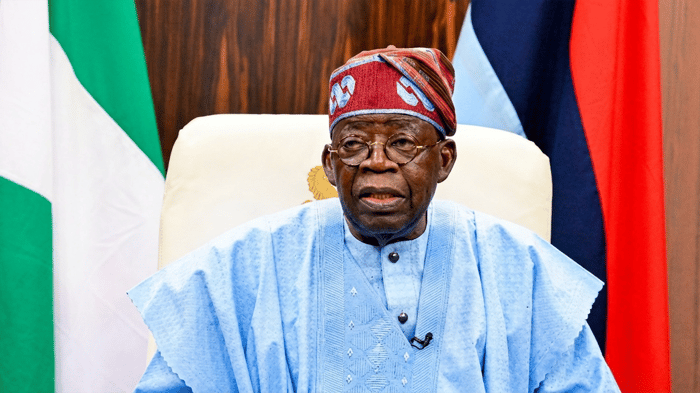
President Bola Tinubu has suspended the collection of management and frontier exploration fees by the Nigerian National Petroleum Company Limited, directing immediate changes to oil revenue remittances to protect the Federation Account.
The directive, signed last week in Abuja, seeks to curb revenue leakages, strengthen fiscal discipline, and align oil revenue flows with constitutional provisions. The Federal Ministry of Finance announced the decision on Wednesday through its Assistant Director of Information and Public Relations, Uloma Amadi.
The move affects deductions under the Petroleum Industry Act and takes immediate effect pending legislative amendments.
Why Tinubu Suspended NNPC Management and Frontier Fees
The suspension targets the 30 per cent management fee allocated to the NNPC and the 30 per cent Frontier Exploration Fund deduction.
Under the Petroleum Industry Act, authorities deducted 30 per cent of Production Sharing Contract profits monthly for inland basin exploration. The same percentage applied to NNPC’s management fees.
However, the Director-General of the Budget Office of the Federation, Tanimu Yakubu, disclosed that Nigeria lost nearly 60 per cent of gross oil revenue to these deductions.
Consequently, Yakubu has initiated discussions with the National Assembly to amend the Act and recover part of the revenue.
Earlier, Tinubu called for a reassessment of both deductions and tasked the Economic Management Team, chaired by Minister of Finance Wale Edun, to submit recommendations to the Federal Executive Council.
Executive Order Blocks Revenue Deductions at Source
The Executive Order now halts NNPC’s collection of management and frontier exploration fees.
In addition, it mandates the direct remittance of taxes, royalties, and profit oil under Production Sharing Contracts to appropriate fiscal authorities. This measure prevents deductions at source.
The order also suspends payments of gas flare penalties into the Midstream Gas Infrastructure Fund. Furthermore, it clarifies the roles of the Nigerian Upstream Petroleum Regulatory Commission and the Nigerian Midstream and Downstream Petroleum Regulatory Authority.
An inter-agency implementation committee, chaired by Wale Edun, will oversee execution.
Government Cites Declining Oil Revenue
The Ministry of Finance said declining oil and gas revenue inflows into the Federation Account prompted urgent action.
Despite improved production levels and favourable market conditions, inflows have remained weak. As a result, the shortfall has limited the government’s ability to meet budget obligations.
Officials stressed that Nigeria cannot afford inefficiencies amid rising fiscal pressure and intense global competition for energy capital.
The ministry added that the oil and gas sector must deliver transparent and constitutionally compliant revenue flows.
Constitutional Backing for the Reforms
According to the ministry, the Executive Order reinforces the 1999 Constitution of the Federal Republic of Nigeria. The Constitution vests mineral resource ownership in the Federation. It also requires that all derived revenues enter the Federation Account.
The government argued that certain fiscal arrangements under the Petroleum Industry Act created off-budget allocations and deductions. Therefore, the order serves as an interim corrective measure pending legislative amendments.
NNPC Frontier Exploration Funding Under Scrutiny
In September 2025, The PUNCH reported that the Nigerian National Petroleum Company Limited received N318.05bn between January and August 2025 for frontier exploration activities.
Documents from the Federation Account Allocation Committee meeting confirmed the disbursement.
Now, the suspension could reshape NNPC’s cost recovery and funding mechanisms. It also signals tighter federal oversight of oil revenue administration.
What This Means for Nigeria’s Oil Revenue
Tinubu’s decision marks a significant shift in oil revenue governance. The reform aims to safeguard revenue integrity and strengthen fiscal discipline.
Ultimately, the government seeks to ensure that Nigeria’s natural resources deliver tangible value to citizens, investors, and the broader economy.
source: Punch News