



 By
By By Elizabeth Ugbo
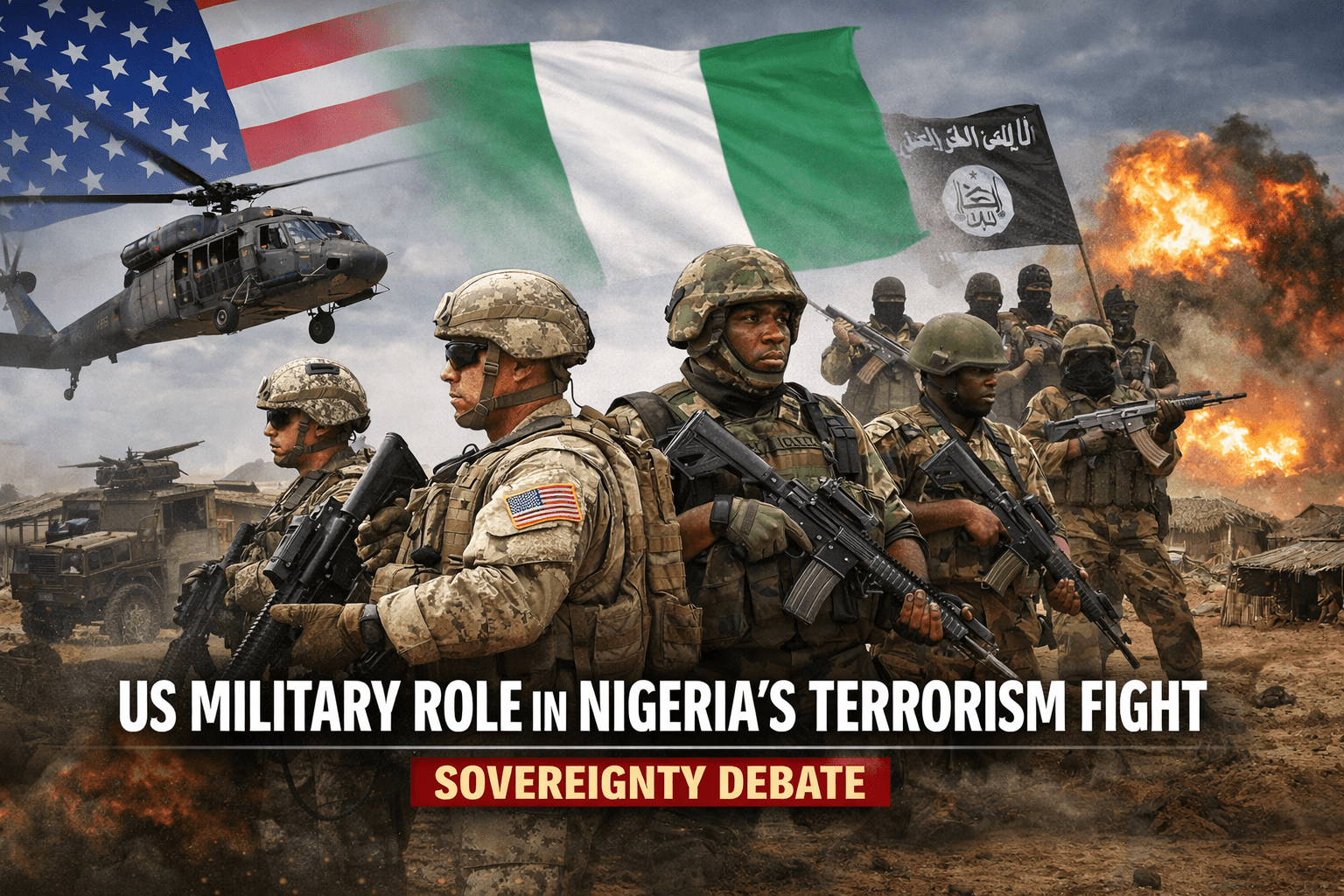
The debate over the United States military presence in Nigeria intensified after a Christmas Day strike on terrorist enclaves in Sokoto. The incident happened in northern Nigeria and followed rising attacks by insurgents across several regions. Security stakeholders, activists, and civil society leaders are now divided over how far US forces should go. While some demand expanded combat support, others insist Nigeria must retain control of its war against terrorism. The central issue remains how foreign involvement can help Nigeria defeat insurgents without undermining sovereignty.
‘We Are Used to Fire Brigade Approach’ – Joseph Ambakederimo
Joseph Ambakederimo, Convener of the South South Reawakening Group, warned against rushing into deeper foreign military involvement. He described Nigeria’s response to insecurity as a “fire brigade approach.”
Ambakederimo questioned whether US soldiers would limit operations to the North-East and North-West. He asked what would happen to other regions facing terrorist threats. According to him, Nigeria must think carefully before expanding foreign boots on the ground.
Security Experts Urge Intelligence-Only Support
A senior security official cautioned against allowing US forces into direct combat. He said Nigeria’s military still has the capacity to defeat insurgents like Boko Haram.
He stressed that US support should remain focused on intelligence and military hardware. Expanding foreign combat roles, he argued, could weaken Nigeria’s security institutions.
Similarly, retired Assistant Inspector-General of Police Austin Iwar supported strategic foreign collaboration. He said advanced US surveillance and satellite tools remain valuable. However, he insisted Nigerians must lead combat operations.
Arewa Defence League Opposes Expanded US Role
The Arewa Defence League rejected deeper US military involvement in northern Nigeria. Its National President, Murtala Abubakar, cited historical concerns over sovereignty.
He warned that exposing defence protocols to foreign powers could damage Nigeria’s security architecture. The group referenced past US interventions in Afghanistan, Iraq, and Libya as cautionary examples.
Youth Council Warns Against Outsourcing Security
The Northern Youth Council of Nigeria also opposed a full-scale foreign troop deployment. The council argued that Nigeria’s crisis stems from weak leadership and poor coordination.
It called for better intelligence fusion, improved border management, and stronger community-based networks. According to the council, foreign support must complement domestic reforms.
Civil Society: Sovereignty Must Guide Decisions
Nelson Ejukujumi of the Centre for Social and Economic Rights said Nigeria remains a sovereign nation. He maintained that US cooperation must follow clear agreements and conditions.
Comrade Debo Adeniran of the Centre for Anti-Corruption and Open Leadership echoed similar concerns. He noted that past US cooperation through United States Africa Command and the Multinational Joint Task Force focused on logistics and intelligence.
Adeniran warned that terrorism linked to Islamic State West Africa Province involves governance failures, poverty, and corruption. He stressed that foreign troops cannot fix systemic issues.
Calls for Stronger Foreign Combat Support
However, some stakeholders want expanded US strikes. David West of the Civil Liberties Organization supported direct US combat involvement. He argued that rising killings show Nigeria cannot defeat insurgents alone.
Zik Gbemre of the Niger Delta Peace Coalition also supported more independent US strikes. He claimed information leaks within Nigeria’s military undermine operations.
Security consultant Nasiru Braimah welcomed foreign tactical support and modern technology. He stressed the need for improved operational planning and better incentives for troops.
Former Military Officers Call for Institutional Reform
Retired Brigadier-General Idada Ikponmwen urged professionalism and clearer role demarcation among security agencies. He said the army must focus on defending against external threats. Meanwhile, the police and intelligence bodies should handle internal security.
Public affairs analyst Ayo Fadaka highlighted Nigeria’s historical pride in military independence. However, he admitted that unconventional warfare now requires new training approaches.
Balancing Sovereignty and Security
The Christmas Day strike triggered mixed reactions nationwide. Some see it as proof of valuable foreign partnership. Others fear long-term dependency and political interference.
Ultimately, Nigeria faces a strategic choice. It must strengthen local capacity while leveraging global partnerships. Any expanded US role must remain clearly defined, legally grounded, and aligned with national interest.