



 By
By By Elizabeth Ugbo
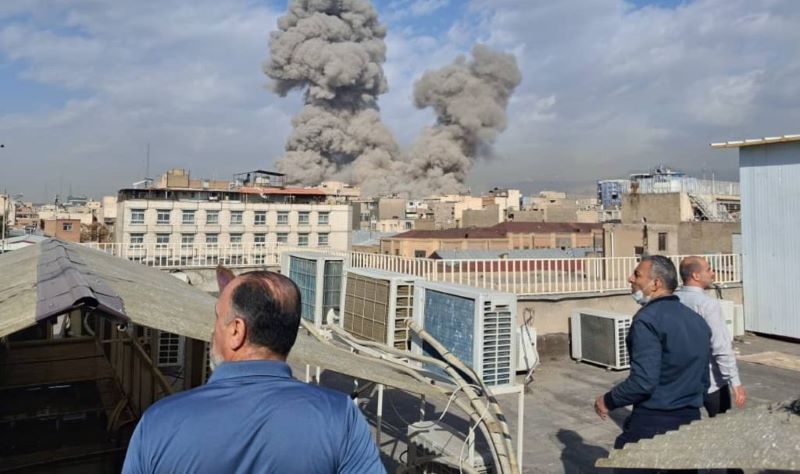
Israel struck an Iranian missile launcher on Tuesday after Iran fired missiles that triggered air raid warnings across several Israeli cities. The attack occurred amid an expanding regional war involving Israel, Iran and allied groups across the Middle East.
Israeli Strike Follows Iranian Missile Barrage
Israeli authorities confirmed that the military targeted an Iranian missile launcher shortly after Iran launched missiles toward Israel. The barrage triggered sirens across several areas.
Residents in Tel Aviv reported about ten loud explosions after the military detected incoming missiles.
Emergency services later confirmed that shrapnel from the attack killed at least one Israeli.
Lebanon Front Intensifies as Israel and Hezbollah Clash
Meanwhile, fighting between Israel and Hezbollah intensified in Lebanon.
Since March 2, cross-border exchanges of fire have killed at least 486 people and injured more than 1,300.
Lebanese President Joseph Aoun accused Hezbollah of pushing the country toward collapse.
However, the head of the group’s parliamentary bloc insisted the organisation had “no other option than resistance.”
Iranian Attacks Spread Across the Gulf
The conflict also expanded across the Gulf region.
Bahrain’s interior ministry reported that an Iranian strike on a residential area in Manama killed one person and injured several others.
Additionally, strikes hit Bahrain’s Al Ma’ameer oil facility and sparked a fire. Following the incident, state energy company Bapco declared force majeure.
Energy firms in Qatar and Kuwait also issued similar warnings that export shipments could face disruption.
At the same time, Saudi Arabia said its air defenses intercepted a drone targeting an eastern oil field near the Emirati border.
Strait of Hormuz Crisis Threatens Global Energy Supply
Attention has also shifted to the Strait of Hormuz, a crucial global oil route.
Iran blocked the waterway after US and Israeli strikes, according to shipping experts. Since then, about ten vessels near the strait have come under attack.
As a result, global shipping giant Mediterranean Shipping Company suspended some export shipments from the Gulf.
France also proposed a defensive mission to reopen the shipping lane. French President Emmanuel Macron said allied naval forces could escort ships once the conflict cools.
Mojtaba Khamenei Becomes Iran’s New Supreme Leader
Iran’s Assembly of Experts appointed Mojtaba Khamenei as the country’s new supreme leader after the death of his father.
The appointment marks Iran’s first leadership transition in 37 years.
Iranian state media showed large crowds in Tehran celebrating his rise. Allies including Hezbollah and Yemen’s Houthi movement quickly pledged allegiance.
Meanwhile, Russian President Vladimir Putin promised unwavering support for Tehran.
Trump Signals War Could End Soon
However, US President Donald Trump said the military campaign against Iran may end soon.
Speaking in Florida, he described the operation as a “short-term excursion.” He also warned that renewed conflict would trigger stronger retaliation.
Iran’s Revolutionary Guards rejected the claim. They insisted Iran would determine when the war ends.
Oil Prices and Markets React to War Tensions
The war initially pushed oil prices above $100 per barrel, the highest level since the Russian invasion of Ukraine.
However, markets later stabilised after Trump signaled that the conflict could end soon.
Stock markets in Tokyo, Seoul and Wall Street recovered after the announcement.
Still, analysts warn that continued attacks near Gulf energy infrastructure could disrupt global supply and trigger another price surge.