



 By
By By Elizabeth Ugbo
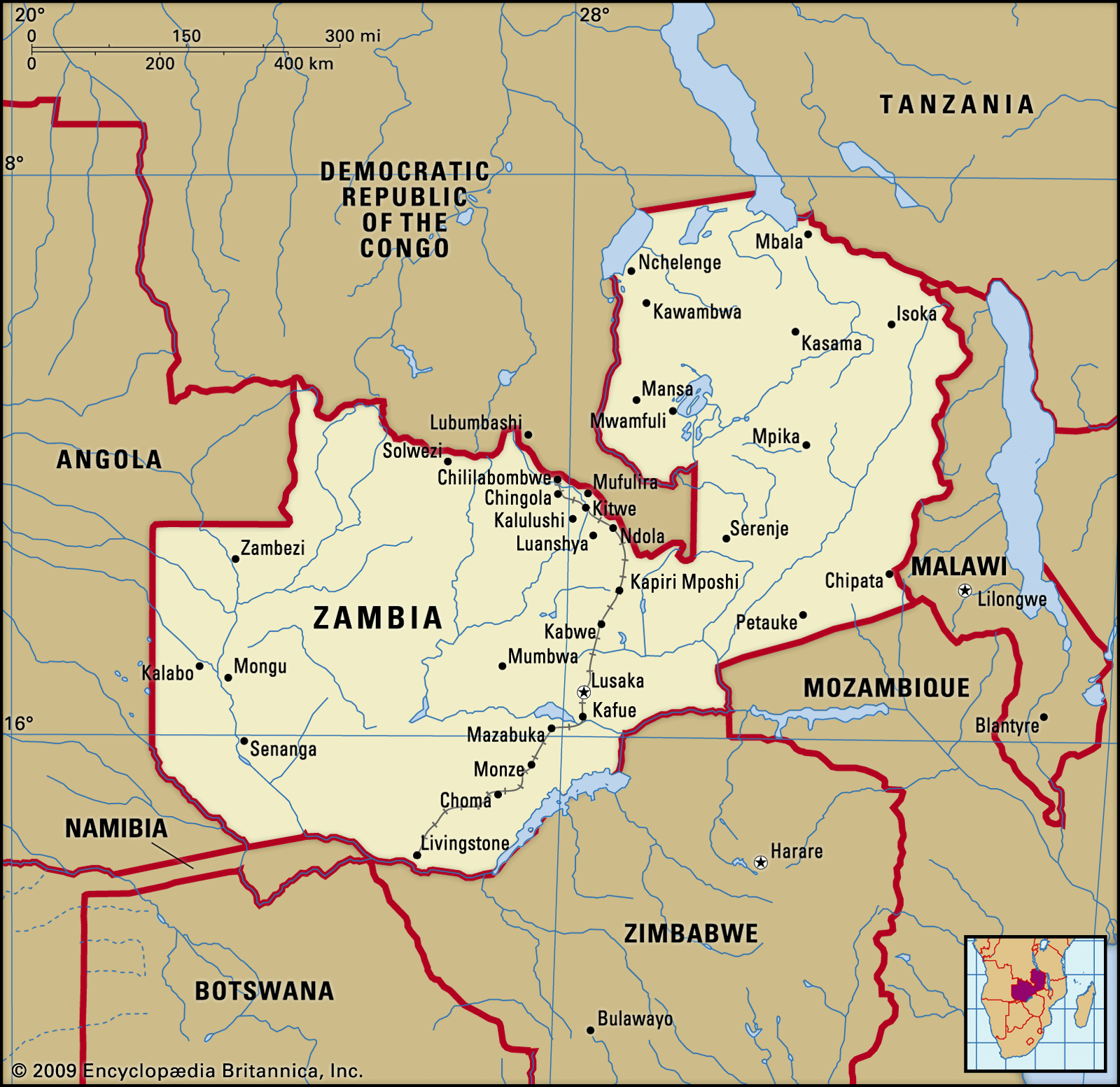
A senior government official in Zambia has alleged that some political parties are demanding sexual favours from female aspirants seeking candidacy ahead of the 13 August general election, raising concerns about gender inequality, abuse of power, and barriers to women’s political participation.
Allegations of Sextortion in Party Nominations
Mainga Kabika, head of the gender division in the president’s office, disclosed the allegations during a conference of state prosecutors.
She explained that several women have contacted her with complaints about being pressured for sexual favours in exchange for selection as candidates.
“I am receiving many messages, and some are already on record,” she said.
However, she did not name the political parties involved.
Women Face Barriers to Political Participation
Beauty Katebe, chair of the Non-Governmental Gender Organisations Coordinating Council, said the issue discourages many women from entering politics.
She stressed that such practices create fear and limit equal opportunities for female aspirants.
Moreover, she urged victims to report cases despite cultural stigma and embarrassment.
“If perpetrators are exposed, they will stop,” she said.
Gender Gap Persists in Leadership
Gender imbalance remains a major issue in Zambia’s political and administrative systems.
Women hold only about 15% of parliamentary seats.
In addition, they make up 28% of civil service directors.
Out of 36 state-owned enterprise CEOs, only five are women.
Although figures like Vice-President Mutale Nalumango hold prominent roles, overall representation remains low.
Structural and Cultural Challenges
The presidency has acknowledged that deep-rooted cultural and structural barriers continue to limit women’s advancement.
Katebe argued that patriarchal systems within political parties worsen the situation.
As a result, many qualified women struggle to secure leadership positions.
Calls for Urgent Legal Action
Stakeholders are demanding stronger legal protections against sexual exploitation.
Katebe called for a fast-track court to handle such cases quickly.
She also urged authorities to strengthen laws to deter offenders.
Meanwhile, Kabika advised female aspirants to document and record evidence of abuse.
Conclusion
As the August elections approach, pressure is increasing on authorities to address these allegations.
Without decisive action, gender inequality could continue to undermine democratic participation in Zambia.