




 By
By By Elizabeth Ugbo
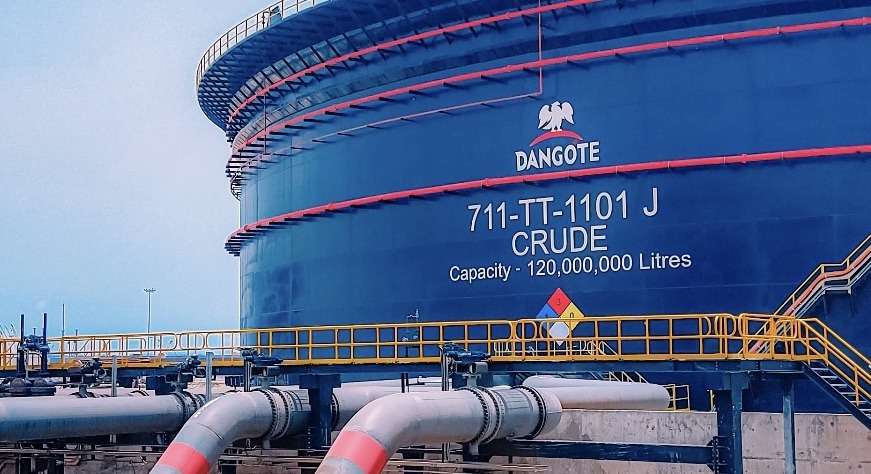
Nigeria’s naira-for-crude policy, introduced in 2024 to boost local supply, has not reduced fuel prices in 2025, according to energy analysts and Petroleumprice.ng CEO Jeremiah Olatide. Despite large-scale refineries like Dangote coming online, the country still relies heavily on imported crude, keeping prices at depots and pumps high nationwide.
Dangote Refinery and Modular Refineries Depend on Imported Crude
Olatide revealed that Dangote Refinery sources about 65–70% of its crude from abroad, while modular refineries import nearly 95%. This reliance undermines the policy’s goal of using local crude for domestic refining.
“The initiative is not effective,” he said. “Fuel prices remain unchanged because most refineries still import crude.”
Increased Supply Does Not Translate to Lower Prices
The start of large-scale refining has improved product availability, reducing supply fears. However, international pricing benchmarks still dictate costs, so consumers see no price relief at pumps.
Nigeria’s Oil Trade Shows Contradictions
- Crude Oil Imports: Nigeria imported N5.734tn worth of crude in 2025.
- Refined Petroleum Products: Imports fell from $14.06bn in 2024 to $10.00bn in 2025, a 28.88% drop.
- Non-Oil Imports: Rose 13.6% to $29.24bn, showing strong demand for foreign goods.
Investment and External Reserves
Portfolio investment inflows dropped 48.3% to $8.04bn, while foreign direct investment increased to $4.01bn. External reserves rose 13.83% to $45.75bn by December 2025. Nigeria’s overall balance of payments stayed positive at $4.23bn, though lower than $6.83bn in 2024.
Current Account and Financial Account Overview
- Current Account Surplus: $14.04bn in 2025, down from $19.03bn in 2024.
- Goods Account: Surplus increased to $14.51bn, mainly due to Dangote Refinery exports of $5.85bn.
- Financial Account: Shifted from a net lending position of $9.65bn in 2024 to net borrowing of $1.69bn in 2025.
Why Fuel Prices Remain High
Analysts point to three key reasons:
- Heavy reliance on imported crude.
- International benchmarks used for pricing local crude.
- Rising non-oil imports increasing pressure on reserves.
Key Takeaways
- Naira-for-crude policy has not reduced fuel prices.
- Domestic refining ensures supply but not lower costs.
- Investment trends show growing focus on long-term capital.
- Changes in crude trade affect Nigeria’s external balance.