




 By
By By Elizabeth Ugbo
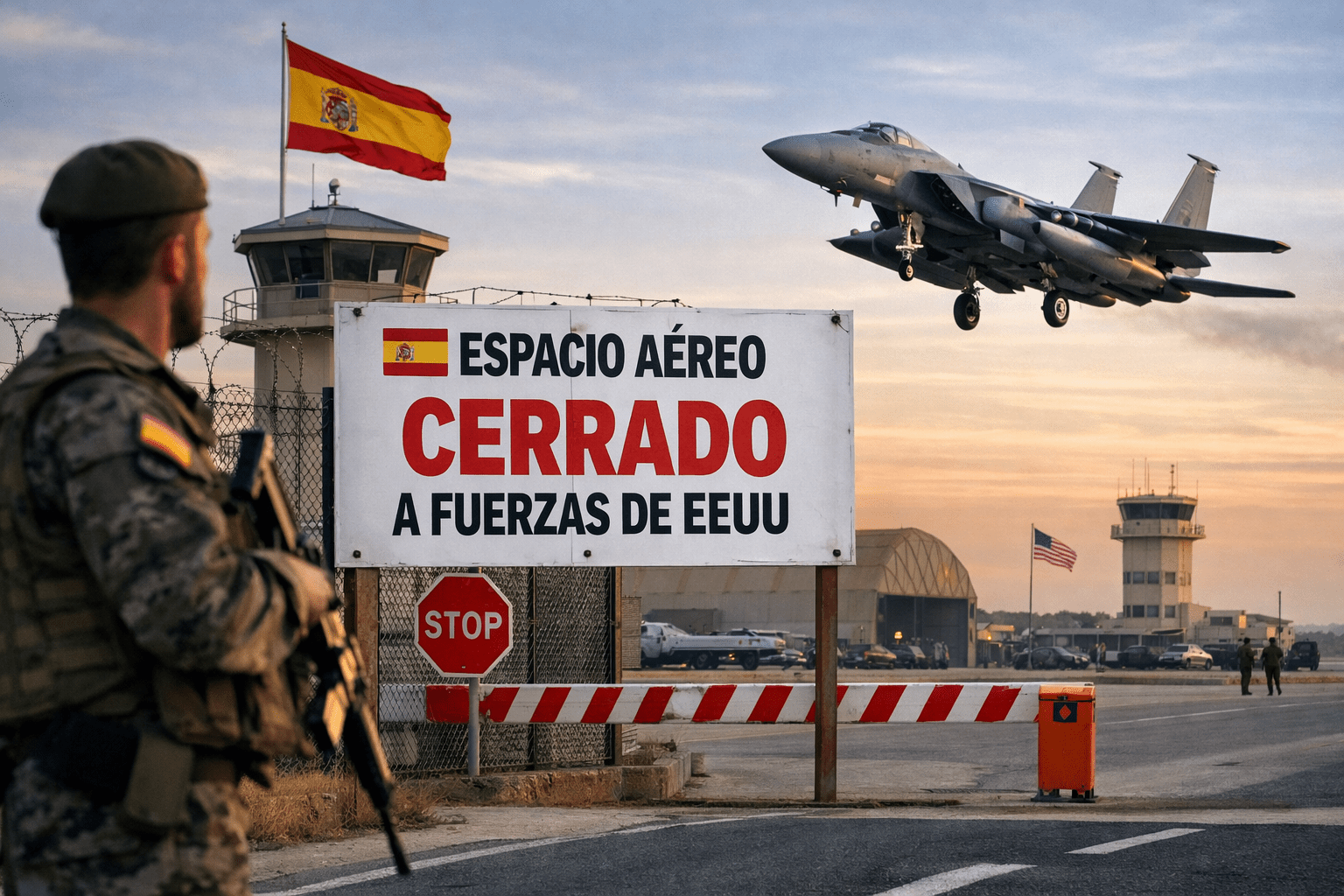
Spain has closed its airspace to United States military aircraft linked to the US-Israel operations against Iran on Monday in March 2026, as confirmed in Madrid, Spain. The government led by Prime Minister Pedro Sánchez took the decision to prevent the United States from using Spanish airspace and jointly operated bases in southern Spain, including Rota and Morón. The move responds to escalating US-Israel military actions against Iran, aims to protect civilians, and reinforces Spain’s opposition to the war through diplomatic and military restrictions.
Defence Ministry Confirms Airspace Closure
Spain’s Defence Minister Margarita Robles confirmed the airspace closure after reports from El País. She stated that Spanish authorities clearly communicated the restriction to US military officials from the start.
Robles stressed that Spain does not authorise any use of its airspace for operations connected to the conflict in Iran.
Why Spain Took the Decision
Spain rejected the use of its military infrastructure due to strong opposition to the war. The government described the conflict as unjustifiable and dangerous.
Prime Minister Pedro Sánchez warned that continued escalation could trigger wider global instability. He also urged world powers to prioritise diplomacy over military action.
Spain argued that protecting civilians remains a key priority. It also seeks to limit its involvement in foreign military operations.
US Reaction and Military Impact
The United States reacted sharply after Spain blocked access to the Rota and Morón airbases. US President Donald Trump threatened to cut trade ties with Madrid.
The decision forced around 15 US military aircraft to relocate to alternative bases.
Relations between Spain and the US have become more strained due to the escalating dispute.
Israel and Broader Geopolitical Tensions
The government of Israel criticised Spain’s position. Tensions increased further after Spain recognised a Palestinian state in 2024.
Spain continues to take a strong stance against Israel’s military campaign in Gaza. This position has set it apart from many European Union members, who mainly call for de-escalation.
Spain’s Expanding Foreign Policy Shift
Spain has emerged as one of Europe’s most vocal critics of US and Israeli military operations in the Middle East. Its leadership argues that ongoing wars threaten global security.
Madrid also previously approved a legal arms embargo on Israel. The policy bans the sale of weapons, dual-use technology, and military equipment.
Spain’s approach signals a broader shift toward stricter neutrality in foreign military conflicts.
Conclusion
Spain’s airspace closure marks a significant escalation in its diplomatic break with US-led military operations in Iran. The decision highlights deepening divisions within Western allies over the war.