




 By
By By Elizabeth Ugbo
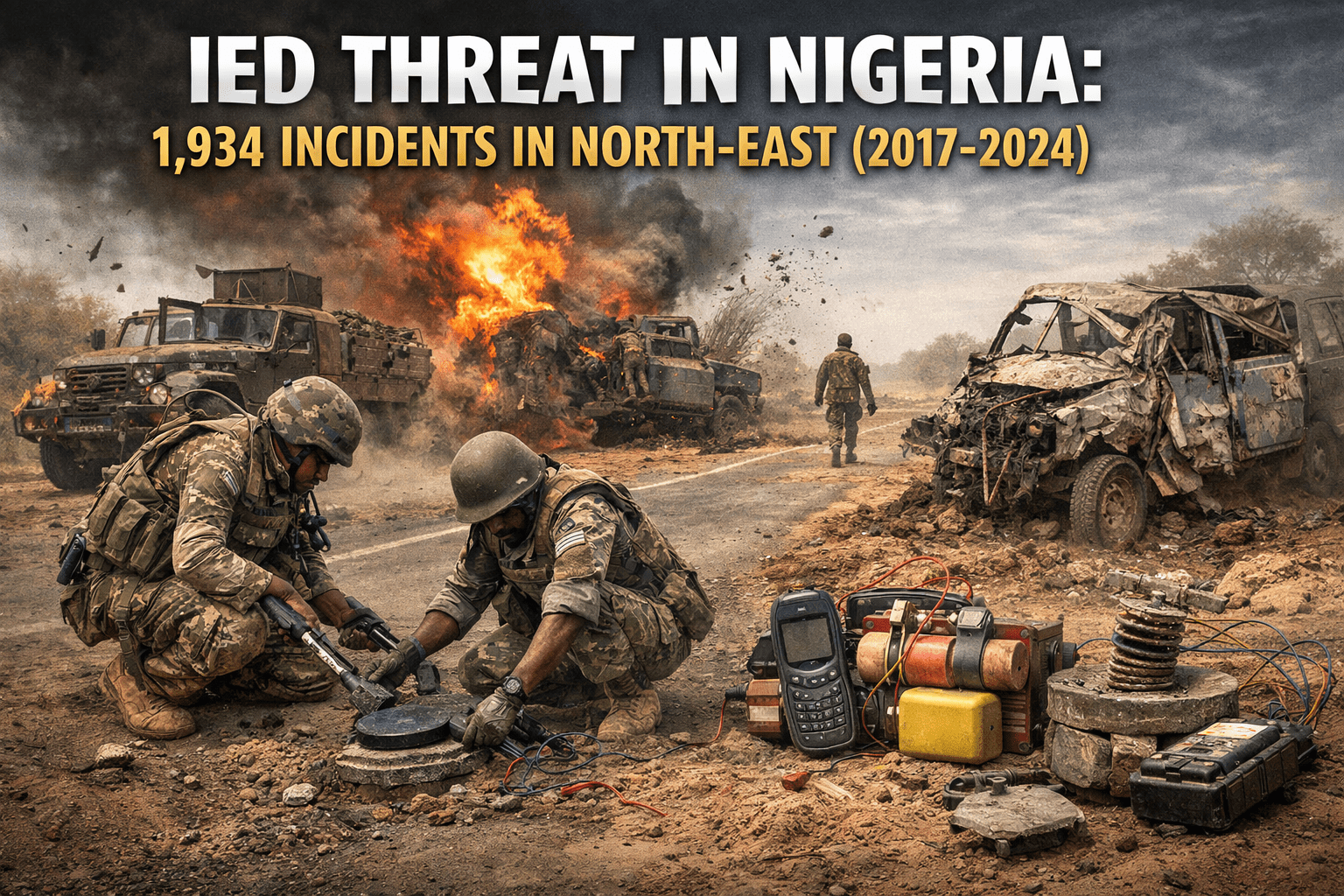
Nigeria recorded 1,934 improvised explosive device (IED) incidents in the North-East between 2017 and 2024, according to the 2025 Nigeria Mine Action review. The attacks, carried out by insurgent groups, targeted civilians, security personnel, and infrastructure, with road networks most affected. The data, presented in Abuja on March 11, 2026, highlights how, where, and why IEDs remain a major security threat in the region.
Rising Sophistication of IED Attacks
Over the years, insurgents have refined their tactics. As a result, IEDs have become more advanced and more deadly.
The Coordinator of the National Counter Terrorism Centre (NCTC), Adamu Laka, explained that troops face constant danger during operations. He spoke at a Counter-IED workshop in Abuja.
According to him, insurgents adapt quickly. Each time security forces counter a method, attackers develop another.
He noted that early devices relied on wire and telephone controls. However, insurgents later switched to pressure plates.
Changing Methods of Detonation
Laka described how insurgents improved their techniques over time.
He said security teams once removed devices successfully. However, attackers responded with layered explosives.
In such cases, a second device explodes when the first is disturbed. Consequently, this method increases casualties and complicates bomb disposal efforts.
He stressed that the impact remains devastating. Nigeria still struggles with this evolving threat today.
Yearly Breakdown of IED Incidents
Data from the report shows fluctuating trends over the years.
- 2017: 381 incidents (highest recorded)
- 2018: 267 incidents
- 2019: 189 incidents
- 2020: 249 incidents
- 2021: 281 incidents
- 2022: 185 incidents
- 2023: 191 incidents
- 2024: 191 incidents
Although numbers dropped after 2017, attacks remain frequent.
Road IEDs Dominate Attacks
Road-emplaced IEDs account for most incidents.
For example, 2023 recorded 161 road IED cases out of 191. Similarly, 2024 reported 174 road-based attacks.
Other types include:
- Body-borne devices
- Vehicle-borne explosives
- Explosive remnants of war (ERW)
Despite these variations, road IEDs remain the most persistent threat.
Impact on Security and Civilians
IED attacks continue to endanger lives across the North-East and North-West.
They disrupt transportation, damage infrastructure, and slow military operations. In addition, civilians face daily risks while traveling.
Security agencies, therefore, face increasing pressure to improve detection and response strategies.
Ongoing Security Challenge
Nigeria continues to battle insurgent groups using IEDs. Although efforts have reduced some attacks, the threat persists.
Authorities now focus on intelligence sharing, advanced detection tools, and training programs. These measures aim to counter evolving tactics effectively.