



 By
By By Elizabeth Ugbo
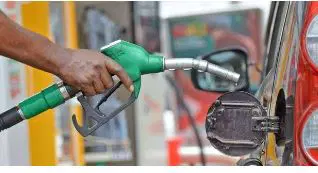
FUEL marketers under the Independent Petroleum Marketers Association of Nigeria (IPMAN) have warned that they will shut filling stations nationwide if the Federal Government enforces petrol price control in Nigeria’s deregulated downstream petroleum sector. The warning came on Tuesday in Abuja after the Minister of State for Petroleum Resources (Oil), Heineken Lokpobiri, vowed to stop profiteering. IPMAN argued that price control would violate the Petroleum Industry Act (PIA) and worsen losses already suffered by marketers due to frequent fuel price reductions.
IPMAN rejects petrol price control
The Independent Petroleum Marketers Association of Nigeria (IPMAN) has rejected any move to regulate petrol prices.
The National Publicity Secretary of IPMAN, Chinedu Ukadike, said marketers cannot survive if the government dictates pump prices in a deregulated market.
He warned that filling stations would shut down across the country if authorities introduced price control.
“You cannot regulate a deregulated market,” Ukadike said.
He argued that marketers sell fuel based on their purchase costs and should not bear losses caused by government intervention.
Marketers count heavy financial losses
Ukadike explained that many independent marketers have suffered severe financial losses in recent weeks.
According to him, marketers often buy petrol at higher prices, only for suppliers to reduce prices before the products reach filling stations.
As a result, competitors who buy later sell at lower prices, forcing others to reduce prices and absorb losses.
“We are losing money because prices keep dropping after we buy products,” he said.
He also noted that many marketers operate with bank loans.
Therefore, they must repay fixed loan obligations despite falling fuel prices and shrinking profit margins.
Low patronage worsens business challenges
Ukadike said lower-priced fuel sold by competitors has reduced customer patronage for marketers with older, costlier stock.
Consequently, many filling stations struggle to recover their investment.
He described the situation as one of the realities of deregulation.
“If you cannot compete, you cannot survive in the market,” he stated.
IPMAN demands more competition
Instead of introducing price controls, IPMAN urged the Federal Government to create a more competitive petroleum market.
Ukadike called for increased fuel importation and faster revival of local refineries.
According to him, greater competition would naturally reduce petrol prices.
“We are not asking for price control. We want more competition,” he said.
He added that the government should focus on making public refineries operational and supporting partnerships that expand local refining capacity.
Lokpobiri warns against profiteering
The controversy followed remarks by the Minister of State for Petroleum Resources (Oil), Heineken Lokpobiri.
Speaking during the 2026 General Counsel and Legal Advisers Forum organised by the Nigerian Midstream and Downstream Petroleum Regulatory Authority (NMDPRA) in Abuja, the minister said deregulation does not permit exploitation.
He stressed that market forces should determine petrol prices.
However, he said government agencies must prevent excessive profiteering.
According to Lokpobiri, the Petroleum Industry Act empowers regulators, including the NMDPRA, to protect consumers while maintaining market competition.
FCCPC raises concerns over fuel prices
The debate intensified after the Federal Competition and Consumer Protection Commission (FCCPC) expressed concern over petrol prices.
The commission questioned why retail fuel prices remain high despite the sharp decline in global crude oil prices.
Crude prices reportedly dropped from about $120 per barrel during the United States-Iran conflict to around $72 per barrel.
However, petrol still sells between N1,140 and N1,210 per litre, depending on location.
PETROAN seeks stakeholder consultation
Meanwhile, the Petroleum Products Retail Outlet Owners Association of Nigeria (PETROAN) urged the government to consult industry players before taking regulatory action.
PETROAN National President Billy Gillis-Harry acknowledged that the Minister of Petroleum Resources has legal powers to protect consumers.
Nevertheless, he insisted that any intervention should follow broad consultations with stakeholders.
He recommended an emergency petroleum stakeholders’ conference to review the situation and agree on solutions that benefit Nigerians.
According to him, unilateral decisions could create additional challenges in the downstream sector.
NMDPRA yet to announce action
The spokesperson for the NMDPRA, George Ene-Ita, said the agency has not announced any action regarding petrol pricing.
“I’ve not been briefed. I don’t know the action the management wants to take,” he said.