



 By
By By Elizabeth Ugbo
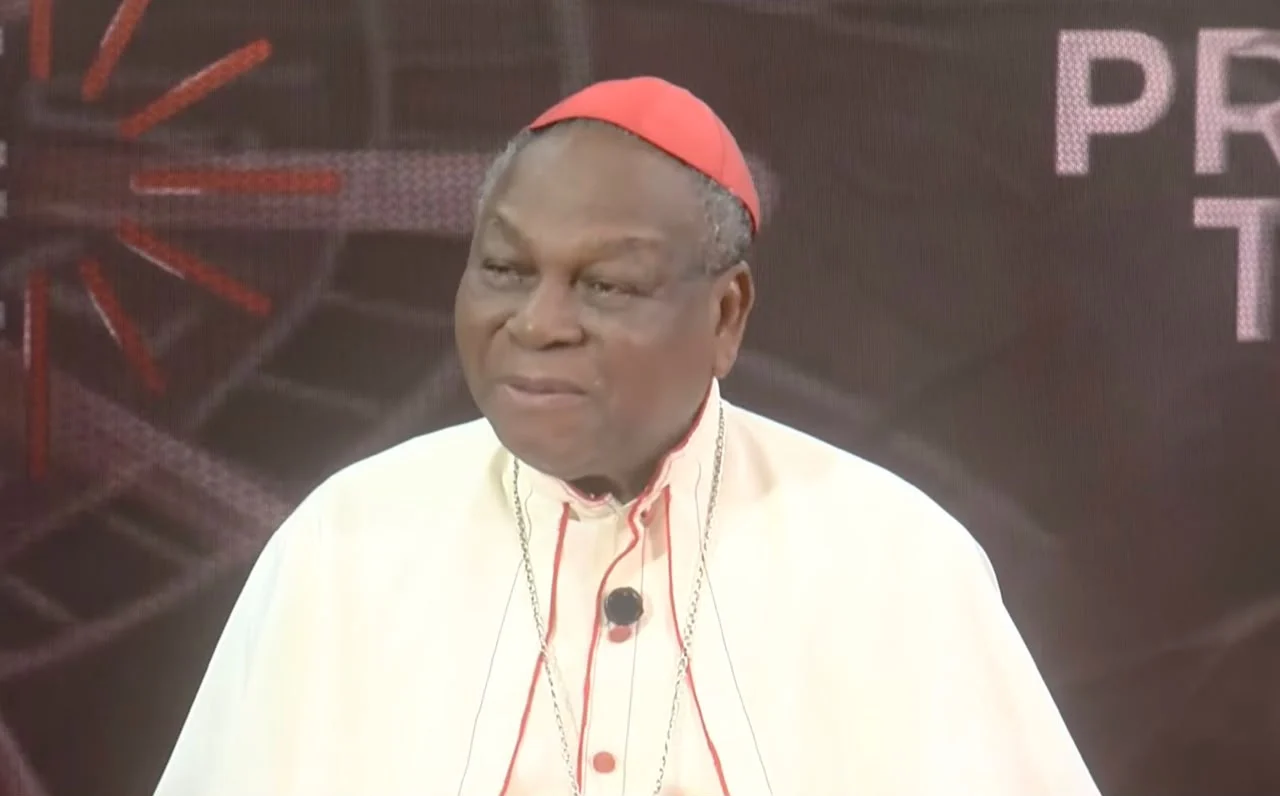
The Archbishop Emeritus of the Catholic Archdiocese of Abuja, John Onaiyekan, disclosed that President Bola Tinubu rejected the Catholic Bishops’ assessment of Nigeria’s economy, insecurity and political climate during their meeting at the State House, Abuja, on July 28, 2026. According to Onaiyekan, the bishops raised concerns about the worsening conditions affecting Nigerians, but the President insisted his administration remained on the right track.
Tinubu Disagreed With Bishops’ Assessment
Archbishop Onaiyekan revealed that President Tinubu openly disagreed with the bishops’ position during the meeting.
Speaking on Prime Time, a programme on Arise News, on Friday, he said the bishops expected a frank discussion because of the country’s challenges.
“When the nation is bleeding, you cannot expect a polite meeting with the Head of State. We told him the economy is not helping our poor people, but he said the economy is doing fine. Frankly speaking, he told us quite clearly that he did not agree with us,” Onaiyekan said.
However, he noted that the bishops never expected the President to accept every criticism.
“We have done our duty and delivered our message. We hope someone will eventually show him some of the realities we highlighted,” he added.
Bishops Say They Have No Political Agenda
Onaiyekan explained that the statement presented to the President reflected the collective position of the Catholic Bishops’ Conference of Nigeria after extensive consultations.
He stressed that the bishops spoke solely to protect the interests of Nigerians.
“We are not politicians seeking elective office. We are religious leaders with a responsibility to speak about the lives of our people,” he said.
According to him, the bishops deliberately presented the realities facing Nigerians instead of offering flattering remarks.
He also expressed satisfaction that the President listened carefully because he addressed each concern during the meeting.
Concern Over Truth Within Government
The cleric warned that many government officials may not be giving the President honest feedback.
He described the lack of truthful advice within government as one of Nigeria’s biggest problems.
According to him, leaders need accurate information to make sound decisions and respond effectively to citizens’ concerns.
On Electoral Reforms and Democracy
Onaiyekan also defended the bishops’ warning about the risk of a dominant one-party political system.
He argued that democracy depends on credible elections, political competition and equal opportunities for all parties.
Although President Tinubu defended the Independent National Electoral Commission (INEC), Onaiyekan maintained that public doubts would continue while the President appoints the commission’s leadership.
He therefore called for electoral reforms that would strengthen INEC’s independence and restore public confidence.
Call to Strengthen Democratic Institutions
The Archbishop urged President Tinubu to safeguard Nigeria’s democratic institutions and prioritise solutions to the country’s challenges.
He concluded that Nigerians deserve better governance, adding that government should focus more on solving national problems than celebrating its achievements.