



 By
By By Elizabeth Ugbo
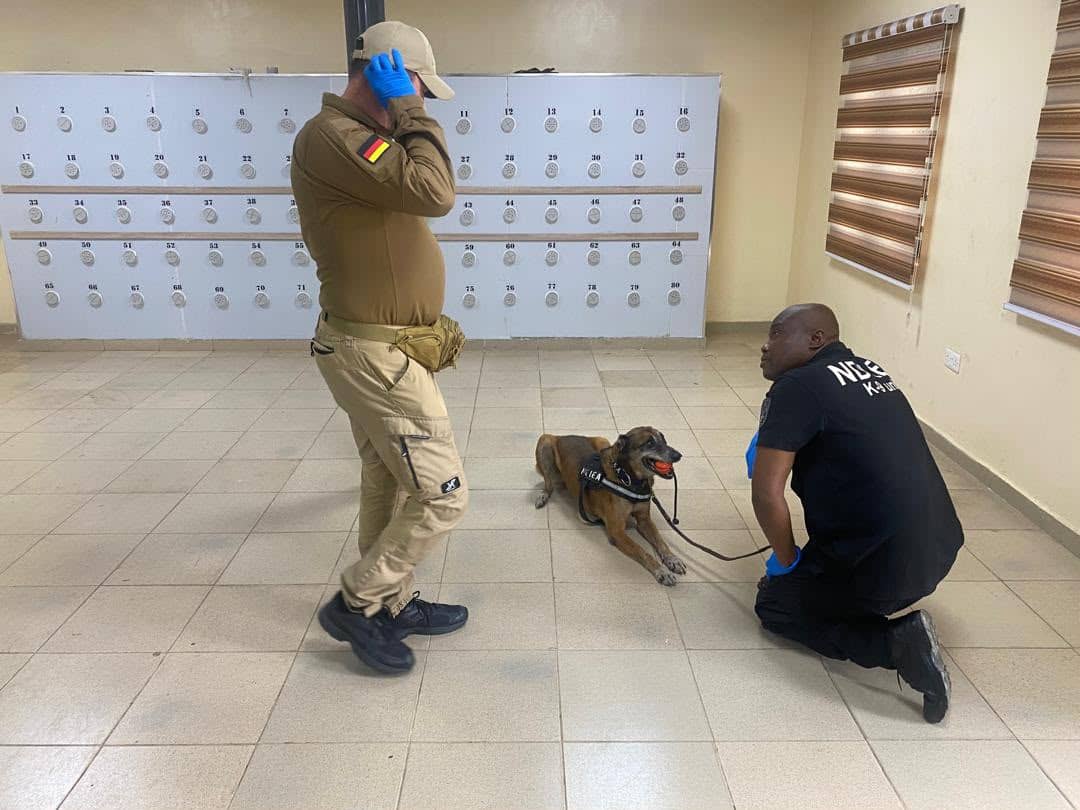
The National Drug Law Enforcement Agency (NDLEA) has trained its sniffer dog handlers in Lagos with German experts to improve narcotics detection operations. The refresher course strengthened handlers’ skills, canine control and drug detection techniques.
German Experts Lead NDLEA Canine Training
The NDLEA organised the specialised training with Germany’s Bundeskriminalamt (BKA).
German technical dog handling experts Andreas Roscher and Jacqueline Shüler led the exercise.
They introduced international best practices to Nigerian canine handlers during the training.
The exercise took place at the NDLEA Canine Unit Facility in Lagos.
It focused on improving operational skills among handlers and their service dogs.
Eleven Canine Unit Personnel Participate
Eleven personnel from the NDLEA Canine Unit participated in the refresher course.
The participants included the Unit Commander, two veterinary doctors and eight dog handlers.
Five additional officers from NDLEA commands in Lagos also attended the training.
The officers have expressed interest in joining the Canine Unit.
Together, the participants worked alongside their service dogs throughout the exercise.
Training Focuses on Narcotics Detection
The course covered advanced obedience and canine control techniques.
It also focused on narcotics detection, scent imprinting and search patterns.
Furthermore, the handlers participated in realistic simulation exercises across key facilities.
These included the Murtala Muhammed International Airport baggage hall.
The exercises also covered APM Terminals in Apapa.
Handlers also trained at the MMIA NAHCO export shed.
The programme further addressed handler safety and deployment tactics.
These skills are crucial when officers deploy canine assets in high-risk areas.
Marwa Highlights Importance of Canine Unit
NDLEA Chairman and Chief Executive Officer, Brig. Gen. Mohamed Buba Marwa (Rtd), welcomed the training.
He described the exercise as an important boost to the Agency’s narcotics detection capacity.
According to Marwa, the training reflects NDLEA’s commitment to developing skilled personnel.
He also stressed the need to match the growing sophistication of drug trafficking networks.
Marwa said canine teams remain among the Agency’s strongest detection assets.
He linked several narcotics seizures to the dedication of dogs and their handlers.
He also praised the German partnership for strengthening the Agency’s operational capacity.
NDLEA Plans More Investment in Canine Operations
The NDLEA boss said the Agency recognises challenges within its Canine Unit.
These challenges include shortages of service dogs and trained personnel.
The Unit also needs more boarding facilities for its growing operations.
The Agency wants stronger canine coverage across seaports, airports and land borders.
Therefore, NDLEA plans to address these gaps through additional investment.
The Agency also plans to sustain the refresher course as an annual programme.
This approach will help handlers maintain their skills and improve canine performance.
It will also strengthen the detection of concealed narcotics across Nigeria’s entry points.