




 By
By Elizabeth Ugbo
The Nigerian stock market gained N2.01 trillion in October 2026 as renewed investor interest lifted the Nigerian Exchange (NGX) All-Share Index above 250,000 points. The rally reflected strong demand for heavyweight stocks across the Industrial Goods, Financial Services and Energy sectors. Meanwhile, changing global oil prices, inflation expectations and corporate earnings continued to shape investment decisions.
NGX Market Capitalization Rises to N165.114 Trillion
The NGX recorded significant growth in October following increased buying interest in large-capitalized stocks.
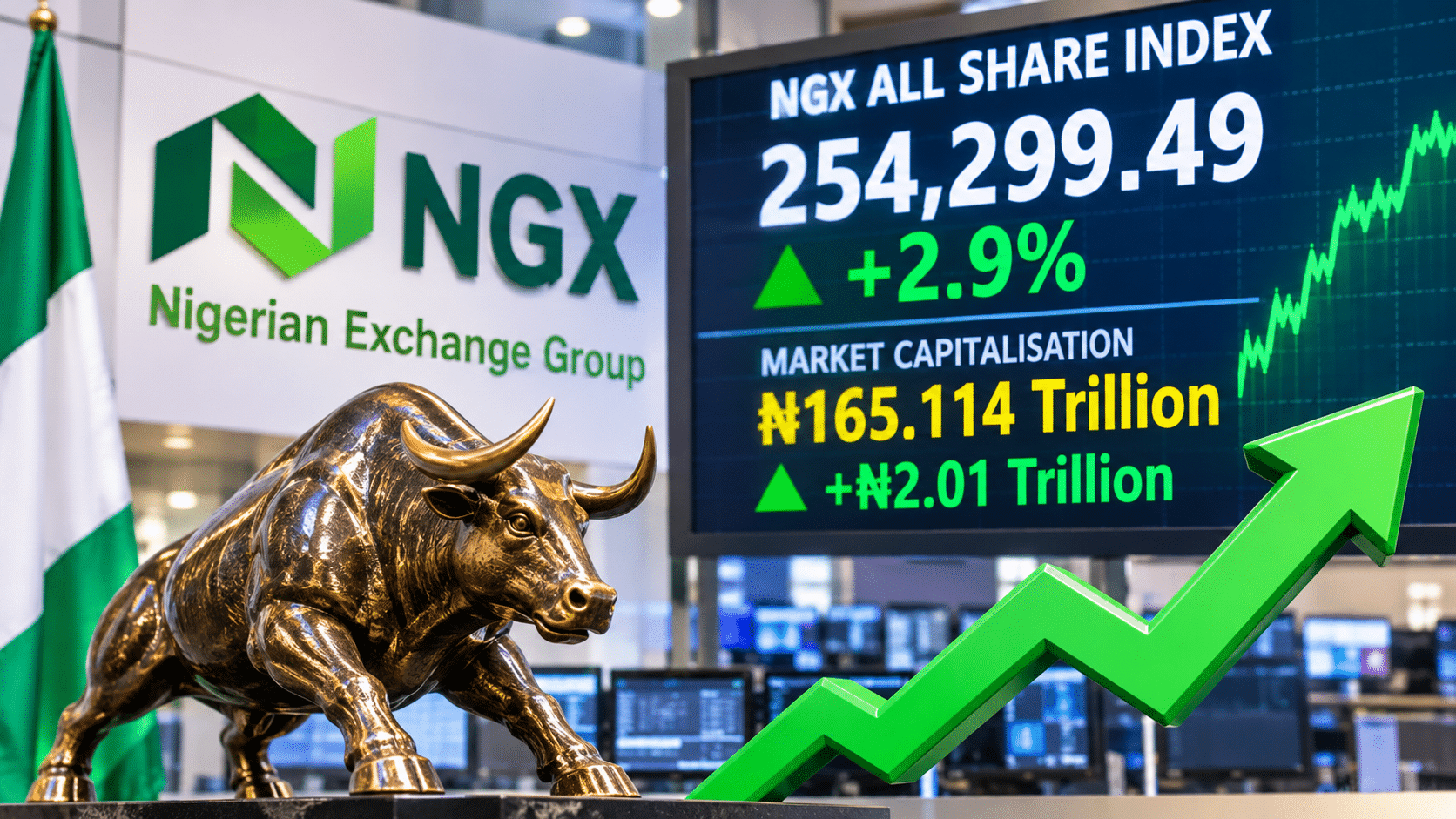
Market capitalization climbed to N165.114 trillion from N163.104 trillion in September. This represented a gain of N2.01 trillion during the month.
Similarly, the NGX All-Share Index (ASI) advanced by 1.2%. It closed October at 254,299.49 points against 251,211.67 points in September.
Consequently, the benchmark index crossed the 250,000-point psychological threshold.
Stock Market Records N4.595 Trillion Weekly Gain
The market also recorded substantial growth on a week-on-week basis.
Market capitalization increased by N4.595 trillion during the week. It rose from N160.519 trillion to N165.114 trillion.
Meanwhile, the NGX All-Share Index gained 2.9% within the same period. It advanced from 247,222.27 points to 254,299.49 points.
According to analysts, the rally reflected renewed investor confidence. However, gains remained concentrated in selected heavyweight stocks.
Investors Maintain Selective Buying Strategy
Analysts noted that the market’s upward movement showed improving investor sentiment. However, the uneven distribution of gains suggests a selective investment approach.
Investors appear to favor stocks with significant market influence. Meanwhile, others maintain caution towards equities that have recorded substantial price appreciation.
This difference between index performance and market breadth remains important. It could also influence the sustainability of the current rally.
Furthermore, expectations surrounding interest rates, inflation and corporate earnings may shape investment decisions.
Improved corporate profitability and favorable financing conditions could attract additional demand. Conversely, uncertainty over costs, earnings and valuations may encourage profit-taking.
Global Oil Prices and Geopolitical Developments
Global crude oil prices remain another important factor influencing market expectations.
Oil prices recorded movements last week as investors reassessed geopolitical risks. Meanwhile, diplomatic efforts continued to support renewed peace negotiations.
The retreat in crude prices reflected changing expectations surrounding developments in the region. However, renewed tensions could quickly reverse market sentiment.
Analysts therefore advise investors to monitor international oil developments. They also recommend considering domestic economic indicators and company-specific performance.
How Oil Prices Affect the Nigerian Economy
Crude oil movements have significant implications for Nigeria’s economy. They influence government revenue, foreign exchange supply and broader economic expectations.
Higher oil prices can strengthen government revenue and external balances. However, the benefits depend on production levels and domestic economic conditions.
Domestic fuel costs and other fiscal pressures also influence the overall impact.
Conversely, sustained declines in crude prices could weaken revenue expectations. Nevertheless, lower prices may ease certain cost pressures.
The impact on listed companies will also vary. Their exposure to energy prices, foreign exchange movements and production costs matters.
Domestic demand will equally determine how individual businesses respond to these developments.
Analysts Advise Investors to Monitor Market Fundamentals
Analysts at InvestData Consulting Limited urged investors to consider several economic factors when making investment decisions.
They stressed the importance of monitoring international oil movements alongside domestic indicators.
Investors should also examine company-specific developments before adjusting their portfolios.
According to the analysts, crude oil price movements do not affect every listed company equally.
Therefore, investors should consider individual business exposure, earnings prospects and prevailing market valuations.