



 By
By Elizabeth Ugbo
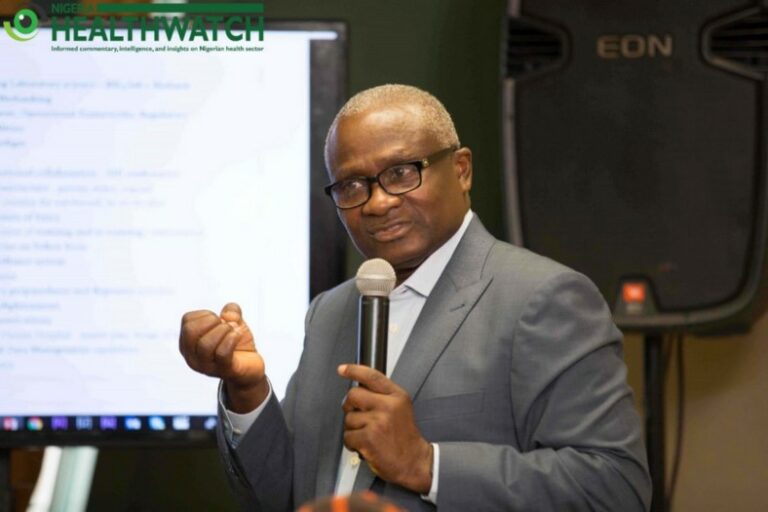
The Director-General of the Nigeria Centre for Disease Control and Prevention (NCDC), Dr Jide Idris, has clarified that President Bola Tinubu’s approved N10bn emergency intervention fund targets multiple epidemic-prone diseases, not Ebola alone. Speaking amid public controversy over the funding in October 2026, Idris explained that the intervention would strengthen Nigeria’s disease prevention, preparedness, surveillance and emergency response. He also urged Nigerians to reject misinformation and support sustainable investment in national health security.
N10bn Fund Targets Multiple Epidemic Diseases
Idris explained that the N10bn intervention would strengthen Nigeria’s preparedness against several public health threats.
These include Lassa fever, cholera, cerebrospinal meningitis, diphtheria, measles and monkeypox.
The funding will also support efforts against antimicrobial resistance and other emerging infectious diseases.
According to him, the Federal Government released the money directly to the NCDC.
He dismissed claims suggesting that the Presidential Task Force on Ebola Virus Disease received the funding.
However, Idris did not disclose the exact date the agency received the money.
This followed his October 25, 2026, press conference, where he said the funds remained unreleased.
Tinubu Approved N10bn Following Ebola Concerns
Idris disclosed that President Tinubu approved the additional N10bn in June 2026.
The approval followed an Ebola outbreak in the Democratic Republic of Congo.
The outbreak raised international concerns about the spread of the disease.
However, Idris stressed that the intervention covered Nigeria’s wider epidemic preparedness programme.
He explained that the NCDC had already mobilised resources from government and development partners.
The additional funding will therefore strengthen existing programmes and expand national health security efforts.
NCDC Funding Increases Amid Growing Health Security Needs
Idris provided details of the government’s financial commitments to national health security.
He disclosed that the NCDC received N4bn in 2024.
The allocation increased to N7bn in 2025, alongside an additional N5bn intervention fund.
Furthermore, the 2026 Appropriation provides N22bn for the agency.
Despite these allocations, Idris said Nigeria still needs substantially more funding.
He estimated that implementing the National Action Plan for Health Security (2025–2029) would cost approximately N522bn.
The five-year plan requires an average annual investment of N104.4bn.
Consequently, the N10bn intervention represents only about two per cent of its average yearly requirement.
He stressed that Nigeria needs sustained contributions from federal and state governments.
Development partners must also support the country’s efforts to address epidemic threats.
Nigeria Needs More Investment in Epidemic Preparedness
Idris highlighted the financial gap affecting Nigeria’s ability to prepare for disease outbreaks.
He cited estimates from the Global Preparedness Monitoring Board.
The organisation estimates that countries need between US$1 and US$2 per person annually.
This investment would help countries achieve an acceptable level of epidemic preparedness.
For Nigeria’s population of approximately 240 million, the requirement translates into US$240m to US$480m annually.
Idris said sustained funding from government and development partners could help close the gap.
He also noted that governments often prioritise visible projects over less visible public health investments.
Nevertheless, preventing epidemics and saving lives require consistent financial commitments.
He warned that responding to major outbreaks could cost far more than preventing them.
Nigeria Confirms Imported Bundibugyo Ebola Case
Addressing the Ebola situation, Idris confirmed Nigeria’s first imported case of Bundibugyo Ebola virus disease.
He said laboratory tests confirmed the case on October 20, 2026.
The confirmation came within 24 hours after authorities received an alert in Abuja.
However, Idris assured Nigerians that the country had no active case at the time of his statement.
He added that health officials continued monitoring all identified contacts daily.
The surveillance programme will continue until every contact completes the mandatory 21-day monitoring period.
Authorities will also maintain surveillance for any new suspected infection.
NCDC Rejects Calls for Election Postponement
Idris also dismissed calls to postpone elections because of the Ebola situation.
He said the current circumstances did not justify travel restrictions or blanket bans on mass gatherings.
Instead, the NCDC developed technical guidelines for organisers of public events.
These guidelines provide measures to prevent infections and control disease transmission.
Idris maintained that organisers could hold public gatherings safely by following infection prevention and control protocols.
Therefore, he urged Nigerians to rely on verified information rather than speculation.
Idris Warns Against Ebola Misinformation
The NCDC director-general urged Nigerians to avoid circulating unverified reports about the Ebola situation.
He warned that misinformation and political interference could weaken public confidence.
Such developments could also undermine Nigeria’s emergency response efforts.
Idris said public discussions about the N10bn allocation should focus on sustainable health security investment.
He emphasised that disease prevention requires long-term planning and adequate funding.
According to him, Nigeria must strengthen its capacity to detect and respond quickly to epidemics.
He added that preventing outbreaks, saving lives and protecting the economy require deliberate government investment.