



 By
By By Elizabeth ugbo
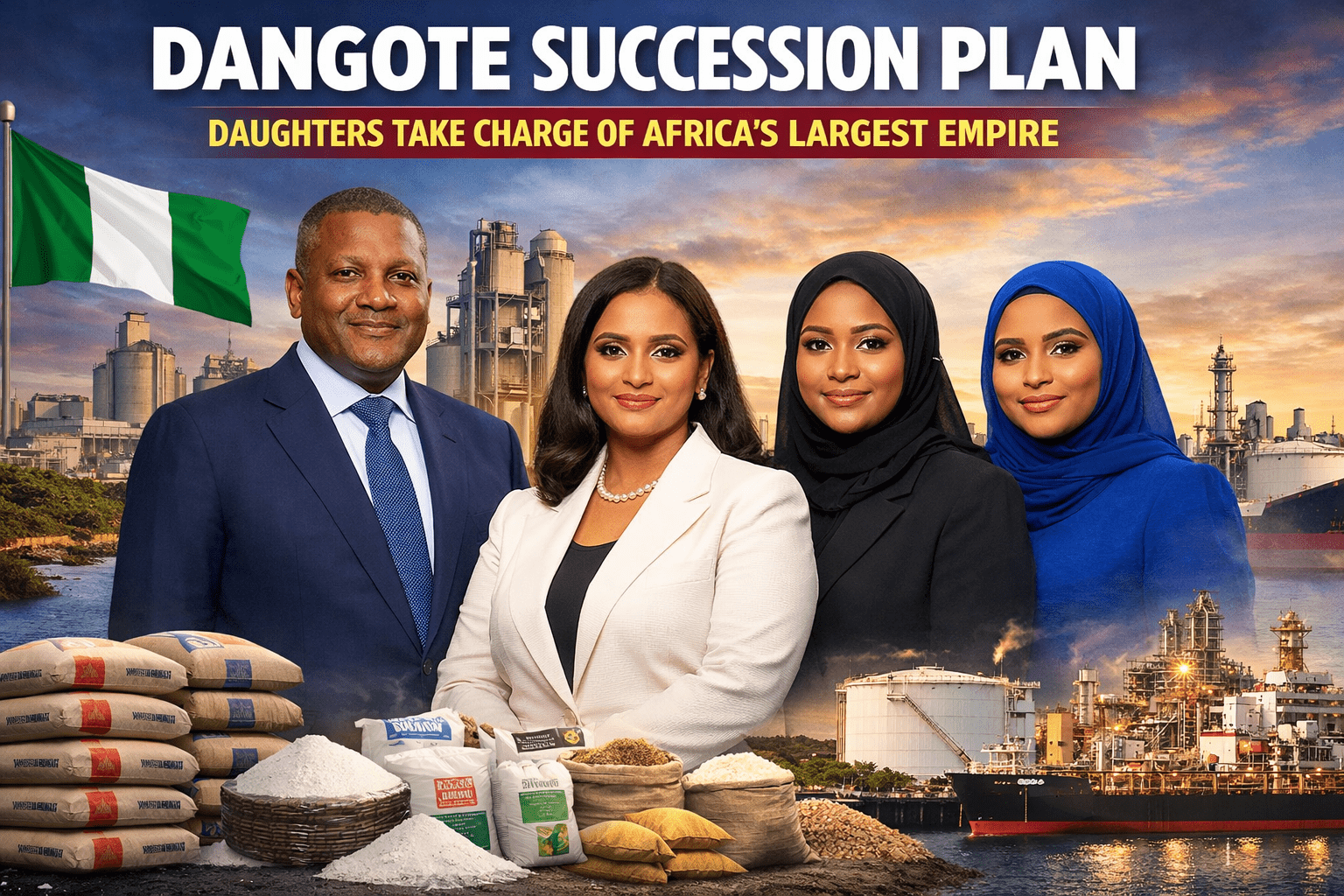
On February 16, 2026, Dangote Industries Limited announced major executive appointments in Lagos, Nigeria. The company elevated Mariya, Halima, and Fatima Dangote into key leadership roles. The move aims to secure long-term continuity and drive its Vision 2030 goal. This strategy answers a critical question: how will Africa’s largest business empire survive beyond its founder?
A Strategic Shift Toward Structured Succession
Dangote Industries made a deliberate transition from founder-led control to shared leadership. The appointments reflect a mentorship-driven succession model. Instead of waiting for a sudden change, the company is preparing early.
This approach ensures knowledge transfer, preserves corporate culture, and strengthens long-term strategy. It also reduces risks that often follow abrupt leadership changes.
Key Roles Assigned to Dangote’s Daughters
The restructuring placed each daughter at the center of critical operations:
- Mariya Dangote now oversees commercial operations across cement and food businesses. These sectors drive domestic and regional dominance.
- Halima Dangote leads the family office and international operations in Dubai and London. She manages global strategy and financial assets.
- Fatima Dangote heads commercial operations in oil and gas. Her portfolio includes the refinery, petrochemicals, fertilizers, and upstream exploration.
These roles carry real authority. They control the core engines of the conglomerate.
Why Dangote’s Business Matters Nationally
Dangote’s operations affect millions of Nigerians daily. Its products include sugar, salt, flour, cement, fertilizer, and petroleum.
As a result, the company has become more than a private enterprise. It now functions as a national economic institution. Its listed firms also create wealth through consistent dividends.
Breaking Cultural Barriers in Leadership
Traditionally, many Nigerian businesses favor male succession. However, this move challenges that norm.
By appointing his daughters, Dangote promotes gender inclusion at the highest level. This decision reflects global trends where women lead major corporations.
Consequently, the appointments may reshape perceptions of leadership and inheritance in Nigeria.
Addressing Nigeria’s Business Continuity Problem
Many indigenous companies collapse after their founders exit. Common causes include:
- Lack of succession planning
- Family disputes
- Weak governance structures
- Overdependence on one individual
Therefore, Dangote’s strategy sets a new example. It shows that sustainability requires planning, not luck.
Aligning With Global Best Practices
Globally, family businesses thrive when they combine family influence with professional management. Companies like Walmart, Samsung, BMW, Volkswagen, and LVMH follow this model.
Dangote’s approach mirrors this structure. It treats succession as a strategic advantage rather than a risk.
High Expectations for the Next Generation
Mariya, Halima, and Fatima face enormous pressure. They must move beyond inheritance and prove leadership capability.
Their performance will influence:
- The future of Dangote Group
- Public trust in family-run enterprises
- Gender leadership perceptions in Africa
Success will depend on execution, adaptability, and innovation.
A Message to Nigeria’s Business Elite
Dangote’s move sends a clear signal to other major entrepreneurs. Business leaders must prioritize succession as much as growth.
Building a company is only the first step. Sustaining it across generations is the real challenge.
Wealth, Legacy, and Long-Term Vision
Sustainable wealth requires stewardship. It demands discipline, systems, and a long-term mindset.
Dangote’s transition reflects this philosophy. It focuses on continuity, not just accumulation.
Conclusion: A Blueprint for the Future
Dangote’s succession plan marks a turning point in Nigeria’s business history. It combines strategy, cultural change, and global alignment.
The Dangote Group is no longer a one-man story. It is evolving into a multi-generational enterprise.
If successful, this model could become a blueprint for African businesses.