



 By
By By Elizabeth Ugbo
Thirty-five years after Operation Desert Storm, the Middle East again sits at the center of a dangerous conflict. The United States, led by Donald Trump, launched attacks targeting Iran in 2025. Israel, under Benjamin Netanyahu, also intensified regional strikes. The war involves the United States, Israel, and Iran, while tensions spread across the Gulf region. Leaders claim security concerns drive the conflict. However, critics argue geopolitical power and oil interests remain the real motive.
Lessons from Operation Desert Storm
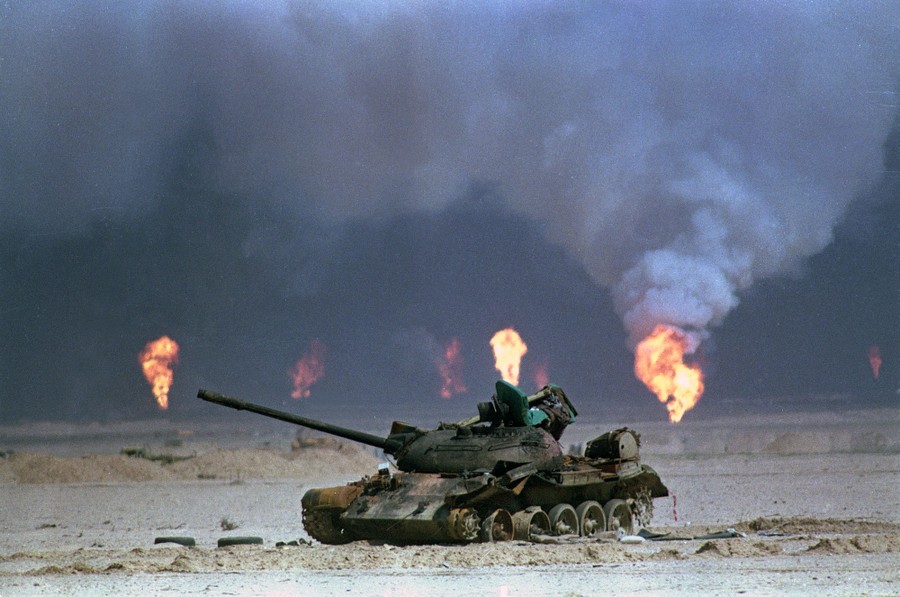
I covered the 1991 Gulf War as a reporter. The conflict began when Saddam Hussein invaded Kuwait in August 1990.
At the time, the United States led a coalition of 42 nations. The coalition launched a massive military campaign against Iraq.
The operation followed United Nations Resolution 678. The resolution authorized “all necessary means” if Iraq refused to withdraw.
The deadline expired on January 15, 1991. Soon after, coalition forces began the air and ground assault.
The conflict reshaped the Middle East. It also triggered major economic shocks worldwide.
Nigeria’s Oil Windfall
The war disrupted Gulf oil supplies. Consequently, global oil prices surged.
Before the invasion, oil sold for about $17 per barrel. By late 1990, prices climbed close to $40.
Nigeria, Africa’s leading producer then, benefited from the spike. The country earned an estimated $12–12.5 billion.
However, the government of Ibrahim Babangida failed to account for the windfall.
Meanwhile, many African countries struggled. Oil-importing economies faced rising import bills and weaker balance sheets.
Exporters such as Angola and Algeria gained temporarily. Still, global disruptions increased inflation across the continent.
A Familiar Economic Shock
Today, the world faces a similar crisis. Yet the global economy now carries deeper scars.
First, the pandemic damaged supply chains. Next, the Russia-Ukraine War pushed food and energy prices upward.
Now, tensions in the Gulf threaten another shock.
The strategic Strait of Hormuz handles about 20 percent of global oil shipments. Any disruption could spike prices instantly.
Oil producers like Nigeria, Angola, Algeria, and Libya may gain short-term revenue. However, inflation and import costs will rise sharply.
Therefore, the economic benefits could quickly vanish.
Security Risks for Africa
The conflict also threatens Africa’s security landscape.
The United States has recently shifted focus toward the Middle East. As a result, counter-terror cooperation in Africa could weaken.
This shift worries governments battling insurgency in the Sahel.
Nigeria, for example, relies on bilateral security support to combat extremist groups.
Reduced cooperation may slow progress against terrorism across West Africa.
Controversial U.S. Foreign Policy
Critics argue that Washington now fuels global instability.
In early 2025, President Trump reportedly ordered the detention of Venezuelan leader Nicolás Maduro. The move sparked international outrage.
Soon after, Trump authorized missile strikes on Iran. He claimed the attacks destroyed nuclear enrichment facilities.
Later, he suggested acquiring Greenland. European and NATO allies strongly rejected the proposal.
These actions have strained alliances and weakened international institutions.
Many observers now question Washington’s commitment to global norms.
Gaza: Unfinished Business
The war in Gaza remains unresolved.
Israel launched devastating operations after the October 2025 ceasefire collapsed. The violence displaced hundreds of thousands of Palestinians.
Refugee camps now house many families across the enclave.
Meanwhile, Israel continues expanding settlements in occupied territories.
The crisis has evolved into a prolonged, low-intensity conflict.
A Wider Regional War
The conflict expanded further after strikes on Iran and Lebanon.
Iran then targeted U.S. assets across the region.
This escalation risks dragging more countries into war.
Civilian casualties continue to rise. Sadly, leaders often dismiss these deaths as collateral damage.
The situation now threatens the entire Middle East.
What This Means for Africa
Africa may sit far from the battlefield. Yet the economic fallout will reach the continent quickly.
Energy prices could surge again. Food costs may also increase due to transport disruptions.
The Russia-Ukraine conflict already triggered food inflation across Africa. A Gulf crisis could worsen the situation.
Therefore, African governments must prepare for another global economic shock.
History offers a warning. The ripple effects of distant wars often strike Africa the hardest.