



 By
By By Elizabeth Ugbo
What Happened to Iran’s New Supreme Leader?
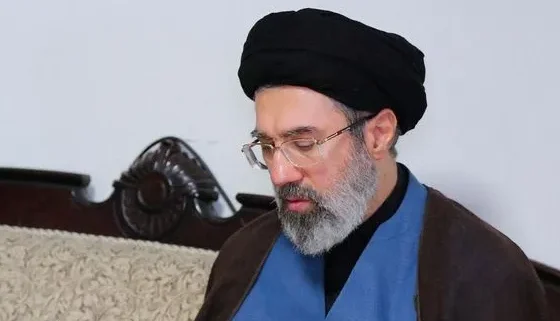
Iran’s newly appointed Supreme Leader, Mojtaba Khamenei, suffered leg injuries during an airstrike in central Tehran that killed several members of his family. Iranian officials confirmed on Wednesday that he remains alive and sheltering at a highly secure location. The strike occurred on February 28 during the escalating conflict between United States, Israel, and Iran. Authorities later appointed him supreme leader to replace his father, Ali Khamenei, who died in the same attack.
Injuries Confirmed but Leader Remains Secure
Officials said Mojtaba Khamenei sustained injuries to his legs during the bombardment. However, sources insist he remains alert and under protection.
According to three Iranian officials cited by The New York Times, Khamenei currently shelters in a highly secure location. Communication with him remains limited.
Iran’s ambassador to Cyprus, Alireza Salarian, also confirmed the injuries.
“He was present during the bombardment and was injured,” Salarian told The Guardian. However, he stressed that Khamenei survived the strike.
Iranian state television later described him as a “wounded veteran of the Ramadan war.”
Assassination Threat Forces Leader Into Hiding
Security analysts believe Khamenei will remain hidden for some time. Both Israeli and American officials reportedly consider him a high-value target.
According to defense analysts, Israel may prioritize eliminating the new leader early in the conflict.
Emile Hokayem of the International Institute for Strategic Studies said the new leader will likely remain underground.
“He will probably stay in a bunker for a long time,” Hokayem said during an online policy discussion.
He also noted that Khamenei witnessed the deaths of close family members in the attack. Therefore, security risks remain extremely high.
Power May Be Delegated to Key Iranian Figures
Despite his appointment, analysts expect Mojtaba Khamenei to delegate major responsibilities.
Hokayem predicted that national security chief Ali Larijani may manage government operations. Meanwhile, parliament speaker Mohammad Bagher Ghalibaf could oversee the war effort.
Iran’s military leadership has already pledged loyalty to the new supreme leader. The powerful Islamic Revolutionary Guard Corps also expressed support.
Additionally, Tehran-aligned groups in the region backed the leadership transition. These groups include the Hezbollah movement in Lebanon and the Houthi movement in Yemen.
International Reactions to the Leadership Change
Russia quickly signaled support for Iran’s new leadership.
Russian President Vladimir Putin promised “unwavering support” to Tehran.
However, the United States took a different position. US President Donald Trump warned before the appointment that Mojtaba Khamenei would be “unacceptable” as supreme leader.
Mixed Reactions Inside Iran
Public reaction inside Iran remains divided.
Thousands of pro-government supporters gathered in central Tehran on Monday. Demonstrators held posters showing Mojtaba Khamenei alongside his father and Iran’s founding leader Ruhollah Khomeini.
However, opposition voices also emerged. Some residents reportedly shouted “Death to Mojtaba” from rooftops in Tehran during nighttime protests.
Critics accuse him of playing a major role in suppressing anti-government protests since 2009.
Government Officials Dismiss Rumours of Death
Rumours about Mojtaba Khamenei’s condition circulated widely online. Some reports even suggested he died in the airstrike.
However, Iranian officials quickly denied those claims.
Yousef Pezeshkian, son of Iran’s president, said he contacted people with direct knowledge of the situation.
“They confirmed that, thankfully, he is safe,” he wrote on Telegram.