



 By
By By Elizabeth Ugbo
Lebanon faces a deepening humanitarian crisis after Israeli forces launched intensified attacks across the country, forcing hundreds of thousands of civilians to flee. The attacks began last week across southern Lebanon and Beirut suburbs, following rocket fire from Hezbollah after the assassination of Ayatollah Ali Khamenei on February 28. Lebanese authorities and the United Nations confirmed the growing displacement and casualties on Wednesday in New York and Beirut. The military escalation has already killed hundreds and left humanitarian agencies struggling to support displaced families.
Mass Displacement Across Lebanon
The crisis continues to worsen as more families flee their homes. Lebanese authorities reported that over 816,000 people have been displaced nationwide since the attacks intensified last week.
Out of that number, 126,000 people now live in 589 collective shelters across the country.
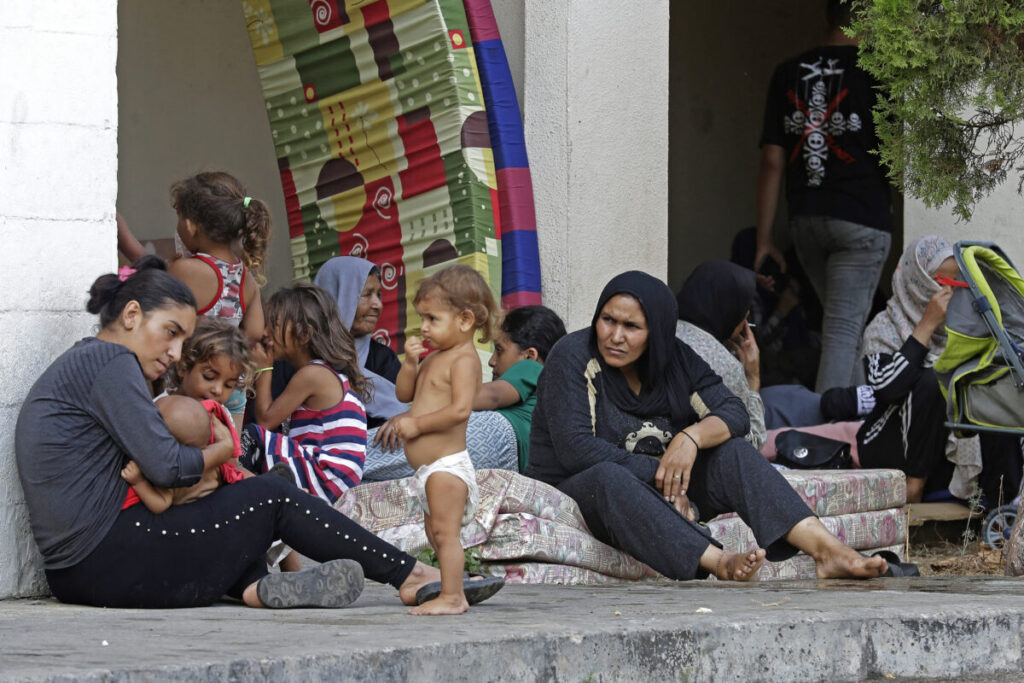
However, most displaced families cannot access official shelters. Instead, many sleep in abandoned buildings, schools, and temporary tent camps.
For example, tents now line parts of Beirut’s Corniche as families search for safety.
According to United Nations humanitarian chief Tom Fletcher, the situation continues to deteriorate rapidly.
“Mass displacement is accelerating,” Fletcher warned while addressing the United Nations Security Council.
He also explained that displaced civilians are moving into cities where shelter capacity already remains overstretched.
Overcrowded Shelters and Rising Risks
Humanitarian groups warn that many shelters now operate far beyond capacity.
Fletcher told the Security Council that hundreds of shelters remain overcrowded and lack sanitation and essential supplies.
As a result, vulnerable groups face growing dangers.
“These conditions increase the risk of harassment, sexual violence, exploitation, abuse and trafficking,” he said.
Women and girls remain particularly exposed in overcrowded facilities.
Rising Casualties From Israeli Attacks
Meanwhile, the death toll continues to climb as Israeli airstrikes and ground operations spread across Lebanon.
The Lebanese Ministry of Health reported that 634 people have died and 1,586 others have suffered injuries since the escalation began.
The casualties include women, children and emergency responders.
Tragically, the International Committee of the Red Cross confirmed that volunteer Youssef Assaf died in the southern city of Tyre while delivering humanitarian assistance.
The Red Cross condemned the killing and called for greater protection for medical workers.
Healthcare staff, hospitals and ambulances must remain protected during armed conflicts under international law.
Children Among the Most Affected
Children now face severe trauma as violence spreads.
A ten-year-old boy named Adam described the moment airstrikes forced his family to flee.
“It sounded like thunder,” he said in a video shared by UNICEF.
“It felt like the whole world was on fire,” he added.
Adam and his family now stay at a shelter in Beirut.
However, thousands of children cannot attend school because of the displacement.
Many families also cannot return home due to ongoing airstrikes.
Humanitarian Agencies Struggle to Respond
Aid organizations say the crisis continues to expand faster than available resources.
Othman Belbeisi of the International Organization for Migration warned that safe areas across Lebanon continue to shrink.
Consequently, more displaced families now live in streets and temporary camps.
“Many families fled with only the clothes they wore,” Belbeisi explained.
“They left everything behind while escaping the violence.”
As a result, fear and uncertainty continue to dominate daily life for thousands of Lebanese civilians.