




 By
By By Elizabeth Ugbo
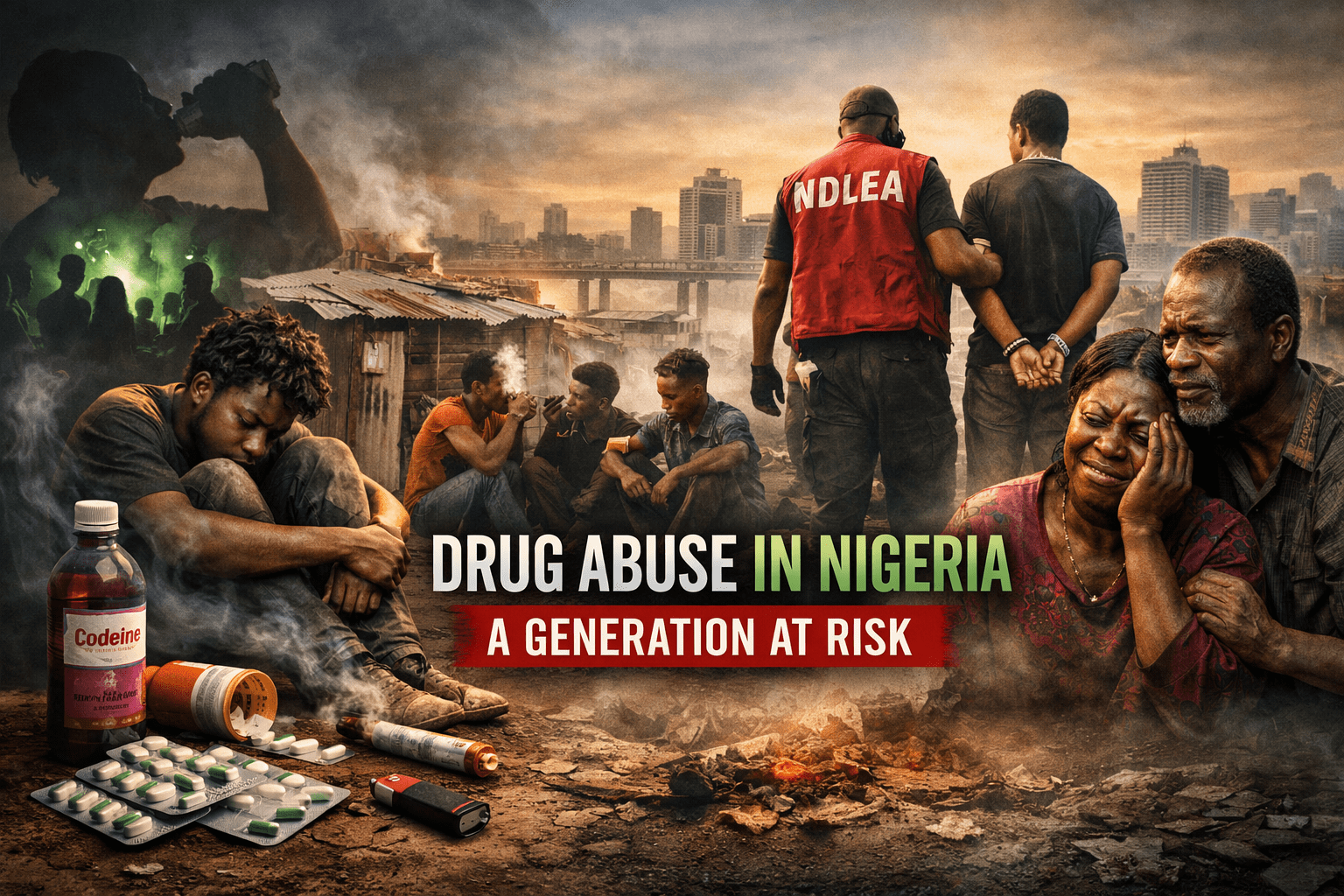
Illicit drug use in Nigeria has reached an emergency level. Millions of Nigerians, especially youths, are affected. The crisis spans cities and rural areas across the country. It involves substances like tramadol, codeine, and cannabis. Authorities such as NAFDAC and NDLEA have raised urgent alarms. Without decisive action, experts warn Nigeria risks losing a generation to addiction.
Alarming Statistics Reveal Scale of the Problem
The latest National Drug Use Survey shows the depth of the crisis. About 14.3 million Nigerians aged 15–64 used illicit drugs within one year. This figure excludes alcohol and tobacco.
Between January and February 2026, NDLEA recorded:
- 3,913 arrests
- 581 convictions
- Over 113,000 kilograms of seized drugs
Despite these efforts, supply chains remain active. Drugs continue to flow through informal markets and street vendors.
Why Drug Use Is Rising Among Nigerian Youths
Several factors drive this growing crisis. First, drugs are cheap and easy to access. For as little as ₦500, youths can buy tramadol or similar substances.
Second, peer influence plays a major role. Many young people experiment due to social pressure. In addition, stress from unemployment, academics, or family issues pushes some toward drugs.
Moreover, drugs offer quick but temporary relief. This false sense of escape often leads to long-term dependency.
Changing Patterns of Drug Abuse Across Nigeria
Drug use trends vary by location but share common roots.
Urban Areas: Lagos, Port Harcourt, Abuja
- Tramadol, codeine syrup, and cannabis dominate
- Synthetic strains like “Colorado” are rising
- Drug use thrives in clubs, lounges, and campuses
- Mixtures like alcohol with drugs are increasingly popular
Rural Communities
- Petrol fumes, glue, and paint thinners are widely abused
- Youths experiment with local mixtures and plant substances
- Limited awareness and resources worsen the situation
Although patterns differ, addiction rates remain similar nationwide.
Real Stories: How Addiction Begins
Abiodun’s Struggle
Abiodun started using tramadol during exams. Initially, he wanted to stay awake and focused. However, he quickly became dependent.
He began skipping classes and avoiding his family. Soon, his behavior changed completely. By the time he recognized the problem, addiction had taken over.
Chinedu’s Family Crisis
Chinedu began with codeine but later used multiple substances. His behavior became erratic and aggressive. Eventually, he became homeless.
His family faced emotional and financial strain. They also struggled to access affordable treatment. Sadly, relapse became a recurring pattern.
Abdulmalik’s Journey to Recovery
Abdulmalik first used codeine at age 15. He struggled with family issues and emotional pain. A friend introduced him to drugs, and addiction followed.
Over time, he used multiple substances and lost focus in life. However, a severe episode led to family intervention.
Rehabilitation helped him recover. Writing became his coping tool. Today, he shares his story to inspire others.
A Nurse’s Hidden Battle
Ekanem-Uweme’s addiction began with prescribed medication. She used pentazocine for pain after surgery. Gradually, occasional use became dependence.
Workplace stigma worsened her situation. She lost her job and faced isolation. Her story highlights addiction within healthcare settings.
Experts Warn of National Security and Health Threat
Health officials stress the seriousness of the crisis. Drug abuse now affects public health, safety, and productivity.
Experts also link drug use to rising crime rates. Addiction often leads to risky behavior and social instability.
Therefore, stakeholders urge coordinated national action.
The Way Forward: Urgent Solutions Needed
Nigeria must act quickly to address this crisis. Key steps include:
- Strengthening drug regulation and enforcement
- Expanding access to rehabilitation centers
- Increasing public awareness campaigns
- Supporting families and reducing stigma
- Creating jobs and opportunities for youths
Early intervention remains critical. Parents, schools, and communities must stay vigilant.
Conclusion: A Crisis That Demands Immediate Action
Drug abuse in Nigeria is no longer hidden. It affects millions of young people across all regions. Cheap access and social pressure continue to fuel the problem.
However, recovery is possible with the right support. Nigeria must act now to prevent further damage and protect its future generation.