



 By
By By Elizabeth Ugbo
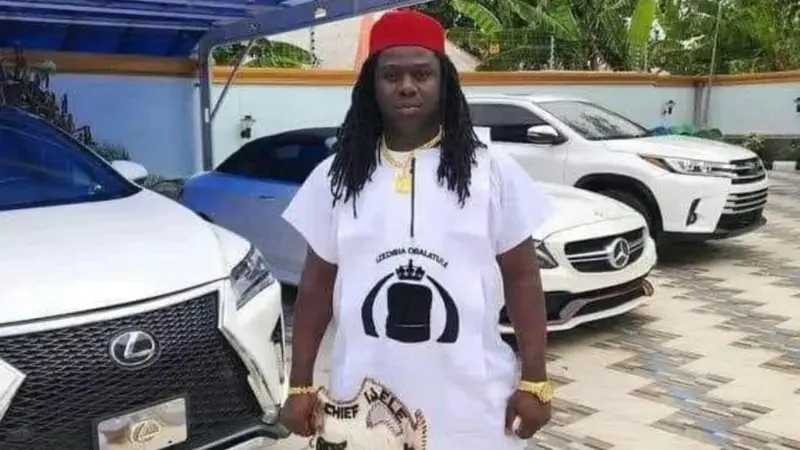
The recent conviction of traditional spiritual practitioner Chidozie Nwangwu in Anambra State, Nigeria, has reignited debate over religious equality and constitutional rights. Authorities prosecuted him under laws targeting supernatural claims, arguing that such measures protect the public from fraud. However, the case raises a deeper question: why are indigenous spiritual practices criminalised while similar promises of divine intervention remain common in churches and other mainstream religious spaces? The issue has now become a national legal and constitutional debate about whether Nigeria’s legal system treats comparable religious practices differently because of religious identity.
Colonial Legacy Still Shapes Nigeria’s Religious Hierarchy
Nigeria’s approach to indigenous spirituality reflects a long colonial legacy. Colonial administrations systematically delegitimised traditional spiritual systems. At the same time, they elevated imported religions as markers of civilisation.
Although Nigeria gained independence decades ago, that hierarchy still influences public policy. Today, domestic laws and social prejudice reinforce the same hierarchy once imposed by colonial authorities.
As a result, what appears to be regulation often masks deeper civilisational insecurity.
The Core Legal Issue: Neutrality Before the Law
The central legal issue is not whether supernatural claims can be scientifically verified. Courts are not theology examiners.
Instead, the real question concerns neutrality. Laws must apply equally to comparable conduct regardless of religious identity.
Where spiritual activity involves voluntary participation, spiritual mediation, and faith-dependent outcomes, selective criminalisation violates constitutional equality.
Therefore, the principle remains simple. The state cannot privilege imported religions while criminalising indigenous spiritual systems that operate on similar metaphysical assumptions.
Nigeria’s Constitution Guarantees Religious Equality
Sections 38 and 42 of the Nigerian Constitution guarantee freedom of religion and protection from discrimination.
These provisions apply to every belief system. They do not distinguish between dominant and minority religions.
Despite these protections, several state laws criminalise rituals promising prosperity, protection, or healing. Governments often justify these measures as consumer protection or public safety regulations.
However, churches regularly encourage financial giving while promising divine blessings.
Statements frequently heard in sermons include:
- Pay tithe and receive divine favour.
- Sow a seed and experience financial breakthrough.
- Give generously and God will multiply your blessings.
Structurally, these promises mirror claims made by traditional spiritual practitioners. Both involve spiritual mediation, financial contribution, and expected divine reward.
Consequently, selective prosecution raises serious constitutional concerns.
The Nwangwu Case Highlights Selective Enforcement
The conviction of Chidozie Nwangwu illustrates the problem clearly. Authorities framed the prosecution as necessary to protect the public from fraudulent supernatural claims.
However, similar spiritual assurances remain common in mainstream religious settings.
This contrast shifts the issue from law enforcement to selective enforcement.
When the state targets one belief system while ignoring comparable practices in others, discrimination becomes difficult to deny.
Judicial Precedents Support Religious Neutrality
Legal precedent supports the principle of religious neutrality.
In Medical and Dental Practitioners Disciplinary Tribunal v. Okonkwo (2001), Nigeria’s Supreme Court affirmed that constitutional protection extends even to beliefs that others consider irrational.
International jurisprudence reinforces this position.
The United States Supreme Court in Church of the Lukumi Babalu Aye v. City of Hialeah (1993) struck down laws that targeted a minority religion under the guise of public welfare.
Similarly, the Supreme Court of India in Bijoe Emmanuel v. State of Kerala (1986) ruled that constitutional protections extend even to unpopular religious beliefs.
In Prince v. President of the Law Society of the Cape of Good Hope (2002), South Africa’s Constitutional Court emphasised that democracy requires tolerance and accommodation of minority religious practices.
Together, these decisions highlight a consistent global principle. Democratic states must regulate conduct without discriminating against particular religions.
Psychological Vulnerability Exists in All Religious Settings
Supporters of restrictive laws often argue that spiritual seekers are psychologically vulnerable.
However, such vulnerability exists in every religious environment.
People seek healing, prosperity, protection, and relief from suffering in churches, mosques, shrines, and spiritual healing centres.
Human psychology behaves consistently across belief systems. Hope under uncertainty, trust in spiritual authority, and communal reinforcement influence religious participation everywhere.
Therefore, no credible evidence shows that followers of indigenous spiritual systems are uniquely vulnerable.
Selective criminalisation reflects sociological bias rather than genuine consumer protection.
Ritual and Divine Reward Are Universal Religious Concepts
Anthropology and religious history confirm that ritual actions linked to divine reward exist across religions.
Biblical texts explicitly connect giving with divine blessing.
Similarly, Islamic teachings promise divine increase for charitable acts.
In both traditions, believers perform an action and expect divine response.
This theological structure resembles traditional spiritual rituals. Criminalising one while protecting the other therefore reflects cultural preference rather than objective legal reasoning.
Fraud Should Be Punished, But Belief Should Not
Criminal liability must rely on clear evidence of wrongdoing.
Fraud, coercion, deception, and violence deserve punishment under existing criminal laws.
However, most spiritual claims emphasise divine will rather than guaranteed outcomes.
A traditional practitioner could use language identical to mainstream religious teaching. Rituals may be performed, yet outcomes remain subject to divine forces and faith.
Legally, this formulation resembles ordinary religious activity.
Furthermore, the state cannot assume violent rituals without proof. Crimes such as homicide already carry severe penalties under Nigerian law.
Therefore, enforcement must depend on evidence rather than prejudice.
Constitutional Democracy Requires Religious Pluralism
Constitutional democracy demands tolerance and pluralism.
Governments should regulate harmful conduct while respecting diverse belief systems.
When the state classifies some religions as legitimate and others as fraudulent, constitutional neutrality collapses.
Nigeria’s democracy cannot thrive under such selective enforcement.
Equality before the law remains the foundation of constitutional governance.
If churches may promise divine blessing in exchange for financial giving, traditional practitioners must face the same legal standards. The law must treat all religions equally.
Neutrality is not optional. It is the cornerstone of constitutional democracy.