




 By
By By Elizabeth Ugbo
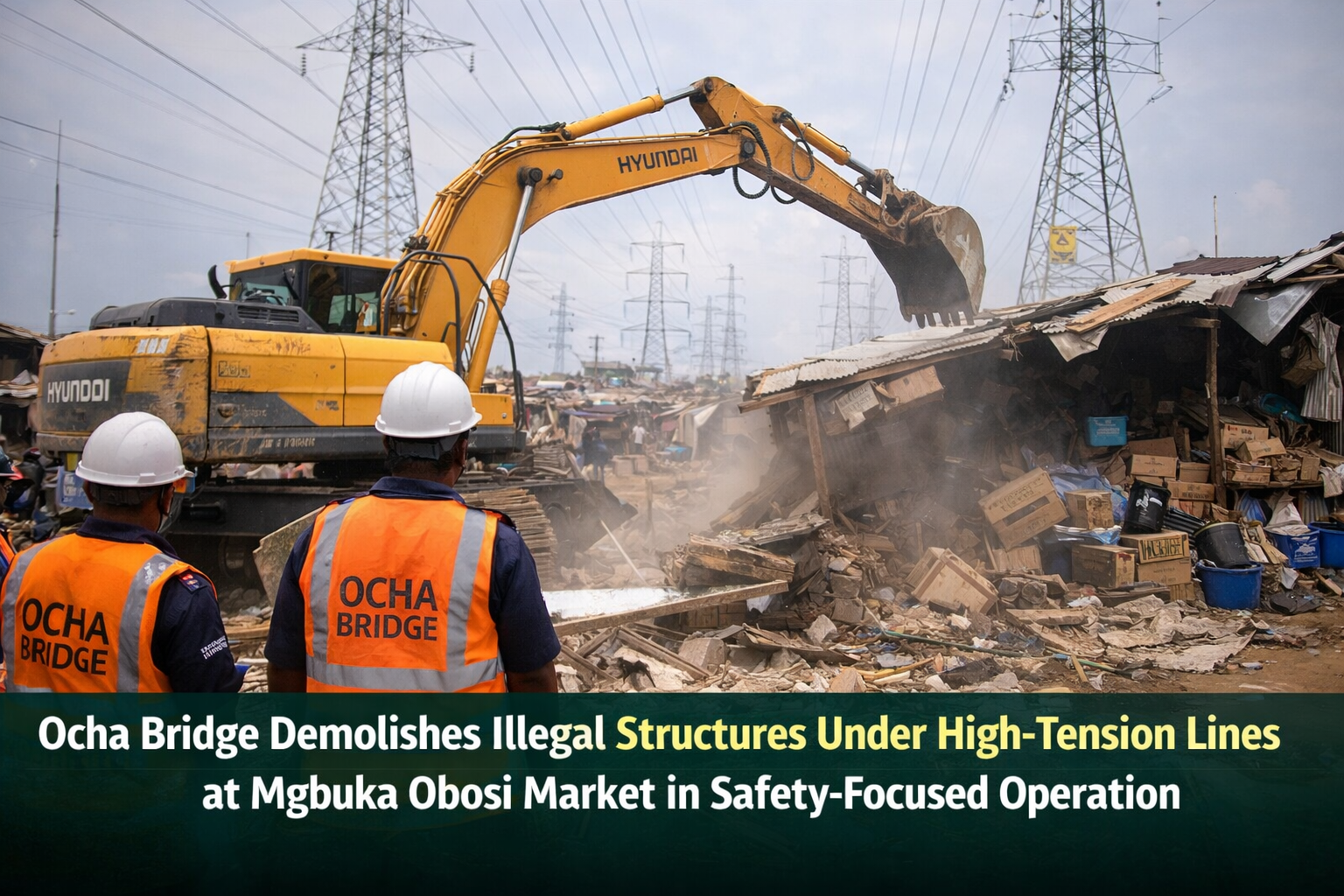
The Operation Clean and Healthy Anambra (OCHA) Brigade on Monday carried out an enforcement exercise at Mgbuka Obosi Market in Idemili North Local Government Area of Anambra State, demolishing shanties and illegal structures erected under high-tension power lines to enforce environmental and safety regulations and prevent potential disasters.
The exercise, which took place in and around the busy market, was aimed at sanitising the area and discouraging residents, traders and developers from the dangerous and unlawful practice of building or operating businesses within restricted power line corridors.
Speaking during the operation, the Managing Director of the OCHA Brigade, Celestine Anere, said the enforcement was part of the agency’s mandate to protect lives and public infrastructure. He explained that structures located under high-tension cables pose serious safety risks to occupants and the general public.
Anere warned that anyone who ignores government directives by erecting buildings or trading in prohibited areas would be treated as a lawbreaker and made to face the full weight of the law. He added that defaulters would be charged to court and compelled to pay for the cost of the workforce and equipment used in demolishing their illegal structures.
He stressed that the exercise was not targeted at any individual or group but was designed to safeguard residents from avoidable disasters and to maintain order in public spaces across the state. According to him, the Anambra State Government had repeatedly warned traders and property developers against building or operating under high-tension cables and other restricted zones.
Anere noted that the ongoing enforcement at Mgbuka Obosi Market should serve as a reminder of the state government’s commitment to enforcing environmental and safety regulations. He urged residents to comply with the law in their own interest and for the safety of the wider community.
The Commissioner for Information, Dr Law Mefor, disclosed this in a statement made available to journalists, noting that defaulters would be fined between ₦20,000 and ₦5 million, depending on the category of the offence. He added that the fines apply to both individuals and corporate organisations.