



 By
By By Elizabeth Ugbo
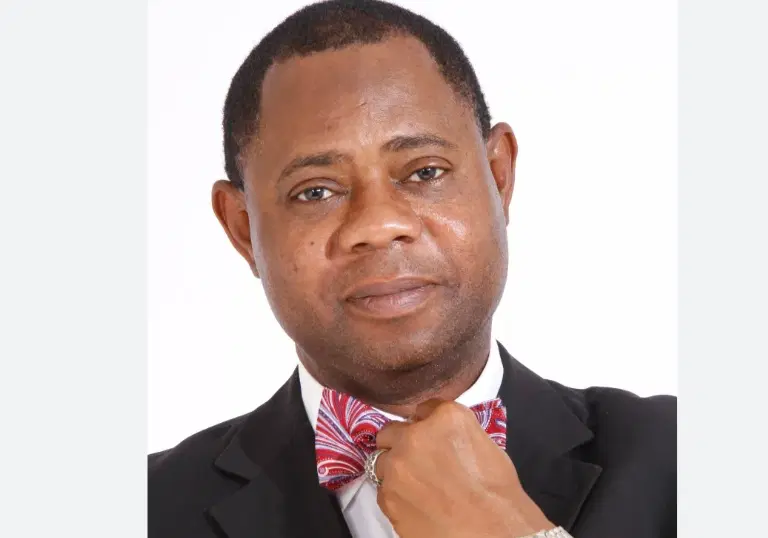
Former UN adviser Fred Eno has said that President Bola Ahmed Tinubu’s Renewed Hope agenda shares the same ideology as MKO Abiola’s Hope 93 campaign. He explained that while the leadership styles differ, the core political vision remains the same.
Eno, who worked closely with Abiola, said Renewed Hope inherited the democratic framework and focuses on strengthening Nigeria’s economy, unity, and security.
Renewed Hope vs Hope 93: A Shared Political Vision
Both movements share the same ideological foundation. Hope 93 emerged during Nigeria’s struggle for democracy, aiming to ensure civilian governance after years of military rule.
Renewed Hope continues this agenda under Tinubu, prioritizing economic reforms and national security.
“Hope 93 and Renewed Hope operate under the same ideology. Both aim to tackle Nigeria’s challenges under a democratic system,” Eno said.
Personalities differ: Abiola expressed leadership through philanthropy, while Tinubu emphasizes economic and institutional reforms.
Tinubu Aims to Transform Nigeria, Not Just Lagos
Eno argued that President Tinubu wants to be remembered as a national reformer, not just a Lagos governor.
“Tinubu would not like to be remembered only as the governor who transformed Lagos. He wants to be the president who transformed Nigeria,” Eno said.
Security Situation Has Improved
Eno addressed Nigeria’s security challenges, noting significant improvements. He recalled periods when soldiers frequently died fighting insurgents in northeastern Nigeria, and civilians abandoned farms or fled communities.
“Insecurity still exists, but compared to five or six years ago, the situation has reduced dramatically,” he said.
Economic Reforms Need Time to Benefit Citizens
Despite optimism about reforms, Eno admitted that many Nigerians still face poverty.
Government social safety programmes, including cash transfers to vulnerable households, are beginning to make an impact. Several ministries and state governments are actively compiling data on vulnerable populations to guide disbursements.
“The benefits of economic reforms take time to reach ordinary citizens,” he stressed.
Nigerians Must Stop Talking Down the Country
Eno criticised negative narratives that portray Nigeria as hopeless, despite progress. While he supports constructive criticism, he urged citizens to engage actively in improving society.
“We spend too much time talking down Nigeria. We must begin to think about how to make things work,” he said.
Leadership Failure Remains Nigeria’s Biggest Challenge
Although Nigeria has maintained democratic governance since 1999, Eno said leadership remains the country’s biggest problem.
“There is no greater failure than failure in political leadership,” he added.
The political elite must improve governance to generate opportunities for citizens.
Foreign Cooperation Needed to Tackle Insecurity
Eno supported stronger collaboration with international partners, particularly the United States, for security operations. He cited the purchase of A-29 Super Tucano aircraft as a major boost against insurgents.
He urged practical partnerships over political pride, emphasizing Nigeria’s capacity to protect its sovereignty.