




 By
By By Elizabeth Ugbo
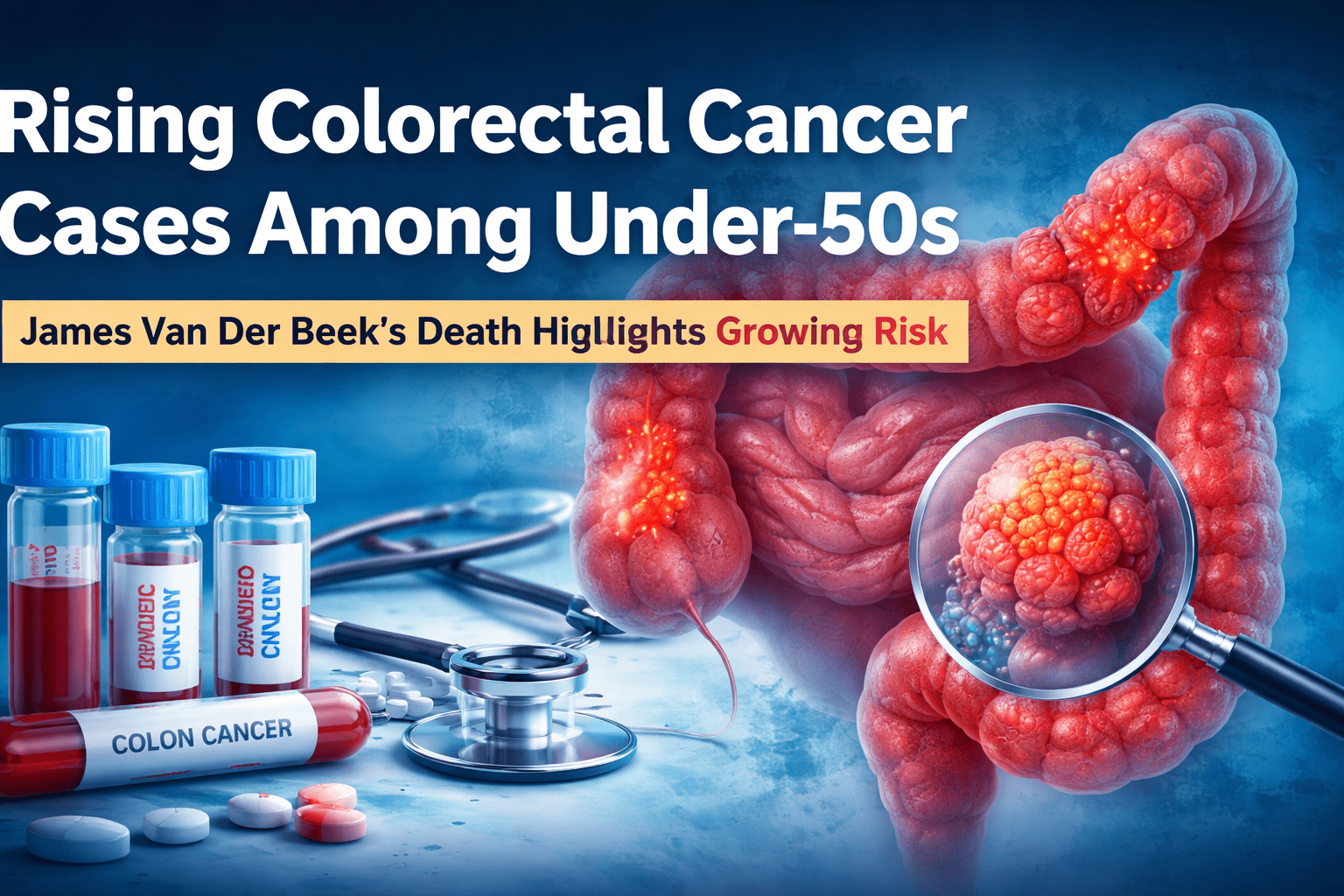
The death of US actor James Van Der Beek has again raised alarm over rising colorectal cancer cases among people under 50. The 48-year-old “Dawson’s Creek” star died last week in the United States after battling bowel cancer. His passing highlights a troubling trend reported by researchers in the US and Europe. Experts say diagnoses among younger adults have surged over the past three decades. However, scientists still do not know what is driving the increase.
Rising Colorectal Cancer Cases in Under-50s
Health experts report a sharp rise in colorectal cancer diagnoses among younger adults. Helen Coleman, a professor at Queen’s University Belfast, said rates among under-50s have increased by roughly one-third since the 1990s.
Research published in JAMA last month shows colorectal cancer now ranks as the leading cause of cancer deaths among under-50s in the United States.
However, experts urge caution. Coleman stressed that the rise began from a low base. Older adults still account for most diagnoses. In Northern Ireland, only six percent of cases occur in people under 50.
Meanwhile, screening programmes have helped reduce cases among older populations in some regions.
Why Younger Adults Often Face Late Diagnosis
Although cases are rising, many young people do not see themselves at risk. For decades, doctors viewed colorectal cancer as a disease of older adults.
As a result, younger patients often delay medical checks. Consequently, many receive diagnoses at advanced stages.
Van Der Beek shared his shock after learning he had stage three cancer in 2023. Despite maintaining strict wellness routines, he had no early warning signs.
Similarly, actor Chadwick Boseman, known for his role in Black Panther, died from colorectal cancer in 2020 at age 43.
Lifestyle Factors Do Not Tell the Full Story
Doctors link colorectal cancer to obesity, poor diet, smoking, alcohol use and inactivity. However, researchers say these factors do not fully explain the sudden surge.
Coleman noted that lifestyle risks alone cannot account for such a rapid change. Furthermore, many younger patients appear otherwise healthy.
Therefore, scientists continue to search for additional triggers.
The Microbiome and Possible Bacterial Clues
Researchers now examine the gut microbiome for answers. This complex ecosystem of microbes plays a vital role in digestion and immunity.
A study published in Nature identified a potential clue. Scientists found DNA mutations linked to colibactin, a toxin produced by certain strains of E. coli bacteria.
Younger colorectal cancer patients showed higher levels of these mutations compared to older patients. Nevertheless, researchers need more evidence to confirm any direct link.
Experts also explore whether repeated antibiotic use may increase early-onset colorectal cancer risk.
Jenny Seligmann of the University of Leeds said doctors now see multiple subtypes of colorectal cancer. This diversity suggests several contributing causes rather than one single trigger.
Symptoms of Colorectal Cancer
Early detection remains critical. The most common symptom involves changes in bowel habits, including persistent diarrhoea or constipation.
Other warning signs include blood in stool, unexplained weight loss and ongoing fatigue.
Therefore, health professionals urge anyone experiencing symptoms to seek medical advice promptly.
Screening Guidelines and Global Response
In response to rising cases, the United States lowered the recommended screening age from 50 to 45 in 2021.
However, the UK and France still begin routine screening at 50. Some experts now call for earlier screening in more countries.
Ultimately, researchers stress the need for awareness, early testing and continued scientific investigation. While cases among young adults remain relatively rare, the upward trend demands urgent attention.
source: vanguard