



 By
By By Elizabeth Ugbo
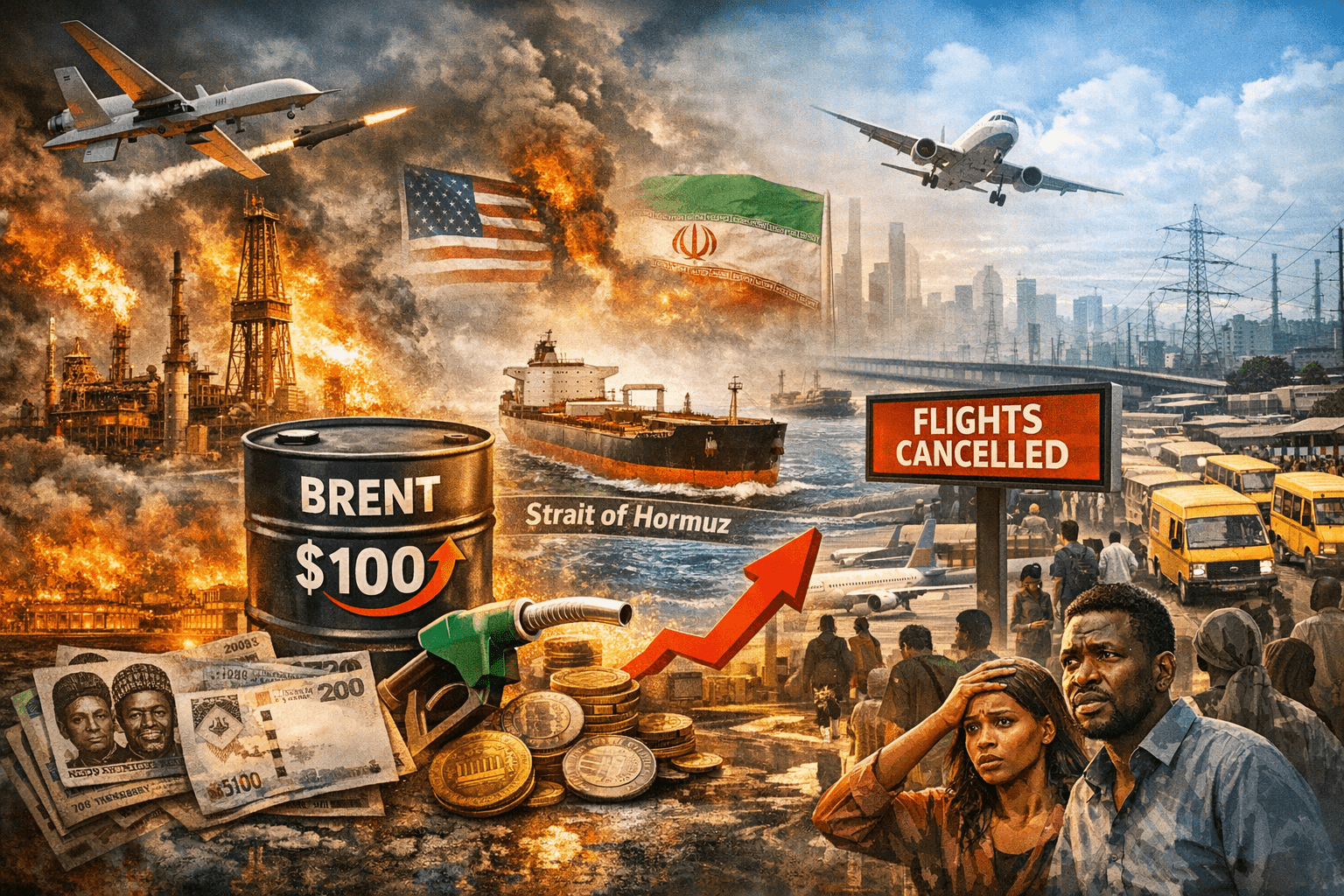
Nigeria faces growing economic pressure as the United States–Iran conflict begins to disrupt global energy markets and trade routes. The crisis escalated on February 28, 2026, after U.S.–Israeli strikes on Iran reportedly killed Iran’s Supreme Leader, Ali Khamenei. The conflict quickly spread across the Middle East, affecting aviation, shipping, and oil supply chains. Nigerians now feel the impact through rising fuel prices, weakened purchasing power, and disrupted international travel. The key question is how this distant war will shape Nigeria’s economy in the coming months.
Nigeria’s Cost-of-Living Crisis Deepens
Nigeria already struggles with a severe cost-of-living crisis. Although headline inflation has slowed slightly in recent months, purchasing power continues to decline.
Energy costs remain the biggest driver of rising expenses.
Across Nigeria:
- Many businesses rely on petrol or diesel generators.
- About 65% of the informal sector powers operations independently.
- Transport operators pay more for fuel.
Consequently, businesses transfer higher costs to consumers. Prices of goods and services therefore continue to rise.
Agriculture, transportation, and manufacturing all depend heavily on fuel. As fuel prices increase, food prices and logistics costs rise as well.
Aviation Sector Faces Major Disruptions
The aviation industry has entered panic mode due to the Middle East conflict.
Major air hubs such as:
- Dubai
- Abu Dhabi
- Doha
have restricted or suspended flight operations.
Airlines now reroute flights around conflict zones. This change creates:
- Longer travel times
- Higher fuel consumption
- Complicated crew schedules
- Increased ticket prices
As a result, Nigerian travelers face delays and cancellations. Business trips, student travel, and tourism have all suffered.
Furthermore, the Nigerian Christian Pilgrims Commission has suspended pilgrimages to:
- Jerusalem
- Israel
- Jordan
Meanwhile, many Nigerians who booked Umrah during Ramadan remain stranded or uncertain about their travel plans.
Middle East Tourism Shock Affects Global Travel
Tourism plays a major role in Gulf economies.
For example:
- Dubai recorded 19.59 million overnight tourists in 2025.
- Qatar welcomed 5.1 million visitors in the same year.
These numbers matter for Nigeria because Gulf cities serve as global travel hubs.
However, the war has caused:
- Conference cancellations
- Reduced tourism
- Airline capacity cuts
Therefore, global travel demand is shifting. Fewer flights mean fewer business meetings, partnerships, and investments.
Security Concerns Rise in Nigeria
Nigerian authorities have also increased security measures.
The government fears protests by the Islamic Movement in Nigeria, a group led by Ibrahim El‑Zakzaky.
The group has historically organised demonstrations supporting Iran. After news of the death of Ali Khamenei spread, rallies appeared in:
- Abuja
- Kaduna
Security agencies now patrol major areas in Abuja to prevent unrest.
Oil Prices Surge After Strait of Hormuz Threat
The biggest economic impact comes from the oil market.
Brent crude jumped to about $80 per barrel shortly after hostilities began. Analysts now predict prices could reach $100 per barrel if the conflict continues.
The main concern involves the strategic Strait of Hormuz.
This narrow waterway connects the Persian Gulf to global markets. It handles roughly:
- 20 million barrels of oil daily
- 20–25% of global seaborne oil trade
- About one-fifth of global fuel consumption
Any disruption to this corridor could send energy prices even higher.
Shipping Costs and Supply Chains Under Pressure
Global shipping companies have already reacted to the crisis.
Major firms such as:
- CMA CGM
- Hapag-Lloyd
have introduced new risk surcharges for cargo passing through the Gulf.
These costs will likely raise prices for imported goods in Nigeria, including:
- Fertilizers
- Food grains
- Industrial materials
Higher shipping costs often lead to higher consumer prices.
Refinery Attacks Disrupt Global Oil Supply
The crisis has already affected oil infrastructure.
Saudi Arabia’s national oil company, Saudi Aramco, temporarily shut the Ras Tanura refinery after a drone-related fire.
Even limited damage can disrupt supply. Traders, insurers, and shippers often slow operations during geopolitical crises.
Therefore, uncertainty alone can tighten global oil supply.
Dangote Refinery Offers Partial Relief
Nigeria may benefit from improved local refining capacity.
The Dangote Petroleum Refinery has started reshaping the country’s fuel market.
The refinery reduces Nigeria’s reliance on imported refined products. This development could lower freight costs and reduce foreign exchange pressure.
However, domestic refining cannot fully shield Nigeria from global oil prices.
Crude oil still trades in international markets. If global prices surge, local fuel prices will also rise.
Rising Fuel Prices Already Hitting Nigerians
Fuel prices have already increased across Nigeria.
Many filling stations report over 15% price increases since the war began. Analysts warn petrol prices could exceed ₦1,200 per litre if the conflict persists.
Higher fuel costs quickly affect:
- Transportation fares
- Food prices
- Manufacturing costs
Ultimately, households feel the pressure through reduced purchasing power.
Financial Markets and the Naira
The conflict may also influence Nigeria’s financial markets.
Higher oil prices could boost government revenue. However, global investors often shift funds toward safer assets during geopolitical crises.
Therefore:
- Emerging market currencies weaken
- Capital flows decline
- Exchange rate volatility increases
The naira could face renewed pressure if investors withdraw funds.
What the War Means for Nigeria
The overall impact depends on how long the conflict lasts.
A short crisis with moderately higher oil prices may strengthen Nigeria’s fiscal position.
However, a prolonged war could produce serious consequences:
- Higher inflation
- Rising fuel prices
- Reduced purchasing power
- Increased financial instability
Although the conflict lies thousands of kilometres away, its economic ripple effects continue to reach Nigerian households.
Conclusion
The US–Iran conflict has quickly evolved into a global economic shock. Rising oil prices, disrupted aviation routes, and strained supply chains already affect Nigeria.
While higher crude prices may boost government revenue, ordinary Nigerians face rising costs and declining purchasing power.
Ultimately, the longer the conflict continues, the deeper the economic strain will become.