




 By
By By Elizabeth Ugbo
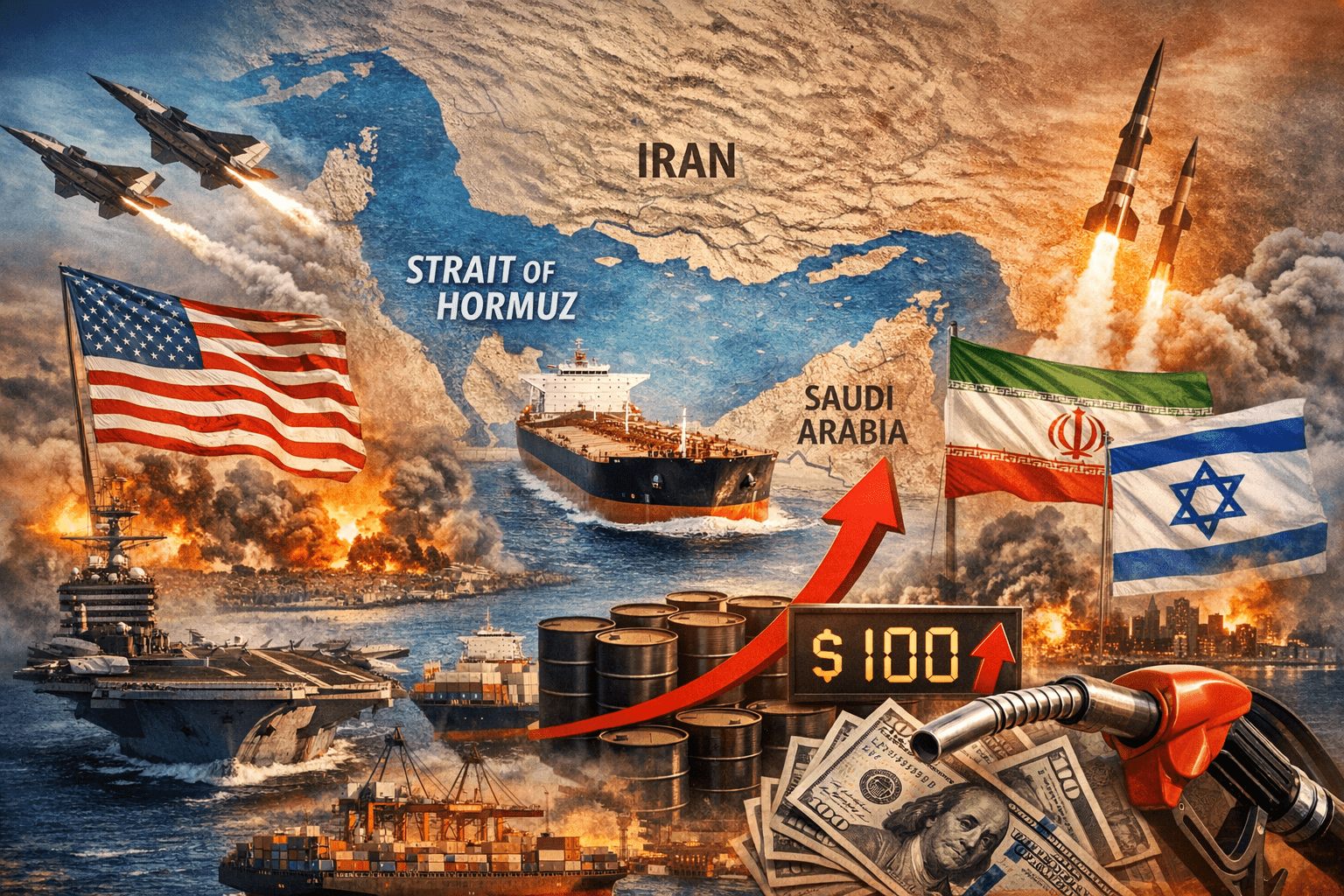
A new report by the New Zealand Ministry of Foreign Affairs and Trade warns that the ongoing conflict involving the United States, Israel, and Iran could raise global oil prices and fuel costs. The report, released Tuesday in New Zealand, explains that disruptions to oil shipments through the Strait of Hormuz may affect global energy markets and trade. Officials highlighted the risk because the waterway handles about 20 percent of the world’s oil supply.
Strait of Hormuz Disruption Raises Global Energy Concerns
The report identifies the Strait of Hormuz as a critical global energy corridor. About one-fifth of the world’s oil supply moves through the narrow shipping route.
Therefore, any disruption could trigger serious economic consequences worldwide.
Officials stressed that the biggest concern is a prolonged interruption to oil shipments.
“Of most concern for the New Zealand economy is the potential disruption to oil transiting the Strait of Hormuz,” the report stated.
New Zealand Still Exposed to Middle East Oil Supply
New Zealand no longer imports crude oil directly from the Persian Gulf. However, the country still relies on refined petroleum products from Asian refineries.
These refineries operate in countries such as:
- South Korea
- Singapore
- Malaysia
- Japan
These economies depend heavily on Middle Eastern crude oil.
As a result, supply disruptions in the Persian Gulf could push refineries to compete for alternative sources. Consequently, global oil prices may increase.
Rising Oil Prices Could Affect Households and Businesses
Higher oil prices would likely affect households and businesses across New Zealand.
The report notes that rising fuel costs could reduce household spending during an ongoing cost-of-living crisis.
In addition, energy prices influence several sectors. Businesses could face higher transportation and production costs.
Furthermore, industries that rely on energy-intensive inputs, such as fertiliser production, may experience price increases.
Oil Markets Already Reacting to the Conflict
Global oil markets have already responded to rising geopolitical tensions.
According to the report, Brent crude prices increased by more than $12 per barrel earlier this year. Since the conflict began, prices have climbed another $10, reaching more than $83 per barrel.
Analysts warn that prices may climb further if tensions escalate.
Some forecasts suggest oil could exceed $100 per barrel if Iran completely blocks the Strait of Hormuz.
Financial Markets Could Also Face Volatility
The report also warns about possible instability in global financial markets.
A prolonged conflict could lead to:
- Higher borrowing costs
- Increased investment risk premiums
- A weaker New Zealand dollar
However, markets have remained relatively calm so far. Oil prices remain lower than levels seen after the Russian invasion of Ukraine.
New Zealand Trade Exposure to the Middle East
New Zealand maintains limited but focused trade ties with the Middle East.
In 2025, exports to the region reached $3.4 billion, representing about 3 percent of total exports.
Dairy products dominate this trade, accounting for nearly 70 percent of exports.
Therefore, regional instability could disrupt an important agricultural market.
Conflict Threatens Global Supply Chains and Transport Routes
The conflict began on February 28, 2026, when the United States and Israel launched large-scale strikes inside Iran.
Iran responded with ballistic missile and drone attacks targeting Israel and several Gulf states hosting US military bases.
These countries include:
- Saudi Arabia
- Qatar
- Bahrain
- Kuwait
- United Arab Emirates
Iran also announced the closure of the Strait of Hormuz. Nevertheless, shipping traffic has slowed rather than stopped completely.
Air Travel Disruptions Affect Global Trade
Air transport across the Middle East has also suffered major disruption.
Airports in:
- Dubai
- Abu Dhabi
- Doha
now operate limited flights. Many regional air routes remain suspended.
This situation matters because Dubai serves as a major global logistics hub.
For instance, Dubai International Airport handles many high-value exports traveling between New Zealand and Europe.
Shipping Routes Already Changing
Shipping companies have begun rerouting vessels to avoid conflict zones.
Some ships now travel around the Cape of Good Hope instead of passing through the Middle East.
Although this route improves safety, it also increases transit time and operational costs.
Economic Impact Depends on Conflict Escalation
The report concludes that the overall economic impact will depend on how the conflict develops.
If the fighting remains limited, the effects may stay confined to short-term supply chain disruptions.
However, a wider regional war could cause more severe consequences for global trade, energy markets, and economic stability.