



 By
By By Elizabeth Ugbo
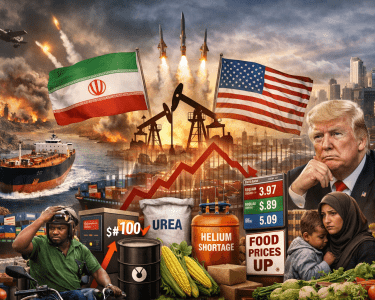
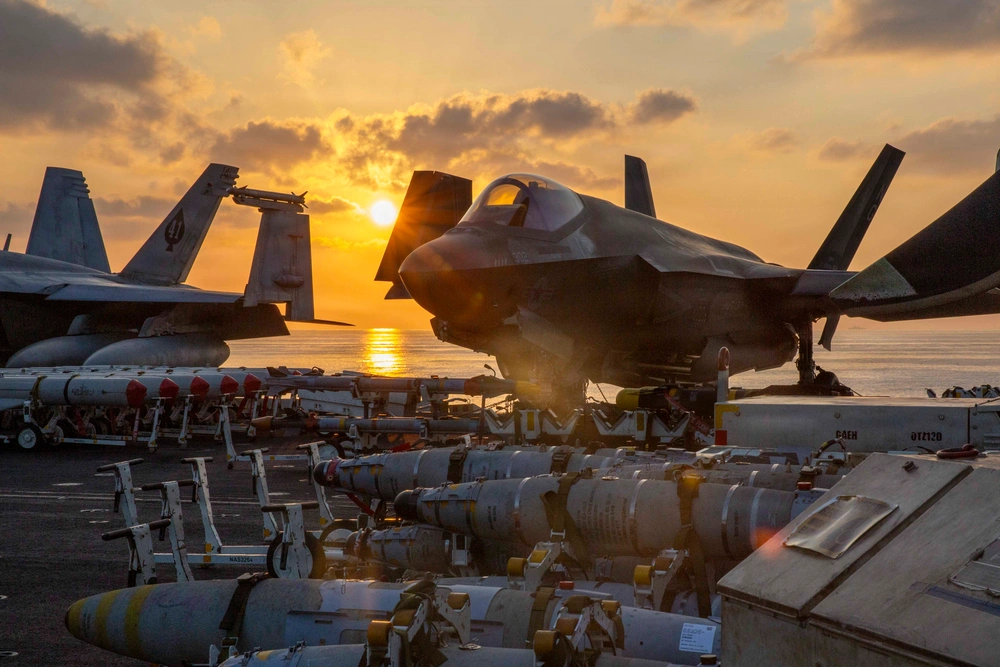
On February 28, 2026, the United States and Israel launched a large-scale military offensive against Iran, targeting its missile sites. The operation, named “Operation Epic Fury”, aimed to prevent Iran from developing nuclear weapons. US President Donald Trump and Israeli Prime Minister Benjamin Netanyahu led the attacks without United Nations Security Council approval, sparking global condemnation and economic uncertainty. The strikes caused widespread casualties, destroyed military assets, and disrupted financial markets worldwide.
Trump’s Aggression and Global Legal Concerns
Trump’s decision to attack Iran violated international law and the UN Charter’s prohibition on aggression. Experts warn that such “turn-by-turn” military actions could set a dangerous precedent for global order. Many world leaders and scholars emphasize diplomacy and respect for international law instead of dressing military aggression in moral or religious terms.
Iran’s Resilient Response
Iran has adopted a “fight to the finish” stance, signaling no intent to surrender. The country’s missile capabilities remain partially operational despite US-Israel strikes. The death toll in Iran has already surpassed 1,000, with infrastructure damage still being assessed. Analysts suggest that Trump and Netanyahu underestimated Iran’s resolve, aiming to intimidate the country into submission, a strategy that is now backfiring.
Economic Impacts on Global Markets
The war has triggered significant financial shocks:
- Global oil prices rose 17%, reaching $85 per barrel, potentially climbing to $150 if energy production remains disrupted.
- Stock markets fell sharply: Dow Jones dropped 0.95% to 47,501.55 points, while S&P 500 fell 1.33% to 6,740.00 points.
- US military costs reached $3.7 billion in the first 100 hours, with $1.902 billion in assets destroyed.
- Israel’s economy could lose $3 billion weekly due to military expenditures.
These disruptions affect trade, investment, and inflation, with ripple effects felt across Europe, the Middle East, and emerging markets.
Opportunities and Lessons for Nigeria
Nigeria can learn from past crises, such as the 1979 Iranian Revolution and Operation Desert Storm (1990-1991). Rising oil prices can benefit Nigeria if earnings are channeled effectively:
- Current petrol prices have surged to N1,000–1,190 per litre from N839.
- Higher oil revenues can reduce fiscal deficits and improve federation account distributions.
- Investment in critical infrastructure can cushion the poor majority from global shocks.
President Bola Tinubu’s recent executive actions, including reforms in the Nigerian National Petroleum Company (NNPC) and appointment of Taiwo Oyedele as Minister of State for Finance, enhance fiscal management and accountability.
Strategic Recommendations
Nigeria and other oil-exporting nations should:
- Hedge against oil price volatility through sovereign funds.
- Increase domestic energy infrastructure to reduce inflationary pressure.
- Prepare contingency plans for election-year economic stability.
- Monitor geopolitical developments to anticipate supply disruptions.
By adopting proactive policies, Nigeria can turn geopolitical crises into economic advantages while safeguarding national interests.
Conclusion
Operation Epic Fury has shown that unilateral military actions carry high risks. Trump and Netanyahu’s strategy has triggered human losses, financial shocks, and global instability. For Nigeria, higher oil prices present opportunities to strengthen the economy and finance infrastructure. International law and diplomacy must guide global interactions to prevent repeated cycles of aggression.