




 By
By By Elizabeth Ugbo
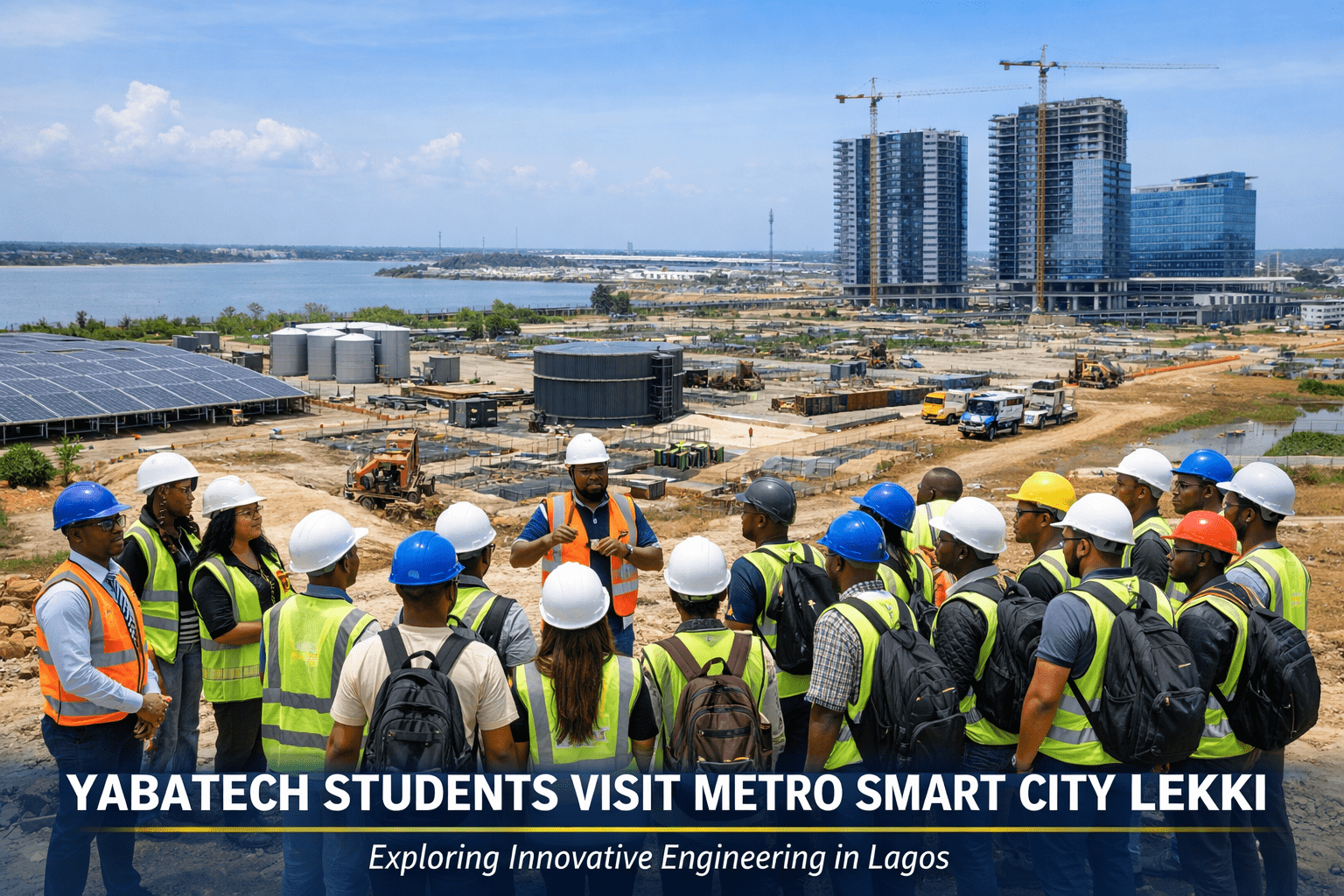
Students of Civil Engineering from Yaba College of Technology (YABATECH) visited the 97-hectare Metro Smart City project in Lekki, Lagos, last week. The trip, organised by Dr. Omolola Adetona, exposed students to real-world engineering. It aimed to bridge theory and practice, inspire innovation, and address skill gaps among young engineers.
Bridging the Gap Between Theory and Practice
Dr. Omolola Adetona, a geotechnical engineering lecturer and CEO of the Engineering Resource Academy, led the initiative. She expressed concern about declining practical competence among young engineers.
According to her, students need real exposure to understand engineering concepts fully. She stressed that classroom learning alone is not enough.
“Students must see how theory applies in real environments,” she said. “Engineering goes beyond lectures and whiteboards.”
Inside the Metro Smart City Project
The Metro Smart City project stands as one of the most ambitious developments in Lagos. The lagoon-front site integrates modern infrastructure and sustainable systems.
Key features include:
- Fibre optic connectivity
- Solar-powered energy systems
- Central water supply
- Rainwater harvesting facilities
- High-rise commercial structures
- Multiple access routes
As a result, the project showcases the future of smart urban development in Nigeria.
Inspiring Future Engineers
Metrospeed Group’s Head of Sales and Marketing, Emike Ntiokiet, addressed the students during the visit. She urged them to think beyond traditional construction methods.
She explained that future developments will focus more on infrastructure than aesthetics. Therefore, innovation will define success in the housing sector.
“In the near future, infrastructure will matter more than just buildings,” she said.
Additionally, she reaffirmed the company’s commitment to capacity building. She promised continued support for students and young professionals.
The Importance of Field Experience
Engineer Abdulhameed Salahudeen also highlighted the value of practical learning. He recommended frequent site visits for engineering students.
According to him, hands-on experience improves understanding and retention. He noted that students grasp concepts better when they see them in action.
“Practical exposure makes knowledge stick,” he said.
Students React to the Experience
The visit left a strong impression on the students. Afolami Omotosho described the experience as eye-opening and motivating.
For many participants, it marked their first real encounter with large-scale engineering projects. Consequently, they gained a clearer view of their future careers.
Why This Matters for Nigeria’s Engineering Future
Nigeria faces a growing housing deficit and rapid urban expansion. Therefore, innovative solutions like smart cities are essential.
This initiative highlights the need to align education with industry demands. It also shows how collaboration can shape a more competent workforce.