



 By
By By Elizabeth Ugbo
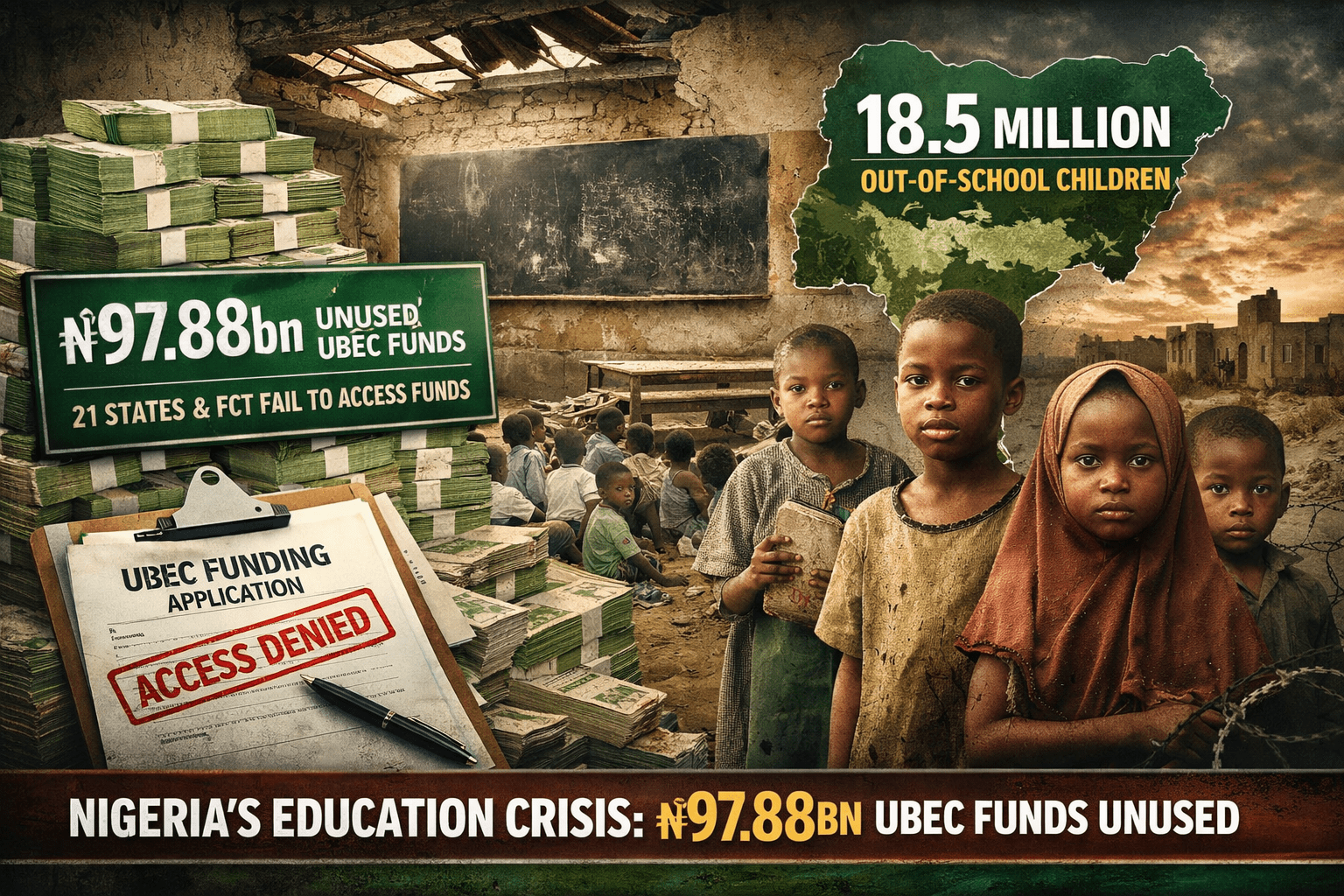
At least 21 states and the Federal Capital Territory have failed to access ₦97.88 billion in basic education funds as of March 2026. The funds, provided by the Federal Government through UBEC, remain unused due to unmet counterpart funding requirements. This situation affects public primary and junior secondary education nationwide. Development experts warn that poor governance and weak policy execution drive this failure. The trend continues despite Nigeria’s worsening out-of-school crisis.
Growing Concern Over Unused Education Funds
The unaccessed funds have now reached nearly ₦98 billion. Notably, 2025 recorded the highest default in the scheme’s history, with ₦68.1 billion left untouched.
Experts describe this pattern as a systemic failure of sub-national governance. They argue that many states fail to prioritise education spending despite available resources.
States With Highest Unaccessed Allocations
Data shows that some financially capable states top the list of defaulters.
- Imo State: ₦10.6 billion
- Ogun State: ₦9.7 billion
- Rivers State: ₦7.8 billion
- Niger, Abia, Oyo: Over ₦7.1 billion each
Additionally, the Federal Capital Territory holds ₦5.07 billion in idle funds. Ekiti, Bayelsa, and Adamawa each have over ₦3.5 billion unaccessed.
This trend raises concerns about priorities rather than capacity.
States Meeting UBEC Requirements
In contrast, 15 states have consistently accessed their UBEC allocations. These include:
- Northern states: Bauchi, Borno, Jigawa, Kaduna, Katsina, Plateau, Sokoto, Taraba, Yobe
- Other regions: Benue, Delta, Enugu, Kogi, Ondo, Osun
These states demonstrate that the counterpart funding model works when governments commit.
Why Funds Remain Unused
The Universal Basic Education Act of 2004 requires states to provide 50 percent counterpart funding. This condition ensures accountability and local ownership.
However, many states fail to meet this requirement. As a result, funds meant for classrooms, teachers, and materials remain idle.
A policy expert, Fatima Hassan Ibrahim, stressed the urgency of the issue. She said the real tragedy lies in funds being available but unused.
Impact on Nigeria’s Education Crisis
Nigeria faces a severe education emergency. According to UNICEF, about 18.5 million children are out of school. This figure is the highest globally.
The crisis affects northern regions most. However, it is spreading to southern states due to economic hardship and insecurity.
UNICEF identifies key drivers, including:
- Poverty
- Insecurity
- Cultural barriers
- Weak education financing
- Poor governance
The agency warns of a potential generational catastrophe without urgent investment.
Urgent Need for Policy Action
Stakeholders insist that Nigeria cannot afford further delays. They call for stronger political will and better financial management at the state level.
States must prioritise education funding and meet UBEC conditions. Otherwise, critical investments will remain stalled.
Conclusion
Nigeria’s education crisis requires immediate and decisive action. While funds exist, ineffective governance continues to block progress.
Unless states act quickly, millions of children will remain out of school. The long-term impact could harm economic growth and national stability.