




 By
By By Elizabeth Ugbo
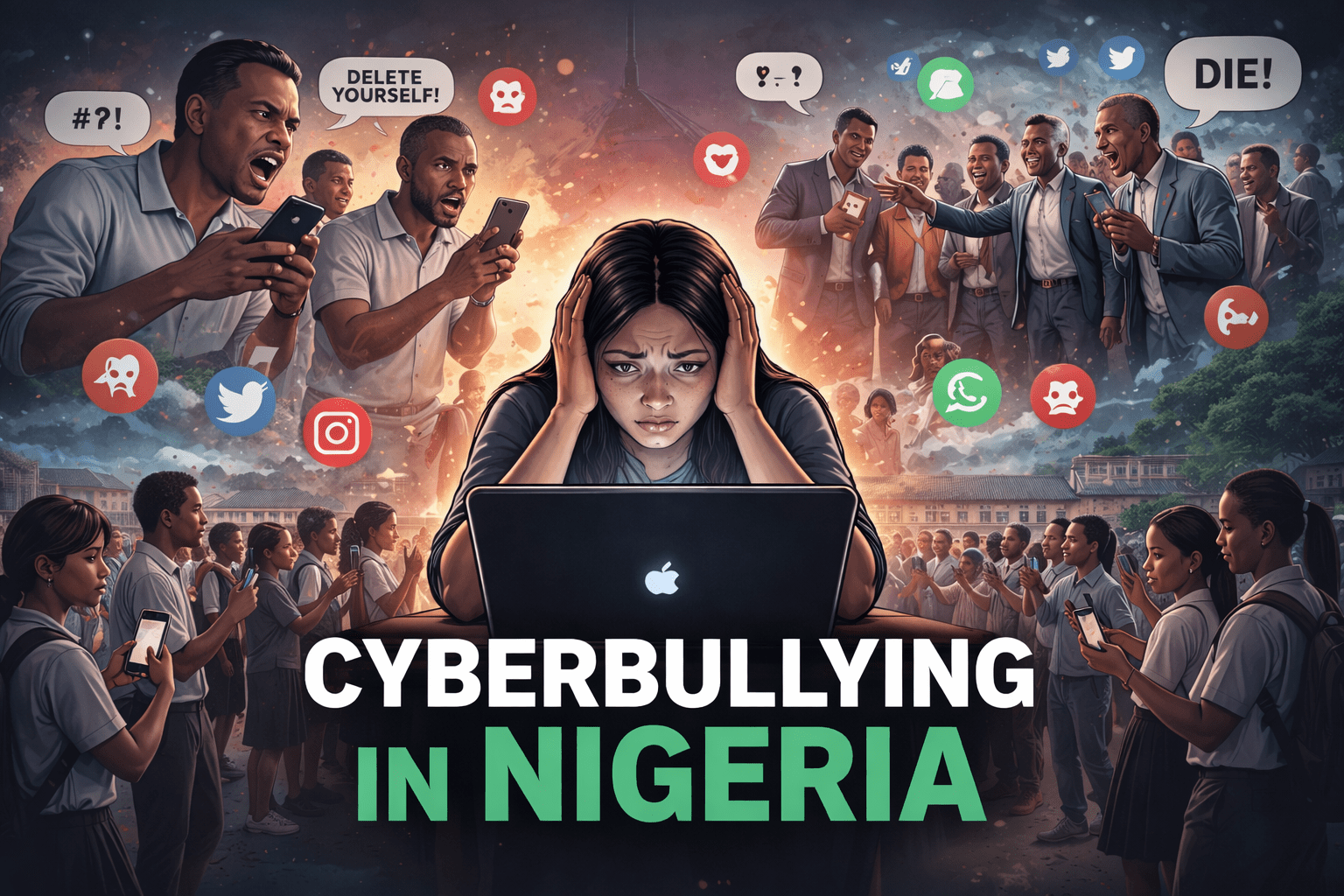
On March 5, 2026, in a Nigerian secondary school, two 14-year-old girls attacked a fellow student after a dispute. The incident happened on school grounds and later escalated when another student carried out a retaliatory assault. The conflict reportedly started over offensive remarks about a deceased parent. A video of the retaliation went viral, sparking nationwide outrage. However, while Nigerians condemned the students’ actions, many ignored the deeper issue—bullying thrives across all levels of society, especially online.
Bullying in Nigeria: More Than a School Problem
Bullying in Nigeria does not begin and end in schools. Instead, it reflects a wider cultural issue. Adults engage in harassment daily, especially on social media. Yet, they face little or no consequences.
For example, a student may face expulsion for violence. Meanwhile, an adult who sends death threats online often walks free. This imbalance sends a dangerous message. It tells young people that bullying becomes acceptable with age.
As a result, the cycle continues.
Online Harassment and the Absence of Consequences
Nigeria’s digital space has become a breeding ground for toxic behaviour. Many users attack others for expressing simple opinions. Sadly, enforcement of laws remains weak.
The Cybercrimes Act of 2015 exists. However, authorities rarely enforce it in bullying cases. According to a 2024 report by the National Information Technology Development Agency, over 40% of Nigerians have faced online harassment.
This statistic should alarm everyone. Clearly, Nigeria faces a bullying epidemic, not isolated incidents.
Social Media Platforms Are Not Doing Enough
Social media companies also share responsibility. Platforms like X and Instagram struggle with moderation in Nigeria.
Reports of threats often receive slow responses. In many cases, harmful content remains online for days. These platforms profit from Nigerian users. However, they invest little in protecting them.
Consequently, toxic behaviour continues unchecked.
Fan Wars in the Entertainment Industry
The entertainment industry shows another side of this problem. Fans of Wizkid and Davido often clash online.
These fan bases attack anyone who criticises their favourite artist. A simple music review can trigger insults and threats. In some cases, professionals stop working to protect their mental health.
This behaviour is not harmless. It normalises bullying and silences honest opinions.
Political Toxicity and Coordinated Harassment
Nigeria’s political space has become even more toxic since the 2023 elections. Supporters of Peter Obi, known as Obidients, often face criticism for aggressive online behaviour.
However, they are not alone. Many political groups use similar tactics. They organise coordinated attacks to silence dissenting voices.
Instead of debate, they use intimidation. Instead of facts, they use insults. This pattern damages democratic values.
The Danger of Selective Outrage
Nigerians often react strongly to school bullying incidents. However, this outrage rarely lasts. Within days, many return to online harassment.
This selective outrage creates hypocrisy. People condemn children but excuse adults. As a result, society fails to address the root problem.
Children observe this behaviour. Then, they replicate it in schools.
Why Culture Matters More Than Laws
Laws alone cannot fix this issue. Nigeria needs a cultural shift. People must stop celebrating aggression. Instead, they should value respectful dialogue.
Parents, influencers, and leaders must lead by example. Children learn more from actions than words. Therefore, society must model the behaviour it expects.
The Way Forward
To tackle bullying effectively, Nigeria must act on multiple fronts:
- Enforce existing cybercrime laws consistently
- Hold adults accountable for online harassment
- Improve moderation on social media platforms
- Promote respectful public discourse
- Educate young people about digital behaviour
Most importantly, Nigerians must recognise the truth. Bullying is not just a school issue. It is a national culture.
Final Reflection
The viral school video should serve as a mirror. It should force society to reflect honestly. Are adults truly different from those students?
Or are they simply better at hiding their aggression behind screens?
Until Nigeria answers this question, bullying will remain deeply rooted.