




 By
By By Elizabeth Ugbo
New Law, Tensions, and Protests in the West Bank
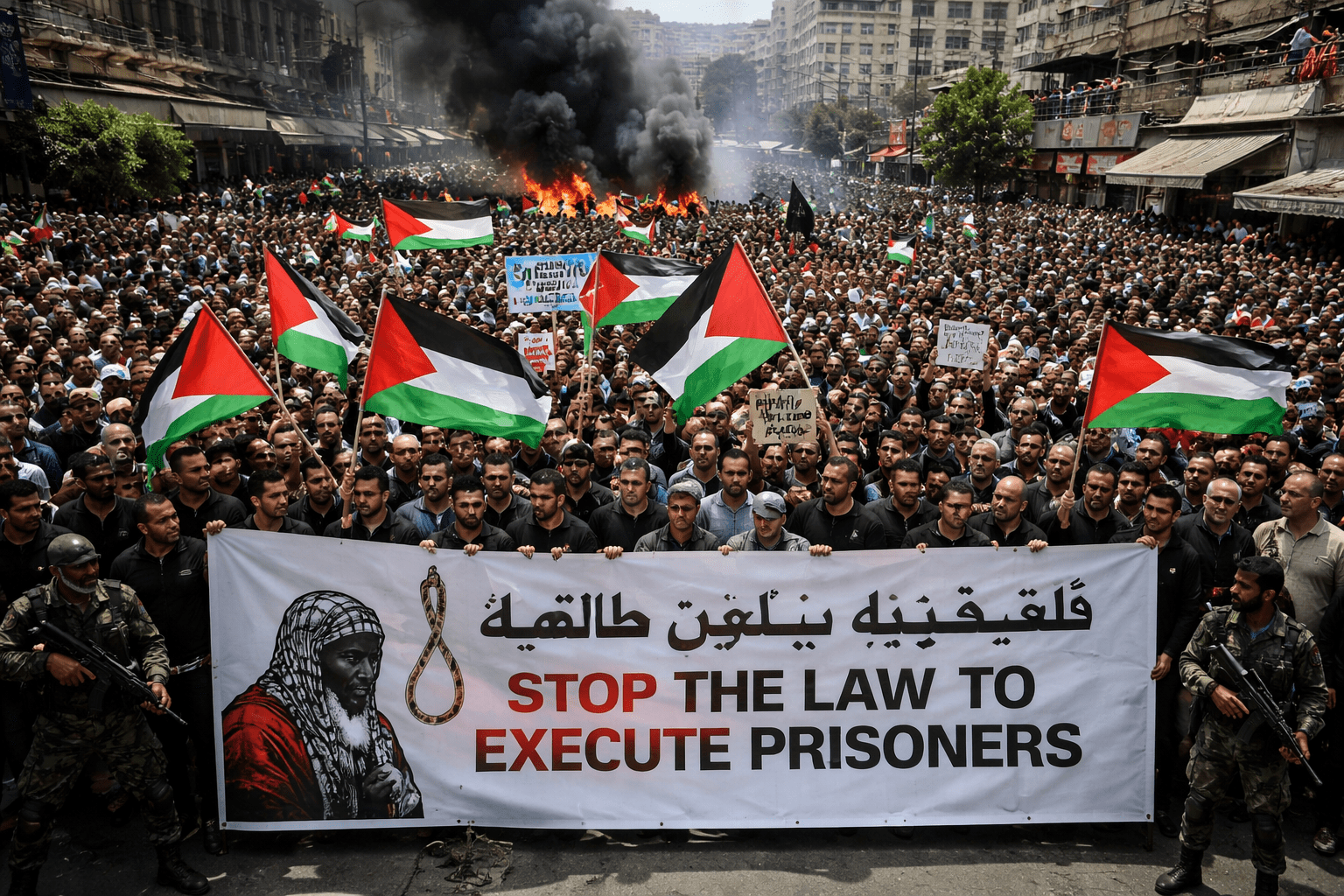
On Monday in Jerusalem, the Israeli Knesset passed a new law. It allows military courts in the West Bank to impose the death penalty on Palestinians convicted of deadly attacks. The law applies to residents of the occupied West Bank and East Jerusalem. It targets cases classified as terrorism. Palestinians, human rights groups, and the United Nations High Commissioner for Human Rights have raised concerns about fairness and equality. Protests erupted across the West Bank because many fear harsher punishment and unequal justice under military courts.
What the Law Changes in the Legal System
Under the new policy, Palestinians tried in Israeli military courts may face death sentences for specific convictions. In contrast, Israeli civilian courts also allow severe penalties for similar crimes. Critics argue this creates two separate legal systems. They say one system is stricter for Palestinians. Israeli authorities maintain the law is aimed at deterrence and national security.
Widespread Shutdowns and Public Demonstrations
In response to the law, businesses and public institutions shut down across major West Bank cities. Ramallah, Hebron, and Nablus saw widespread closures. Many residents joined strikes and street protests. At Qalandia checkpoint near Jerusalem, demonstrators burned tyres. Security forces responded with tear gas, stun grenades, and rubber bullets. Officials reported no confirmed injuries during these clashes.
Political Reactions and Human Rights Concerns
Palestinian leaders, including factions within the Palestinian Authority, called for general strikes and protests. Former Palestinian Authority President Mahmoud Abbas’s Fatah movement supported the strike action. Human rights organisations warned the law could deepen tensions. The United Nations rights chief said its application could raise serious legal concerns under international law.
Life in the West Bank Under Rising Tensions
Many residents say the issue affects nearly every family. Some describe widespread fear due to the number of detainees held in Israeli prisons. Reports from advocacy groups allege poor detention conditions, though details vary by source. Meanwhile, protests continue as communities call for international attention and intervention.