




 By
By By Elizabeth Ugbo
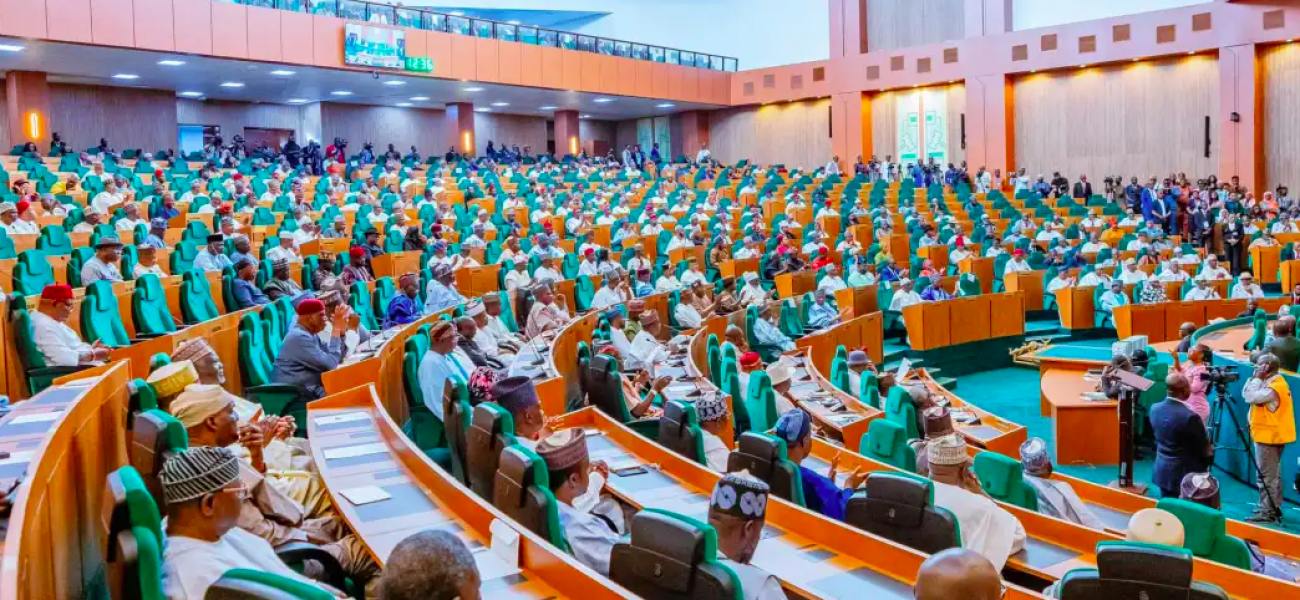
A fresh wave of defections hit Nigeria’s House of Representatives on Tuesday, as lawmakers switched parties during plenary in Abuja to improve their chances ahead of the 2027 elections. The moves, announced by Deputy Speaker Benjamin Kalu, reflect shifting alliances driven by internal party crises, electoral calculations, and the quest for stronger political platforms.
Rising Political Realignments in the House
Since the inauguration of the 10th National Assembly in 2023, the All Progressives Congress (APC) has maintained a majority in the House. However, opposition parties continue to push for relevance through defections and coalition-building.
Interestingly, the emergence of the African Democratic Congress (ADC) as a key beneficiary signals a gradual shift. The political space is becoming more diverse beyond the dominance of the APC and the Peoples Democratic Party (PDP).
Key Defections Across Party Lines
During plenary, several lawmakers formally announced their defections. One notable case involved Thaddeus Attah, who represents Eti-Osa Federal Constituency in Lagos. He left the Labour Party (LP) for the ADC, citing leadership crises within his former party.
Similarly, the PDP recorded significant losses. Lawmakers who defected include:
- Abubakar Abdul (Niger) → APC
- Yakubu Noma (Kebbi) → ADC
- Ibrahim Mohammed → APC
In Osun State, two representatives—Mudashiru Alani and Adetunji Olusoji—defected from the PDP to the Accord Party.
Meanwhile, the APC also lost members. David Fuoh (Taraba) joined the PDP, while Bashir Zubair (Kaduna) moved to the ADC. These shifts highlight the two-way nature of Nigeria’s political realignments.
Why Lawmakers Are Defecting
Defections are not new in Nigeria’s political landscape, especially as elections approach. With less than two years to the 2027 polls, lawmakers are recalibrating their strategies.
Several factors are driving this trend:
- Internal leadership crises within parties, especially the PDP and LP
- Desire for better re-election prospects
- Alignment with influential political blocs
- Access to stronger party structures
As a result, party loyalty often remains flexible when electoral stakes are high.
Democracy or Drift Toward One-Party System?
Despite concerns about a possible one-party dominance, Deputy Speaker Benjamin Kalu dismissed such fears.
According to him, the ongoing defections demonstrate democratic freedom. Lawmakers are moving both to majority and minority parties, reinforcing political competition.
What to Expect Ahead of 2027
Analysts believe the trend will intensify in the coming months. Parties are currently restructuring, while aspirants are testing their popularity ahead of primaries.
Consequently, more defections are likely as politicians position themselves strategically for electoral advantage.
Plenary Adjourned in Honour of Late Lawmaker
The House adjourned plenary to Wednesday in honour of Hassan Danjuma, who died on April 10, 2026, at the age of 66.