




 By
By By Elizabeth Ugbo
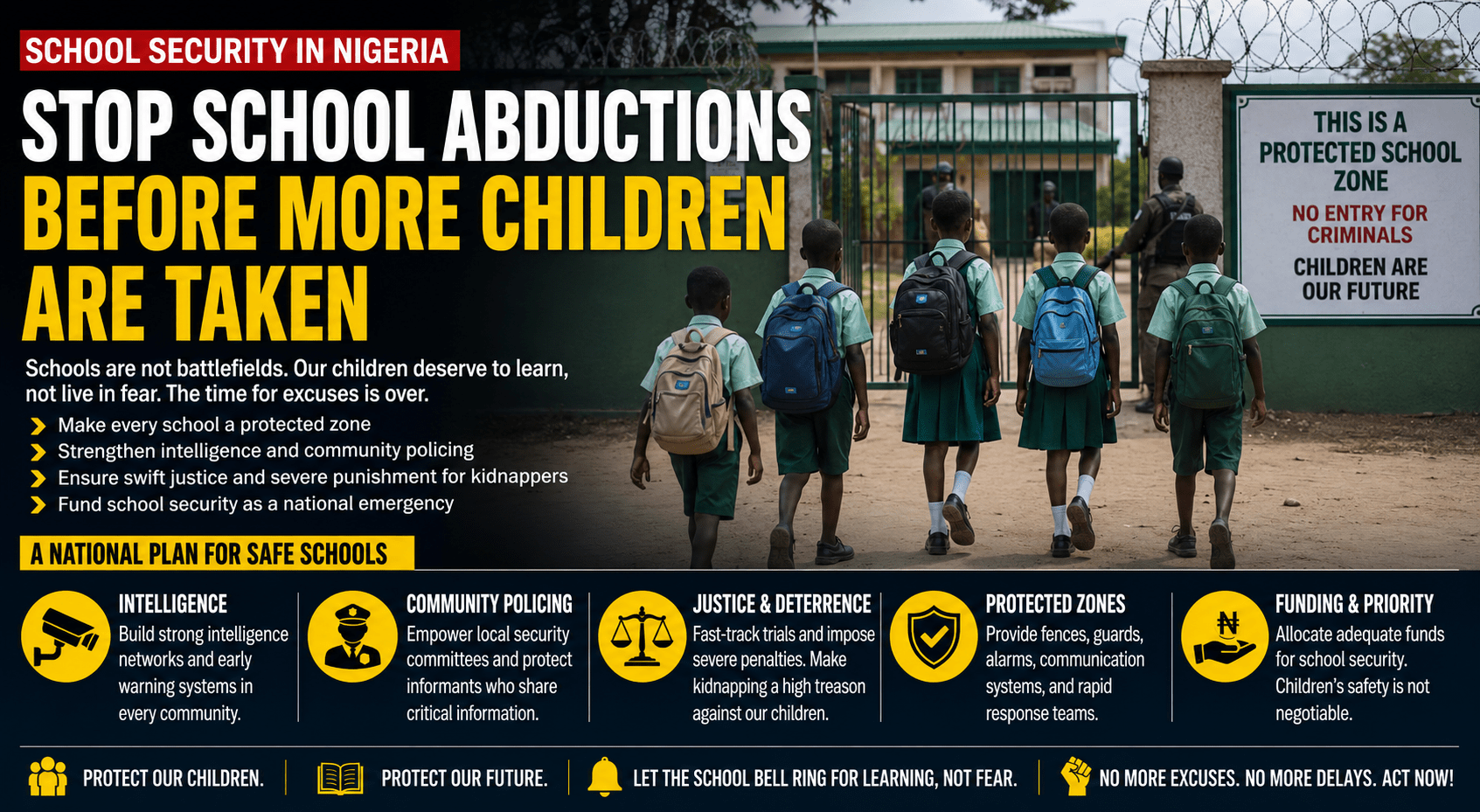
In Nigeria today, schoolchildren face rising kidnapping risks from armed groups. Bandits target schools in rural and remote areas during school hours to abduct pupils for ransom. The crisis escalates as security gaps widen across communities, while authorities struggle to respond effectively. This situation demands urgent reforms in intelligence gathering, policing, justice systems, and school protection policies to prevent further attacks.
Rising Threat to School Safety
Armed kidnappers now see schools as easy targets. They strike during learning hours and escape quickly.
Many rural schools lack fences, guards, and emergency communication systems.
As a result, attackers move freely and strike with little resistance.
This pattern weakens public trust in education. Parents now fear sending children to school.
Consequently, attendance drops in high-risk communities.
Governance and Funding Gaps
Governments often respond after attacks occur. This approach focuses on reaction instead of prevention.
Many local authorities claim they lack funding for full school protection systems.
However, they still allocate money to less urgent projects.
School security requires prioritization in national budgets.
Leaders must treat it as a national emergency, not a local issue.
Community Intelligence and Early Warning Systems
Kidnappers rarely operate without notice in local areas.
Residents often observe strange movements and unfamiliar faces.
However, fear of retaliation stops many people from reporting suspicious activity.
A strong tip-off system can change this reality.
Authorities should build trusted hotlines and protect informants.
Local security committees can also strengthen early warning responses.
These solutions cost less than ransom payments and rescue operations.
Justice and Deterrence
Weak prosecution encourages repeat crimes. Some suspects escape justice through corruption or delays.
This situation sends a dangerous message that kidnapping is profitable.
Authorities must enforce swift trials for abduction cases.
Strong punishment will discourage criminal networks from targeting schools.
Law enforcement agencies must treat school kidnapping as a top national offense.
Balancing Security and Learning Freedom
Some stakeholders propose heavily fortified schools with armed presence. Others warn this approach may harm learning environments.
Both views highlight a key issue: broken governance systems.
Schools should remain safe without becoming military-style zones.
Security must protect children while preserving a normal learning atmosphere.
Community-based protection and smart infrastructure offer balanced solutions.
Community Efforts and Limitations
Some communities now organize night patrols and school escort groups.
These efforts help reduce risks in small areas.
However, they cannot replace full government responsibility.
Parents already face financial pressure and cannot carry full security duties.
The state must lead and coordinate nationwide protection efforts.
Conclusion
School abductions reflect deeper security and governance failures.
Nigeria must shift from reaction to prevention.
Authorities should invest in intelligence, justice, and community partnerships.
Children deserve safe classrooms and peaceful journeys to school.
Security must protect learning, not restrict it.