




 By
By By Elizabeth Ugbo
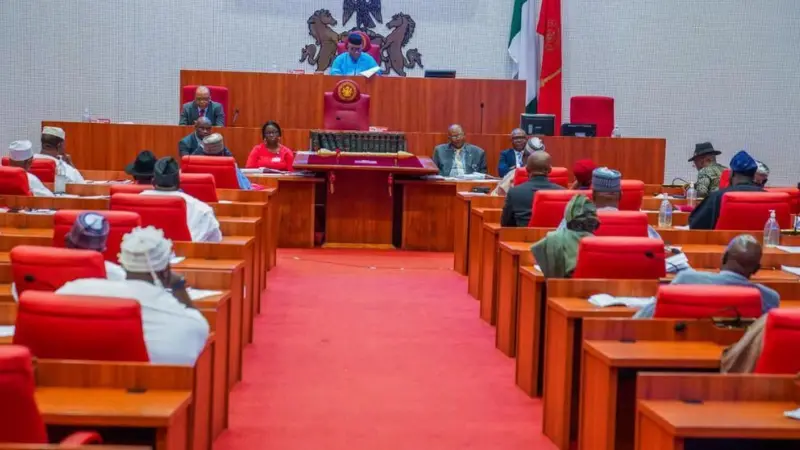
The Senate on Wednesday passed the Constitution of the Federal Republic of Nigeria (Alteration) (State Police) Bill, 2026, in Abuja. Lawmakers approved the bill to establish state police services alongside the federal police system. The legislation aims to strengthen internal security, improve responses to local threats, and decentralise policing across Nigeria. Senators also included safeguards to prevent governors from using state police for partisan, ethnic, religious, sectional, or personal interests.
Senate Approves Landmark State Police Reform
The Senate passed the constitutional amendment after more than two-thirds of lawmakers voted in support during a manual voting exercise.
Senate President Godswill Akpabio announced the bill’s passage after an overwhelming majority backed the proposal.
The upper chamber adopted the report of the Senate Committee on the Review of the Constitution. Deputy Senate President Barau Jibrin, who chairs the committee, presented the report.
Before the final vote, senators considered the bill clause by clause at the Committee of the Whole.
Bamidele Leads Debate on State Police Bill
Senate Leader Opeyemi Bamidele urged lawmakers to support the legislation. He described it as a critical reform that would improve security management nationwide.
According to him, the bill creates a decentralised policing system while preserving national cohesion and accountability.
“The proposal seeks to balance local policing autonomy with national cohesion, accountability with operational effectiveness, and federal oversight with state responsibility,” Bamidele said.
He explained that the bill, transmitted by President Bola Tinubu, would allow states to establish police services while retaining the Federal Police for national responsibilities.
Roles of Federal and State Police
Under the proposed framework, state police services will enforce state laws and maintain public safety.
They will also prevent and detect crimes, protect lives and property, and perform other local policing duties.
Meanwhile, the Federal Police will continue to handle national security matters. These include counter-terrorism operations, organised crime, cybercrime, border security, arms trafficking, and interstate criminal activities.
The bill also empowers the National Assembly to set minimum standards for recruitment, training, promotions, discipline, firearms use, accountability, and professional conduct.
Governors to Appoint State Police Commissioners
One of the bill’s major provisions allows governors to appoint Commissioners of Police for their states.
However, state Houses of Assembly must confirm the appointments.
Clause 17 states that while the Inspector-General of Police will continue to lead the Federal Police Service, each State Police Service will have a Commissioner of Police appointed by the governor.
The legislation also permits governors to issue lawful written directives on public safety and public order matters within their states.
Safeguards Against Political Abuse
Lawmakers inserted several protections to prevent misuse of state police powers.
Section 17(7) prohibits State Commissioners of Police from arresting, detaining, investigating, or deploying force against individuals, political parties, or groups simply for criticising the government.
Any action must comply with existing laws and constitutional provisions.
The measure seeks to protect journalists, activists, opposition politicians, and other citizens from unlawful harassment.
Federal Government Retains Oversight Powers
The bill outlines situations where federal authorities may intervene in state police affairs.
Bamidele said intervention can occur when public order collapses, state police services fail to function effectively, fundamental rights face serious violations, electoral intimidation emerges, or national security comes under threat.
He noted that the President must authorise any intervention in writing.
In addition, such action must remain limited in scope and duration. The Senate will oversee the process, while courts may review it when necessary.
“The bill provides robust safeguards against abuse, preserves federal authority where necessary, protects constitutional rights and creates a modern policing framework capable of addressing contemporary security challenges,” Bamidele stated.
Senate Adopts Manual Voting Process
Before voting on the bill, senators agreed to use manual voting.
The decision followed concerns that malfunctioning electronic devices could prevent some lawmakers from participating.
Under the arrangement, each senator stood up, announced their name, and publicly declared their position.
Bamidele moved the motion, stressing the need for transparency and inclusiveness.
Senate Minority Leader Abba Moro seconded the motion.
Lawmakers said the approach ensured every senator participated and made their positions known to constituents.
Governors Allowed Into Senate Chamber
The Senate also reversed an earlier decision and allowed governors and senior government officials into the chamber during deliberations.
Initially, lawmakers rejected the request because Senate rules restrict floor access to senators.
The decision briefly delayed proceedings as invited guests waited outside the chamber.
Akpabio later appealed for reconsideration. He argued that governors should witness the debate because state Houses of Assembly must approve any constitutional amendment establishing state police.
Following his appeal, Bamidele moved a motion to suspend Order 12 of the Senate Rules.
Jibrin supported the motion and praised Akpabio’s inclusive leadership.
The Senate subsequently approved the request.
Key Officials Present During Deliberations
Among the officials admitted into the chamber were Kaduna State Governor Uba Sani, Ogun State Governor Dapo Abiodun, Ondo State Governor Lucky Aiyedatiwa, and the Chief of Staff to the President, Femi Gbajabiamila.
Their presence underscored the significance of the proposed state police framework and the broader constitutional reform process.
What Happens Next?
The State Police Bill now moves to the next stage of the constitutional amendment process.
For the amendment to take effect, at least two-thirds of Nigeria’s state Houses of Assembly must approve it.
If adopted, the reform will mark a major shift in Nigeria’s policing structure and security architecture.