



 By
By By Elizabeth Ugbo
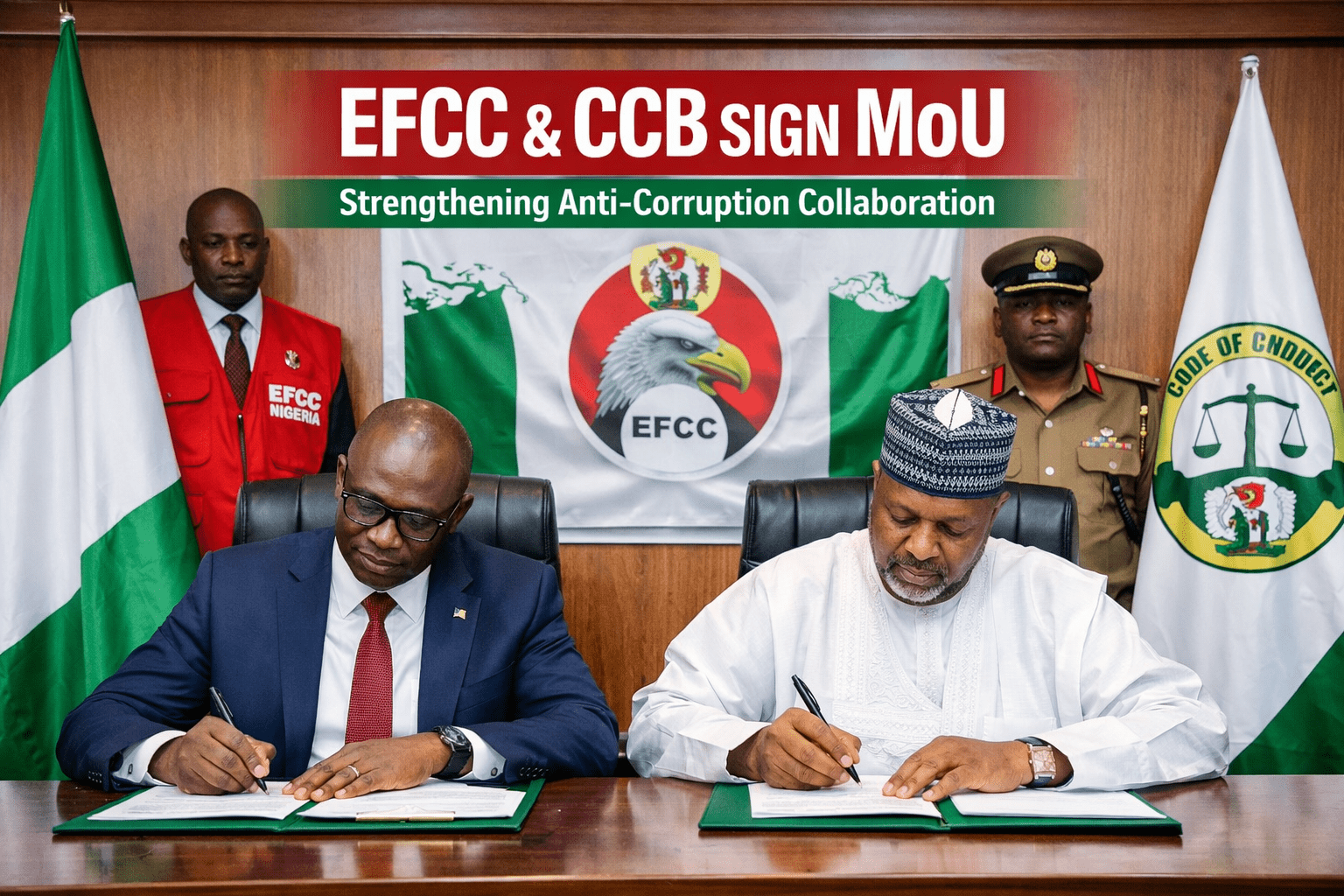
The Chairman of the Economic and Financial Crimes Commission, Ola Olukoyede, on Wednesday in Abuja signed a Memorandum of Understanding with the Code of Conduct Bureau, led by its Chairman Abdullahi Bello, to strengthen inter-agency collaboration against corruption, enhance intelligence sharing, and boost joint investigations aimed at tackling financial crimes in Nigeria.
EFCC, CCB Strengthen Anti-Corruption Collaboration in Nigeria
Olukoyede said corruption remains a major obstacle to Nigeria’s development. He linked financial crimes to poverty, hunger, poor infrastructure, and widespread underdevelopment.
According to him, anti-corruption agencies must work together to achieve meaningful results. He stressed that no single institution can tackle corruption alone.
“All of us are key players in the anti-corruption fight,” Olukoyede said. “If we work as a team and confront corruption frontally, we can take Nigeria out of this mess.”
Intelligence Sharing to Drive Joint Investigations
Olukoyede emphasized that intelligence sharing would play a central role in the renewed partnership. He urged both agencies to avoid rivalry and instead pursue sincere collaboration.
“There’s no doubting the fact that we need to collaborate and synergize,” he said. “We must not compete. We must work together with sincerity of purpose.”
He added that coordinated efforts would deliver stronger outcomes in asset tracing and prosecution of financial crimes.
CCB Asset Database to Support Asset Recovery
Bello highlighted the strategic value of the CCB’s asset declaration database. He explained that the bureau maintains comprehensive records of assets and liabilities declared by public servants.
He noted that investigators would rely on this database during joint investigations and asset recovery efforts. Furthermore, he described the MoU as a milestone in institutional partnership.
Bello said both agencies had previously benefited from intelligence sharing and technical cooperation. However, he added that the new agreement would formalize and deepen that collaboration.
Key Areas of Cooperation Under the MoU
Under the Memorandum of Understanding, the EFCC and CCB agreed to:
- Conduct joint investigations
- Coordinate asset recovery operations
- Strengthen capacity building initiatives
- Enhance technological collaboration
- Launch public enlightenment campaigns
These initiatives aim to promote transparency, accountability, and ethical conduct in public service.
Why Anti-Corruption Collaboration Matters
Olukoyede maintained that corruption fuels economic hardship and weakens governance structures. Therefore, stronger institutional synergy remains critical to Nigeria’s development.
He urged all stakeholders to prioritize unity and commitment in the fight against financial crimes. According to him, sustained collaboration will produce lasting impact.