




 By
By By Elizabeth Ugbo
Iran has warned countries against joining the United States’ economic war amid rising tensions. The warning came on Saturday as diplomatic efforts continued in Egypt, Oman and Pakistan. Tehran also issued special permission for Iraqi oil tankers to cross the Strait of Hormuz. However, Iran said the waterway would remain closed until the US lifts its naval blockade.
Iran Issues Warning Over US Sanctions
Iran has threatened retaliation against any country that supports new US economic sanctions.
Mohsen Rezaei, secretary of Iran’s Supreme National Security Council, issued the warning on Saturday.
He urged countries, including Iran’s neighbours, to reject Washington’s economic pressure campaign.
Rezaei said Tehran would first seek dialogue to reduce tensions.
However, he warned that Iran would respond militarily if countries continued supporting the United States.
“Any country that takes part in imposing economic restrictions on us will be regarded as an enemy,” he said.
Rezaei also warned of a “seismic” Iranian response to participating countries.
US Prepares New Sanctions Against Iran
The warning followed plans by the United States to impose fresh sanctions on Iran.
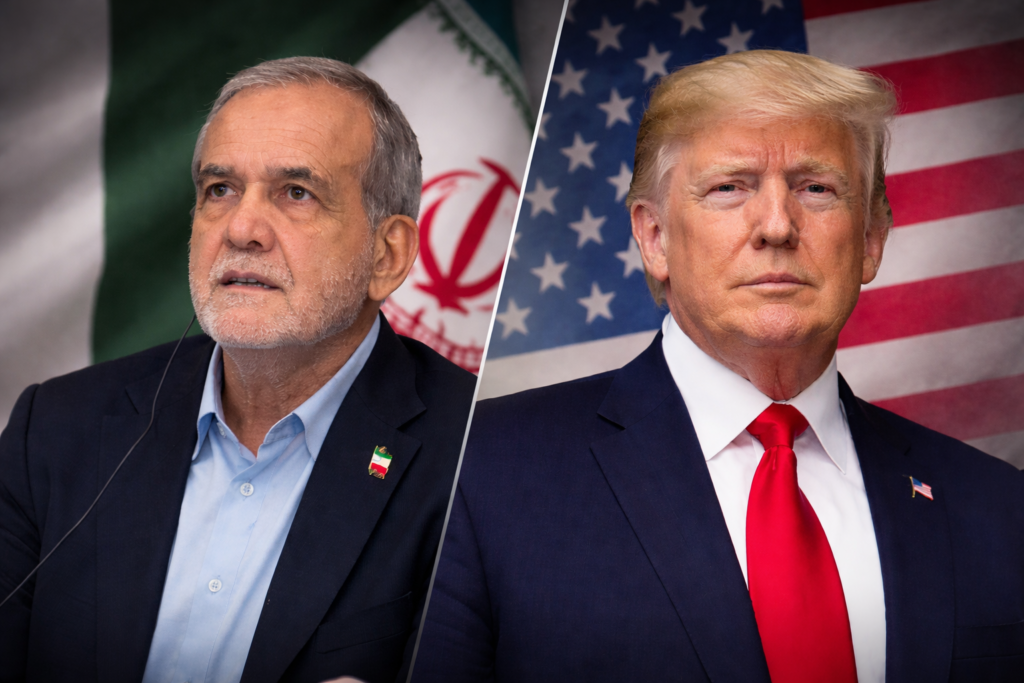
US President Donald Trump recently announced a major economic campaign against Tehran.
Trump described it as the “most crushing economic operation” against Iran.
He also threatened serious economic consequences for countries supporting Tehran.
US Treasury Secretary Scott Bessent later reinforced the warning.
“You’re either with us or against us,” Bessent said.
He also called on China to cooperate with Washington.
China remains a major buyer of Iranian oil, purchasing more than 80 percent of Iran’s shipped crude.
Bessent is expected to provide further details about the planned sanctions on Monday.
Strait of Hormuz Remains Largely Closed
Meanwhile, uncertainty continues around the Strait of Hormuz.
Iran’s government news agency, IRNA, reported that special permission was granted to Iraqi oil tankers.
The approval allows the vessels to transit the strategic waterway.
However, Iran has not announced a wider reopening of the strait.
Al Jazeera correspondent Tohid Asadi said the situation remains unclear.
According to Asadi, Iran plans to keep the strait closed until the US naval blockade ends.
Iran and Oman are also discussing ways to manage shipping through the waterway.
However, no agreement has been reached so far.
The Strait of Hormuz remains a crucial global shipping route.
Its disruption has already pushed up commodity prices, including oil and fertiliser.
Egypt Pushes for Diplomatic Solution
At the same time, Egypt has intensified diplomatic efforts to ease the crisis.
Egyptian Foreign Minister Badr Abdelatty spoke with his Iranian counterpart, Abbas Araghchi.
The two ministers reviewed the regional situation during their telephone conversation.
They also discussed ways to create conditions for de-escalation.
Egypt said both sides discussed returning to the diplomatic process.
That process could involve renewed talks between Oman and Iran.
It could also involve resuming implementation of the US-Iran memorandum.
Egypt said the ultimate goal remains a comprehensive and lasting agreement.
Such an agreement would address outstanding concerns and improve regional security.
Iran Discusses Crisis With Pakistan
Araghchi also held talks with Pakistan’s army chief, Field Marshal Asim Munir.
The two officials discussed possible solutions to the regional crisis.
They focused on strengthening peace, stability and security across West Asia.
Araghchi also briefed Egypt on Iran’s position.
He explained Tehran’s assessment of recent developments and ongoing negotiations.
He also outlined challenges facing the diplomatic process.
Iran Rejects US Secondary Sanctions
Iranian Foreign Ministry spokesperson Esmaeil Baghaei also criticised the planned sanctions.
He described the proposed measures as an attempt to impose US authority beyond its borders.
Baghaei argued that secondary sanctions lack a foundation in international law.
He made the comments in a post on X on Saturday.
Meanwhile, diplomatic efforts to end the conflict remain stalled.
Traffic through the Strait of Hormuz has also remained severely restricted.
Iran closed the waterway after the United States and Israel launched joint strikes.
The closure has created further uncertainty across global energy markets.
Strait of Hormuz Crisis Raises Global Economic Concerns
The Strait of Hormuz crisis could have wider economic consequences if it continues.
The waterway carries a significant share of global energy shipments.
Therefore, prolonged disruption could affect oil supplies and international prices.
It could also increase transportation and fertiliser costs worldwide.
For now, Iran continues to demand an end to the US naval blockade.
At the same time, Washington is preparing additional economic pressure.
Meanwhile, Egypt and Oman are pushing for renewed diplomatic engagement.
The coming days could therefore determine whether tensions escalate further or return to negotiations.