




 By
By By Elizabeth Ugbo
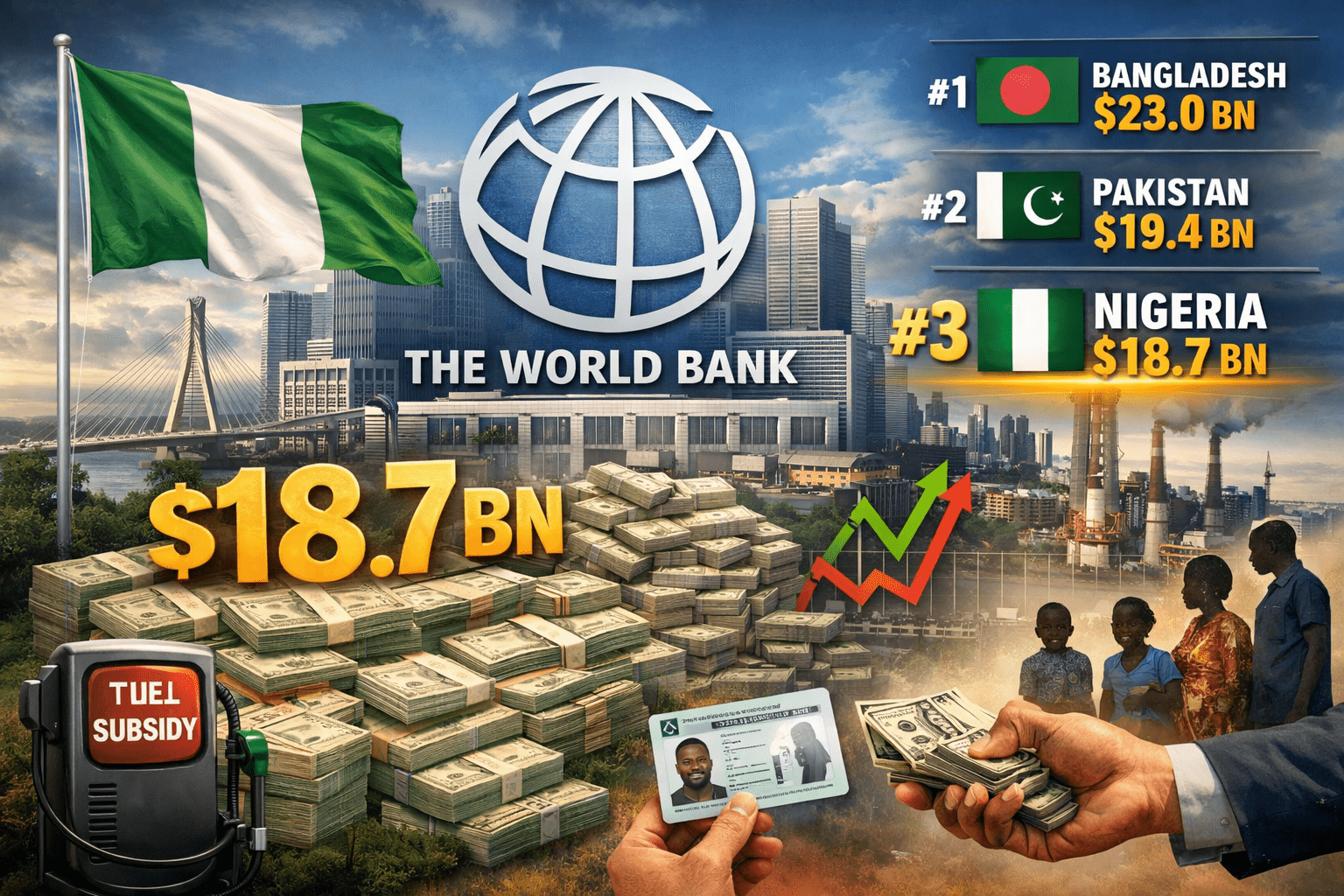
Nigeria’s debt to the International Development Association (IDA) rose to $18.7bn as of December 31, 2025, according to its Management’s Discussion and Analysis. The report shows that Nigeria’s exposure increased from $16.8bn at the end of 2024, marking an 11.3 percent year-on-year growth. The surge reflects the Federal Government’s reliance on concessional financing as it navigates fiscal pressure, global market volatility, and economic reforms.
Nigeria now ranks as the third-largest borrower in the IDA portfolio, behind Bangladesh ($23.0bn) and Pakistan ($19.4bn).
Rising Dependence on Concessional Financing
The latest figures highlight Nigeria’s growing dependence on multilateral funding. Tight fiscal space and global economic shocks pushed the government to secure affordable loans.
The ministry stated that the World Bank Group’s 20th replenishment programme, IDA20, mobilised $97.4bn in concessional financing. The funds supported vulnerable countries facing poverty, climate change, fragility, and economic disruptions.
Minister of Finance and Coordinating Minister of the Economy, Wale Edun, described Nigeria’s relationship with IDA as unique.
“Nigeria’s partnership with IDA is unique. We are both a recipient and a contributing donor,” he said.
IDA20 and Nigeria’s Reform Drive
Edun noted that IDA’s Development Policy Operation provided timely support during economic turbulence.
He explained that IDA20 aligned financing with national priorities. According to him, pooled concessional funding reduced fragmentation, strengthened policy coherence, and supported responsible reforms.
Reflecting on the programme’s launch, he said the world faced severe crises at the time.
“When IDA20 was launched, the world was in crisis,” Edun stated.
He listed pandemic aftershocks, supply chain disruptions, and rising food insecurity as major global challenges.
Economic Reforms Backed by IDA
The minister said Nigeria chose reform over retreat despite mounting pressure.
He highlighted key reforms, including:
- Exchange rate unification
- Fuel subsidy removal
- Ending deficit monetisation
Edun stressed that reform policies must protect vulnerable citizens.
“Reform must protect the vulnerable,” he said.
Cash Transfers and Digital ID Integration
According to the Federal Ministry of Finance, reforms supported by IDA delivered direct benefits to millions of Nigerians.
Through digital ID integration:
- Over 12 million Nigerians enrolled
- Nearly 60 percent were women
- Nine million poorest households received direct cash transfers
Edun emphasized that secure and transparent identification systems reduce leakages, improve trust, and expand economic opportunities.
Nigeria’s Position in the IDA Portfolio
The IDA report confirms Nigeria’s $1.9bn increase in exposure within one year. This growth underlines the country’s expanding engagement with concessional funding.
However, the government maintains that these loans support structural reforms and social protection programmes designed to stabilise the economy.
As global uncertainties persist, Nigeria continues to balance reform implementation with fiscal sustainability.