



 By
By By Elizabeth Ugbo
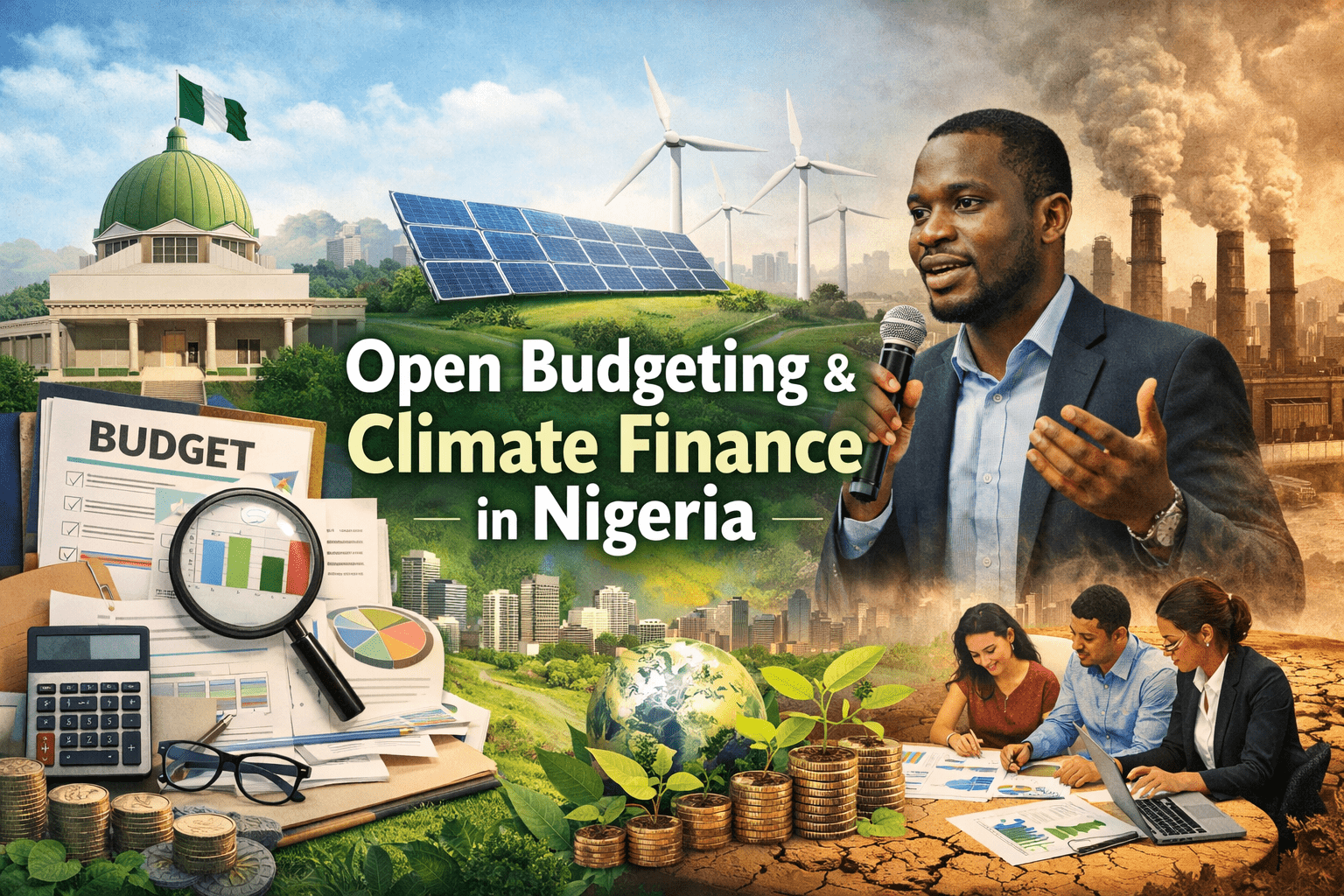
BudgIT Foundation on Wednesday called on the Federal Government to strengthen climate finance reporting and budget transparency during a stakeholder workshop in Abuja, organised in collaboration with the Partnership for Agile Governance and Climate Engagement (PACE), to address Nigeria’s growing climate risks and funding gaps.
Why Climate Finance Transparency Matters
Deputy Country Director of BudgIT Nigeria, Vahyala Kwaga, said global industrialisation has placed developing nations at greater climate risk.
He noted that countries like Nigeria contribute less to environmental degradation. However, they face severe climate impacts.
According to him, Nigeria lacks strong mitigation, adaptation and resilience systems. Therefore, climate change effects hit harder.
“Developing countries like Nigeria may not be heavily industrialised. Yet, we suffer disproportionately because we lack adequate resilience measures,” Kwaga said.
He stressed that transparent budgeting and structured climate finance remain critical for national response efforts.
States Outperform Federal Government in Budget Reporting
Kwaga commended several state governors for detailed budget implementation reports.
He explained that many states provide disaggregated spending information. In fact, he said state reports often surpass federal reports in comprehensiveness.
“At the sub-national level, reporting is far more comprehensive than federal budget implementation reports. However, states can still improve,” he stated.
Despite this progress, he urged states to improve timeliness and deepen financial disclosures.
Budget Call Circular as Entry Point for Climate Action
Kwaga identified the Budget Call Circular as a major advocacy tool.
He explained that the document sets government priorities before ministries prepare budgets. Therefore, early civil society engagement shapes climate spending.
He added that collaboration with the Budget Office ensures climate change and sustainability reflect across ministries. Consequently, policy goals align with financial allocations.
MTEF Must Anchor Climate Priorities
Kwaga emphasised the importance of the Medium-Term Expenditure Framework (MTEF).
He said the MTEF provides three-year fiscal projections that guide annual budgets. Therefore, it must embed sustainability and green initiatives.
“The MTEF should influence the appropriation act. If sustainability measures do not appear in the budget, then fiscal planning lacks consistency,” he explained.
He warned that without clear adaptation priorities, climate spending will remain fragmented and weak.
CSOs Seek to Close Climate Funding Gaps
Civil society organisations at the workshop explored strategies to bridge Nigeria’s climate finance gap.
Participants called for structured budget cycles and improved reporting systems. Moreover, they urged stronger federal action to align fiscal planning with environmental commitments.
Budget Foundation maintained that open budgeting and transparent climate finance reporting will strengthen Nigeria’s resilience and accountability systems.