




 By
By By Elizabeth Ugbo
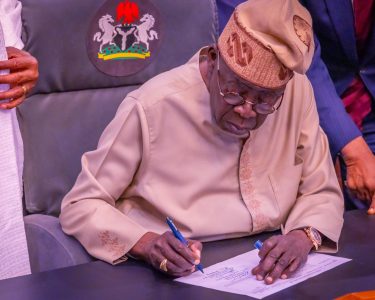
President Bola Tinubu has ordered the Nigerian National Petroleum Company Limited to remit all oil and gas revenues to the Federation Account, halting deductions for management fees and the Frontier Exploration Fund. The directive, issued in Abuja, took immediate effect in 2025. It affects NNPC, international oil companies, state governments and industry workers. The move seeks to enforce constitutional fiscal rules and boost transparency. However, stakeholders warn it could disrupt deepwater investments and production sharing contracts.
Tinubu Halts NNPC Deductions
The executive order stops automatic deductions from oil revenues before remittance.
Specifically, it halts management fees and 30 per cent allocations to the Frontier Exploration Fund.
Investigations show the deductions generated about N2.1tn between 2022 and 2025.
Breakdown of retained funds shows:
- 2022: N20.739bn
- 2023: N695.9bn
- 2024: N452.6bn
- 2025: N906.91bn
Consequently, the government insists all revenues must first enter the Federation Account. Thereafter, NNPC can seek operational funding through the national budget.
Why the Order Matters
Supporters argue the directive strengthens transparency and accountability.
State governments believe full remittance will increase distributable revenue.
Fiscal analysts also say it aligns oil revenue management with constitutional provisions.
Moreover, they argue frontier exploration should rely on budgetary allocations or private capital, not automatic deductions.
Industry Fears Over Policy Stability
However, senior NNPC officials warn the order may unsettle investors.
They say deepwater operations rely on stable fiscal frameworks.
Nigeria currently pursues at least three deepwater projects.
Some investors have already raised concerns about policy consistency.
Deepwater assets operate under production sharing contracts.
Under this model, parties share crude oil output, not cash.
Each partner sells its share and remits proceeds accordingly.
Officials stress royalties and taxes already reach the Federation Account through crude lifting arrangements.
They argue that altering this structure could create operational confusion.
Furthermore, lenders may question existing crude-backed loan arrangements worth $3.175bn secured in 2023.
Impact on Staff and Operations
NNPC sources reveal that 400 to 500 employees manage production sharing contracts daily.
These professionals supervise rigs, platforms and seismic operations across 39 PSC sites.
Out of these, 14 sites currently produce oil.
Five major assets contribute nearly 80 per cent of PSC output.
Industry experts warn abrupt changes could weaken monitoring systems and cost verification processes.
Labour unions, including the Petroleum and Natural Gas Senior Staff Association of Nigeria, demand clarity on implementation.
They insist reforms must not threaten jobs or production stability.
Frontier Exploration Fund Volatility
Monthly data highlights sharp swings in frontier deductions.
For instance, August 2025 recorded N78.94bn in allocations after profits surged.
However, June posted only N6.83bn following a profit collapse.
Similarly, 2023 showed extreme fluctuations, with retained earnings ranging from N25.66bn in February to N169.63bn in December.
Overall, annual retention rose from N20.739bn in 2022 to N906.91bn in 2025.
This represents a cumulative increase of over 4,200 per cent within four years.
Energy economists argue that suspending deductions earlier could have delivered N2.1tn directly to the federation.
They believe such funds could strengthen fiscal buffers and infrastructure financing.
Legal and Investment Implications
Legal analysts caution that the order may create tension between the Petroleum Industry Act and constitutional fiscal provisions.
They urge the government to design a transparent funding model for strategic oil projects.
Above all, experts stress that disciplined implementation will determine the reform’s success.
A presidential implementation committee will oversee compliance and coordination.
Stakeholders agree that balancing fiscal transparency with sustained oil investment remains critical.