



 By
By Elizabeth Ugbo
The United States government says Nigeria has intensified efforts to address religious violence following its redesignation as a Country of Particular Concern (CPC). US officials made the remarks during a congressional hearing on Thursday, where lawmakers examined Nigeria’s response to attacks on vulnerable communities. The discussions focused on security improvements, accountability, religious freedom and ongoing cooperation between both countries.
US Acknowledges Nigeria’s Efforts to Address Religious Violence
Riley Barnes, Assistant Secretary of State for Democracy, Human Rights and Labour, said the CPC redesignation had encouraged Nigeria to take the security situation more seriously.
According to Barnes, the Nigerian government has introduced several measures since the designation.
These measures include leadership changes, strategic military deployments, increased arrests and prosecutions.
Furthermore, Nigerian authorities have agreed to improve transparency in spending on displaced persons.
The government has also promised to develop a timeline for safely returning internally displaced persons to their ancestral communities.
However, Barnes stressed that the United States expects more concrete results.
He said Washington wants fewer attacks and less violence across affected communities.
He also emphasised the need to prosecute individuals responsible for violent attacks.
Barnes maintained that Nigeria must demonstrate measurable progress before the United States considers the situation satisfactory.
US Expert Warns Against Religious Interpretation of Nigeria’s Insecurity
Meanwhile, Oge Onubogu, Director and Senior Fellow of the African Programme at the Centre for Strategic and International Studies, called for an honest assessment of Nigeria’s insecurity.
She warned against portraying Christians as the only victims of violence in Nigeria.
According to Onubogu, the country’s security challenges involve several interconnected factors beyond religion.
She explained that Muslim communities have also suffered devastating attacks.
Furthermore, she identified ethnicity, land disputes, resource competition and political rivalries as contributing factors.
Other challenges include criminal activities, poor governance, livelihood struggles and longstanding local grievances.
Onubogu also argued that the CPC designation should support effective policies rather than replace them.
US Lawmakers Oppose Lifting Nigeria’s CPC Designation
Chris Smith, Chairman of the US House Foreign Affairs Africa Subcommittee, opposed removing Nigeria from the CPC list.
He insisted that the designation should remain until Nigeria demonstrates substantial improvements.
Smith acknowledged the country’s reported progress but described the pace as insufficient.
He referenced Under Secretary Hooker’s remarks during the second session of the US-Nigeria Joint Working Group.
According to him, Nigeria must deliver stronger results before Washington considers changing its position.
US Demands Stronger Protection for Vulnerable Communities
Frank Garcia, Assistant Secretary of State for African Affairs, said Washington continues engaging Nigerian authorities over religious violence.
He explained that diplomatic discussions remain ongoing despite the continued attacks.
Garcia outlined several expectations from the Nigerian government.
These include stronger security deployments to protect Christian communities in the Middle Belt.
He also called for faster responses to early warnings about potential attacks.
Additionally, he emphasised stronger courts and security agencies to ensure perpetrators face justice.
Garcia said Washington also wants deeper military cooperation between both countries.
Nigeria and US Strengthen Security Cooperation
The United States is pursuing a coordinated strategy to strengthen Nigeria’s security operations.
According to Garcia, the strategy includes security capacity building and increased military cooperation.
It also involves wider use of biometric data to identify individuals responsible for attacks.
Furthermore, Washington plans to support financial measures against terrorist financing networks.
Nigeria and the United States have already established a military partnership targeting terrorist groups in northern Nigeria.
Both countries have also created a Joint Working Group to address Washington’s concerns about religious violence.
US Pushes Nigeria to Review Blasphemy Laws
Barnes also disclosed that American officials had urged Nigeria to repeal its blasphemy laws.
At a minimum, Washington wants Nigerian authorities to move towards ending their enforcement.
The discussions form part of broader American efforts to address religious freedom concerns.
However, US officials insist that Nigeria must translate diplomatic commitments into measurable improvements.
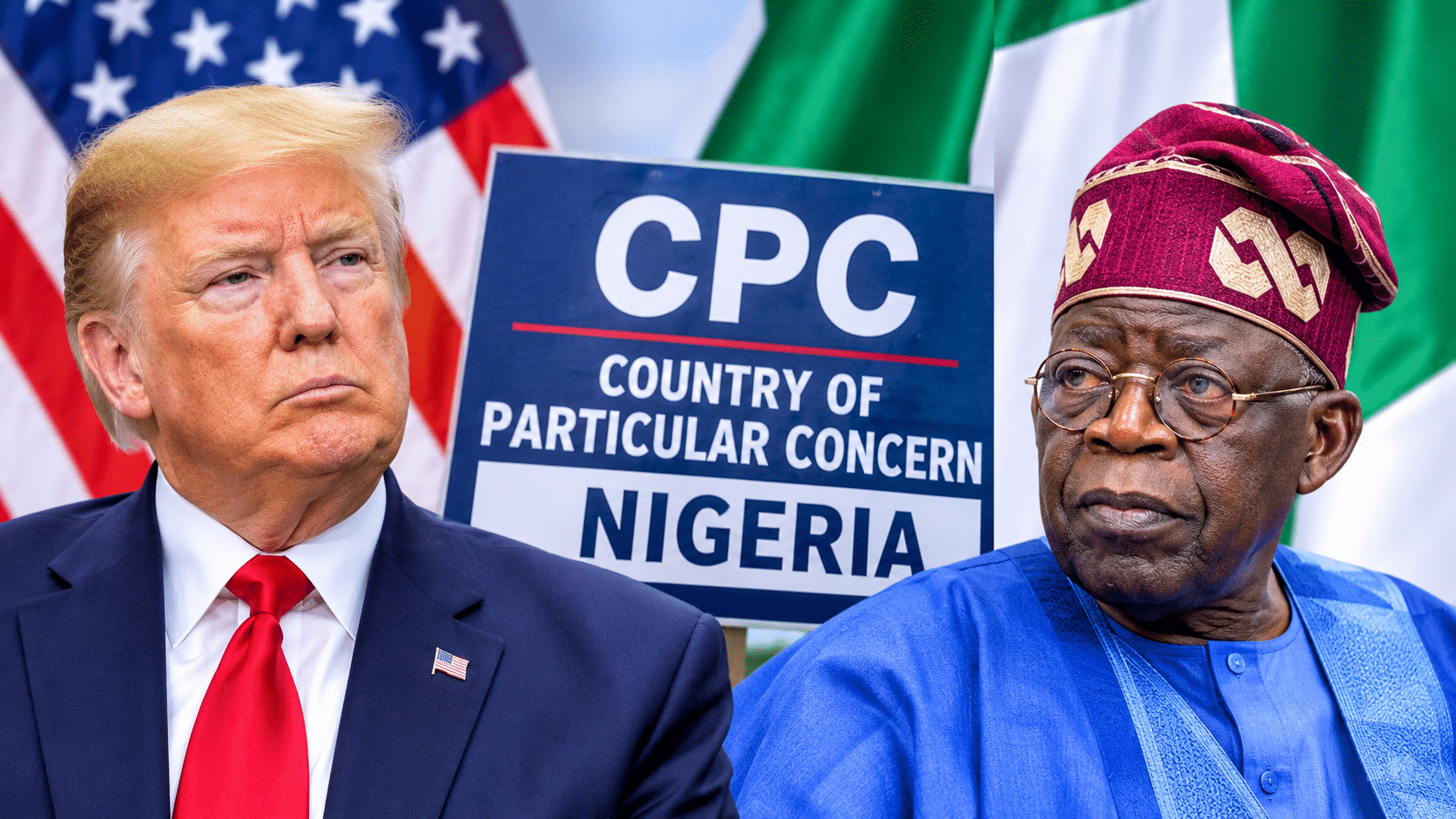
The CPC designation followed allegations of widespread persecution of Christians in Nigeria.
President Donald Trump redesignated Nigeria as a Country of Particular Concern before the reported US missile strike in Sokoto on Christmas Day.
Ultimately, Washington says Nigeria must demonstrate sustained improvements in protecting vulnerable communities.
The United States maintains that fewer attacks, stronger accountability and better security responses will determine the success of its engagement with Abuja.