



 By
By By Elizabeth Ugbo
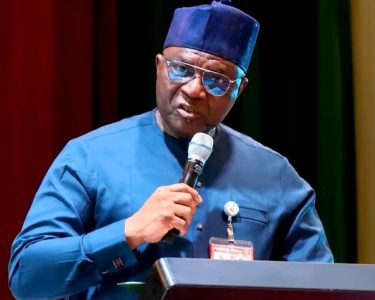
A new report has revealed that violent conflict is driving more households into poverty across Northern Nigeria. The findings were presented on Thursday during a high-level webinar in Abuja. The report was jointly released by the Chronic Poverty Advisory Network (CPAN), the Development Research and Projects Centre (dRPC), and the UK Foreign, Commonwealth and Development Office (FCDO)-supported Strengthening Peace and Resilience in Nigeria (SPRiNG) project. It examined how insecurity affects livelihoods and household welfare. The Minister of Humanitarian Affairs and Poverty Reduction, Dr Bernard Doro, said the findings would strengthen the implementation of the One Humanitarian–One Poverty Response System (OHOPRS).
Three Major Security Threats Identified
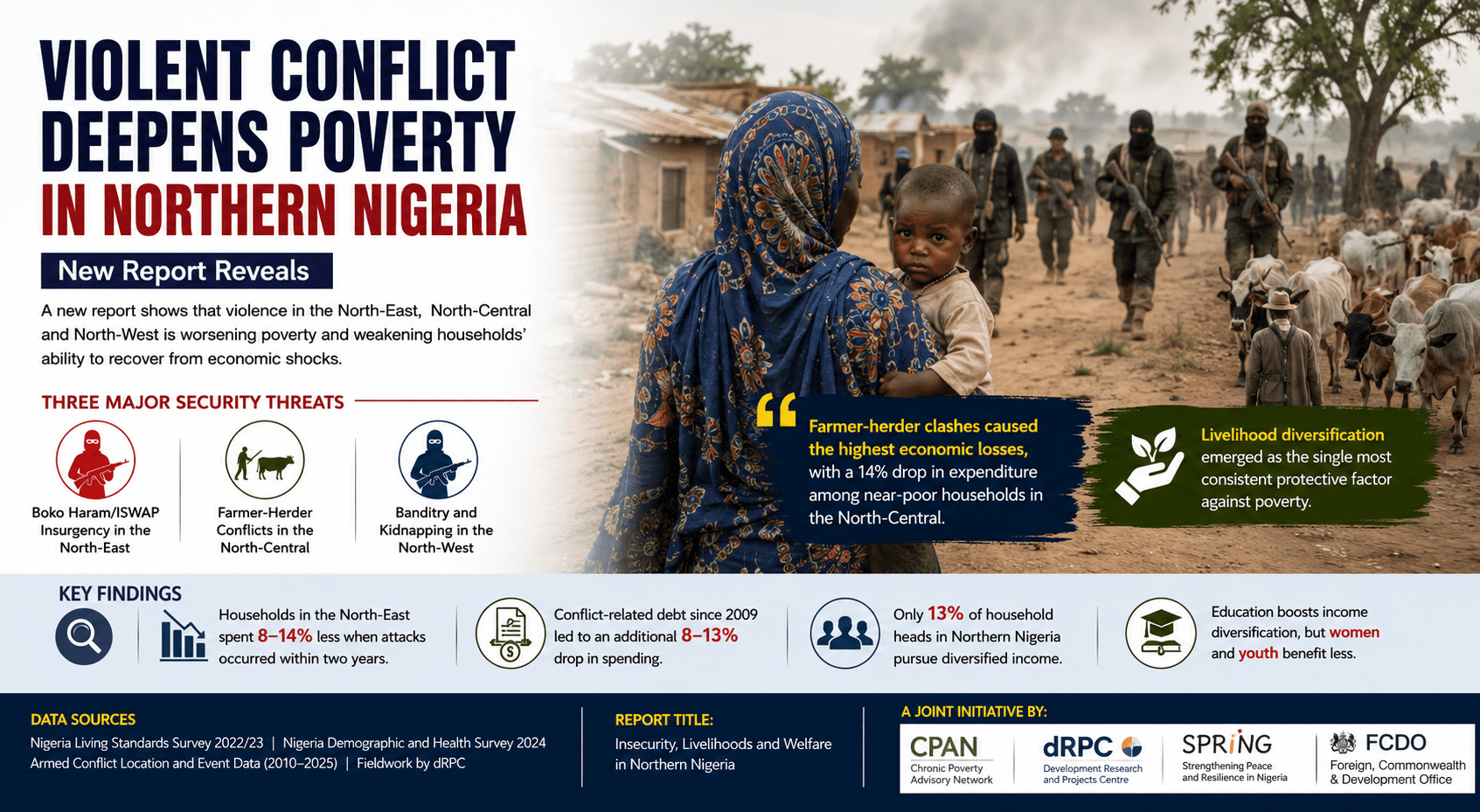
The report, titled “Insecurity, Livelihoods and Welfare in Northern Nigeria,” identified three major security challenges.
These include:
- Boko Haram and ISWAP insurgency in the North-East.
- Farmer-herder clashes in the North-Central.
- Banditry and kidnapping in the North-West.
Researchers said these conflicts continue to weaken household incomes and increase poverty.
Conflict Reduces Household Welfare
CPAN Deputy Director, Dr Vidya Diwakar, presented the report during the webinar.
She explained that the study analysed data from the Nigeria Living Standards Survey 2022/23, the Nigeria Demographic and Health Survey 2024, Armed Conflict Location and Event Data from 2010 to 2025, and field research conducted by dRPC.
According to the report, households affected by Boko Haram and ISWAP attacks in the North-East recorded between eight and 14 percent lower spending per adult.
Furthermore, households carrying conflict-related debt since 2009 suffered an additional expenditure loss of between eight and 13 percent.
Farmer-Herder Clashes Cause Highest Economic Losses
The study found that farmer-herder conflicts produced the largest welfare losses.
Near-poor households in the North-Central experienced a 14 percent decline in expenditure at the 60th percentile.
Meanwhile, households in the North-West affected by banditry and kidnapping recorded expenditure losses ranging from four to 11 percent.
Moderately poor households were the hardest hit in the region.
Livelihood Diversification Offers Hope
Despite the challenges, the report identified livelihood diversification as the strongest pathway to resilience.
Researchers found that combining farming, non-farming and small business activities consistently protected households against poverty.
However, only 13 percent of household heads in Northern Nigeria currently earn income from diversified sources.
The study also found that education improves households’ ability to diversify income.
Nevertheless, the benefits remain weaker for women- and youth-headed households, which account for 28.9 percent of households in the region.
Experts Recommend Stronger Peace and Livelihood Programmes
Reviewing the report, SPRiNG Team Lead Dr Ukoha Ukiwo, Plateau State Peace Building Agency Director Dr Julie Sanda, and Senior Special Assistant to the President on Chieftaincy Matters Abba Waziri stressed the need to connect peace-building with livelihood recovery programmes.
They said rebuilding livelihoods remains essential for reducing poverty and preventing future conflicts.
The panel also urged governments to expand economic opportunities in conflict-affected communities.
Traditional Rulers Have Key Role
Participants emphasised the importance of empowering traditional rulers and community leaders.
They said local leaders should receive more training to strengthen peace-building efforts across affected communities.
Government Commits to Evidence-Based Poverty Reduction
Speaking at the close of the webinar, dRPC Executive Director Dr Judith-Ann Walker thanked the FCDO for supporting the research.
She also praised the ministry for embracing evidence-based policies under the OHOPRS framework.
Walker described the framework as being built on “one system, one register and one pathway.”
In response, Minister Bernard Doro pledged stronger collaboration between the government and development partners.
He also challenged researchers to produce more evidence that would improve targeting, sequencing and graduation pathways under the OHOPRS framework.
The minister added that women and young people should remain a priority because they are often excluded from poverty reduction programmes.