



 By
By By Elizabeth Ugbo
Canada has announced a 90-day entry ban on residents from the Democratic Republic of Congo, Uganda and South Sudan following a deadly Ebola outbreak in eastern DR Congo. The restriction came after the United States imposed a similar travel ban last week, while the Bahamas introduced quarantine measures for travellers from the affected countries. The outbreak, caused by the rare Bundibugyo Ebola strain, has already led to 220 suspected deaths in Ituri province. Health officials and aid workers are struggling to contain the virus because of ongoing conflict, poor infrastructure and mass displacement.
WHO Raises Alarm Over Conflict in Ituri
The Director-General of the World Health Organization, Dr Tedros Adhanom Ghebreyesus, warned that violence in eastern DR Congo is slowing efforts to stop the outbreak.
In a statement shared on X, Tedros described the situation as a “catastrophic collision of disease and conflict”.
He explained that health workers cannot build trust or isolate infected patients while fighting continues in the region.
Tedros is expected to visit DR Congo this week to coordinate emergency response efforts.
Ebola Cases Continue to Rise
Congolese health authorities said around 1,000 people are showing symptoms linked to Ebola.
However, officials have confirmed only 17 Ebola-related deaths through laboratory testing so far.
Medical teams are currently tracing about 3,600 people who may have contacted infected patients.
Authorities have distributed 2,000 testing kits, while another 4,000 kits are expected soon.
Rare Bundibugyo Ebola Strain Creates Challenges
This outbreak involves the rare Bundibugyo strain of Ebola, which currently has no approved vaccine or treatment.
However, health officials may introduce experimental treatments soon, including an antibody therapy developed in the United States.
The Democratic Republic of Congo country director for Médecins Sans Frontières said building proper containment infrastructure could take several weeks.
He also urged all armed groups to agree to an immediate ceasefire so medical teams can reach affected communities safely.
Travel Restrictions Tighten Across Countries
Concerns over the possible spread of Ebola have pushed several countries to tighten border controls.
Canada announced a temporary 90-day entry ban for residents from DR Congo, Uganda and South Sudan.
Last week, the United States blocked entry for non-citizens who recently travelled to any of the three countries.
Meanwhile, the Bahamas introduced strict quarantine and isolation measures for foreign nationals arriving from the affected nations.
Uganda also temporarily closed its border with DR Congo on Wednesday.
However, authorities said essential workers, including humanitarian staff, medical personnel and food transporters, can still cross under strict conditions.
Aid Workers Face Difficult Conditions
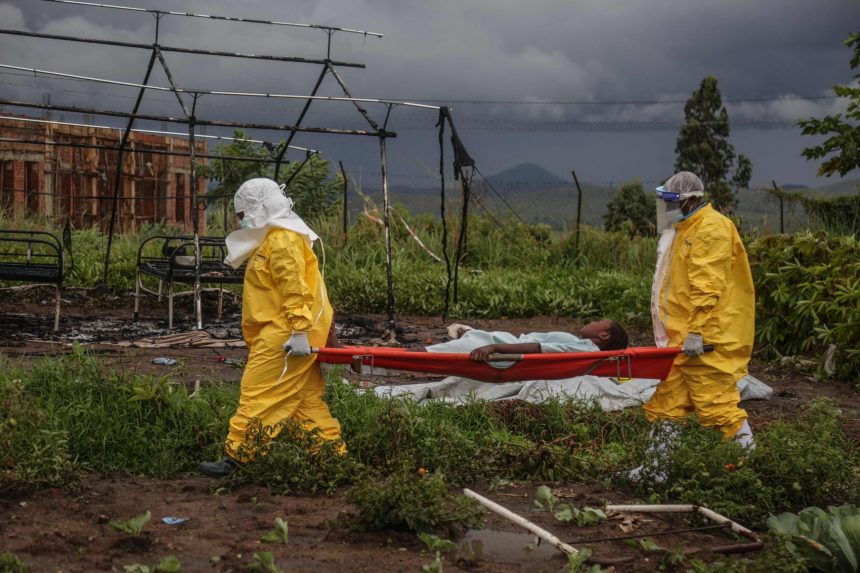
Aid organisations continue to face major obstacles in reaching remote communities in Ituri province.
Poor road networks have slowed emergency response operations across the affected areas.
At the same time, conflict and mass displacement have weakened the local healthcare system.
International aid cuts have also reduced available resources for treatment and surveillance efforts.
Ituri province has remained under military administration since 2021 after authorities replaced civilian leadership to combat armed groups operating in the region.
According to WHO officials, continued clashes are forcing exposed residents into overcrowded camps, increasing the risk of further infections.
Tedros warned that attacks on health facilities are making it difficult to track Ebola cases and identify contacts quickly.
Global Health Concerns Increase
Health experts fear the outbreak could spread further if violence and displacement continue in eastern DR Congo.
International agencies are therefore calling for stronger humanitarian access and urgent cooperation among regional governments.
Medical teams say containing the outbreak will depend heavily on rapid testing, contact tracing and improved security conditions.