




 By
By By Elizabeth Ugbo
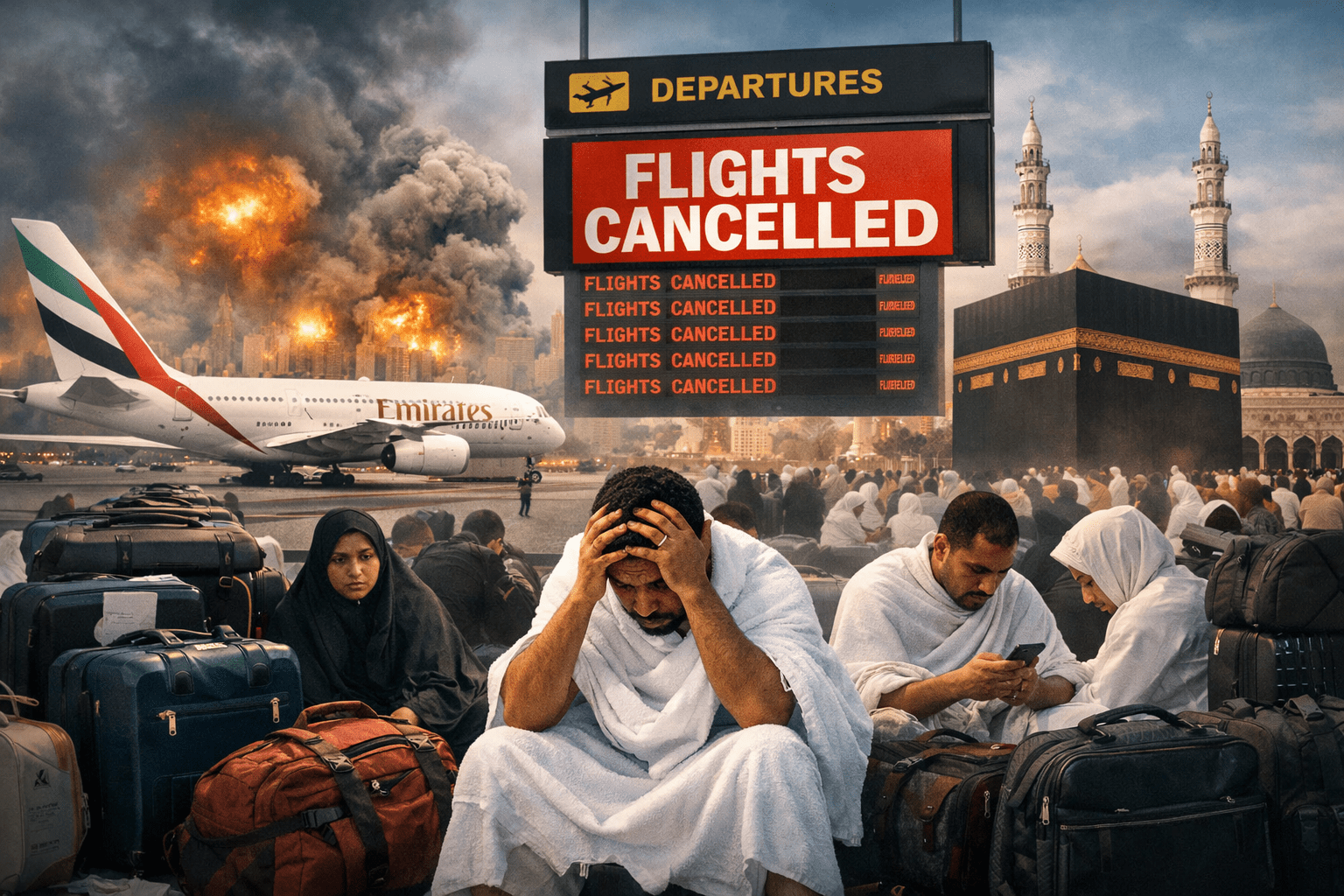
Hundreds of Nigerian Muslims preparing for the Umrah pilgrimage during Ramadan have become stranded after airlines cancelled flights due to the escalating United States–Israel–Iran conflict. The disruption affected travellers scheduled to depart from Lagos and other cities in early March 2026. The crisis has grounded flights across the Middle East and forced airlines to suspend routes, leaving pilgrims unable to reach Saudi Arabia.
Airlines Cancel Flights to the Middle East
Several international airlines suspended services across the region after the conflict intensified.
Major carriers affected include Emirates, Qatar Airways, Etihad Airways, Air France, Turkish Airlines, EgyptAir and Ethiopian Airlines.
Authorities closed or restricted airspace in several countries. These include Iran, Iraq, Israel, Syria, Kuwait, Qatar and the United Arab Emirates.
Consequently, major transit hubs such as Doha and Dubai experienced serious disruptions. Millions of international passengers rely on these hubs for connecting flights.
Nigerian Pilgrims Count Financial Losses
Many Nigerian pilgrims had already paid for visas, flights and accommodation before the cancellations.
A government official from Dutse in Jigawa State said he planned to travel with three others, including a local government chairman. They were scheduled to depart on March 4.
He explained that each pilgrim paid about 12,500 Saudi riyals (around N5 million) for accommodation in Makkah.
Another pilgrim said some travellers paid as much as 7,000 riyals per night for hotels in Madinah.
“It is painful that we cannot proceed with the Umrah trip because of the war. We paid for everything,” he said.
He also noted that their visas will expire on April 8, raising concerns about whether they can still perform the pilgrimage.
Travel Agents Struggle With Refund Requests
Travel agents have contacted airlines to request refunds. However, many carriers declined the requests.
According to one agent, airlines usually offer rescheduling instead of refunds during crises.
“When situations like this occur, airlines ask customers to reschedule flights rather than refund payments,” the agent explained.
So far, Emirates and Qatar Airways have not responded to enquiries about refunds or alternative arrangements.
Celebrity and Politician Also Affected
A popular movie star in Kano revealed that he spent more than N13 million preparing for Umrah with his wife.
They planned to depart from Murtala Muhammed International Airport in Lagos aboard Qatar Airways before the airline cancelled flights.
“We were supposed to travel as a group, but everything has been disrupted,” he said.
Similarly, a politician from Katsina State said the crisis disrupted his family’s Ramadan travel plans.
“It was a promise I made two years ago. Now we are stranded,” he said.
Business Plans Disrupted Ahead of Eid
The crisis has also affected traders who depend on Umrah trips for business.
A businessman in Yola said he usually buys goods during Umrah to sell during Eid celebrations.
“Now I don’t know what to do because my travel plans have collapsed,” he said.
Stranded Nigerians in Saudi Arabia Seek Help
A Nigerian trader currently in Makkah said the situation has also affected travellers already in Saudi Arabia.
He explained that religious activities continue normally. However, disrupted transit routes have made international travel difficult.
Some Nigerian pilgrims now struggle to pay for extended hotel stays after airlines cancelled their return flights.
According to him, several stranded travellers rely on financial help from fellow Nigerians to cover accommodation costs.
Ramadan Umrah Demand at Peak
Umrah remains one of the most popular pilgrimages for Muslims worldwide.
Available records show that more than 122 million Muslims performed Umrah during Ramadan in 2025.
However, the ongoing conflict involving the United States, Israel and Iran has severely disrupted travel across the Middle East.
Consequently, the crisis has not only disrupted spiritual journeys but also exposed thousands of travellers to significant financial losses during the peak Ramadan pilgrimage season.