



 By
By By Elizabeth Ugbo
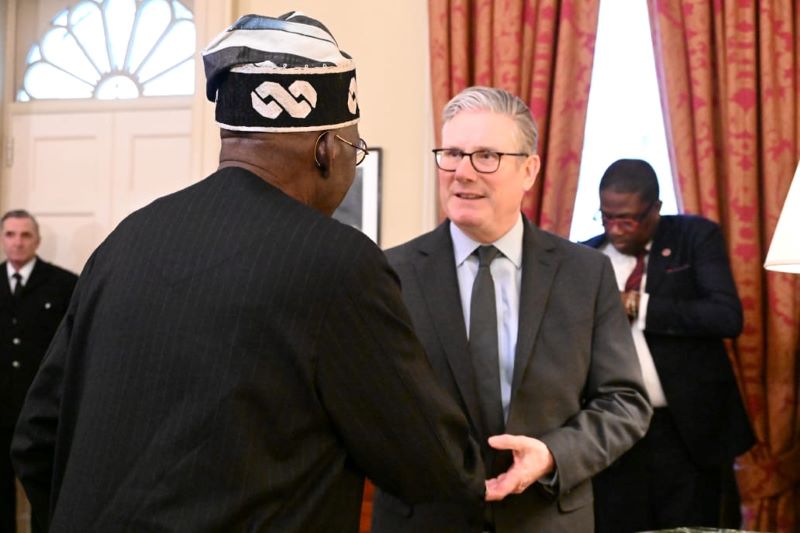
President Bola Ahmed Tinubu met Prime Minister Keir Starmer in London to strengthen bilateral ties. The talks focused on trade, security, climate, and economic growth. Both leaders aimed to deliver practical outcomes, not symbolic diplomacy. The meeting took place in the United Kingdom during Tinubu’s official visit. It targeted investment inflows, job creation, and productivity growth.
UK Signals Nigeria as Priority Economic Partner
The United Kingdom showed strong interest in deeper engagement with Nigeria. Officials positioned Nigeria as a key partner in its global economic strategy.
Meanwhile, Nigeria signaled a shift toward results-driven diplomacy. The government now prioritizes measurable gains such as investments and partnerships. This approach strengthens confidence among global investors.
Economic Reforms Boost Investor Confidence
Nigeria’s reforms continue to reshape international perception. Exchange rate unification has improved transparency in the foreign exchange market. Fiscal restructuring has strengthened public finance management.
In addition, tax reforms have enhanced revenue generation and policy clarity. These changes now attract foreign capital at scale. As a result, investors see Nigeria as a more stable and predictable market.
Cultural Diplomacy Reflects Evolving Relations
The visit blended history with modern engagement. King Charles III used a Nigerian phrase during a state toast. He said, “Naija no dey carry last.”
This remark reflected warmth and cultural connection. More importantly, it showed a shift toward mutual respect and parity.
Key Deals: Lagos Ports Modernisation
A major outcome was the £746 million financing deal. The agreement will upgrade Apapa and Tin Can Island ports in Lagos. It was signed at Lancaster House.
This investment will reduce port congestion and logistics costs. It will also improve Nigeria’s trade efficiency. Consequently, industries will scale faster and compete globally.
Fintech and Banking Expansion Strengthens Ties
Several Nigerian financial institutions expanded into the UK market. These include Kuda, Moniepoint, LemFi, and Fidelity Bank.
Similarly, Zenith Bank opened a new branch in Manchester.
In addition, Wise expanded its regulatory presence in Nigeria. This move strengthens the country’s digital payments ecosystem.
Industrial and Manufacturing Investments Grow
British firms also increased their footprint in Nigeria. Twinings Ovaltine launched a £24 million facility in Lagos.
This investment supports local manufacturing and job creation. It also reduces dependence on imports.
Agriculture Partnership Boosts Dairy Value Chain
The Nigeria Sovereign Investment Authority partnered with Asset Green. Together, they aim to expand Nigeria’s dairy industry.
This initiative promotes food security and domestic production. It also supports rural development and value creation.
A Shift from Diplomacy to Execution
The outcomes reflect a broader transformation in Nigeria’s foreign policy. Engagement now focuses on execution, not promises.
Capital inflows, policy alignment, and innovation now define partnerships. This shift ensures long-term economic benefits.
Conclusion: Tinubu’s Visit Delivers Tangible Results
Tinubu’s London visit marked a strategic reset in UK-Nigeria relations. It delivered concrete agreements across infrastructure, finance, and agriculture.
Ultimately, the visit proved that Nigeria’s reform agenda is gaining global recognition. More importantly, it showed that diplomacy now drives measurable economic outcomes.