



 By
By By Elizabeth Ugbo
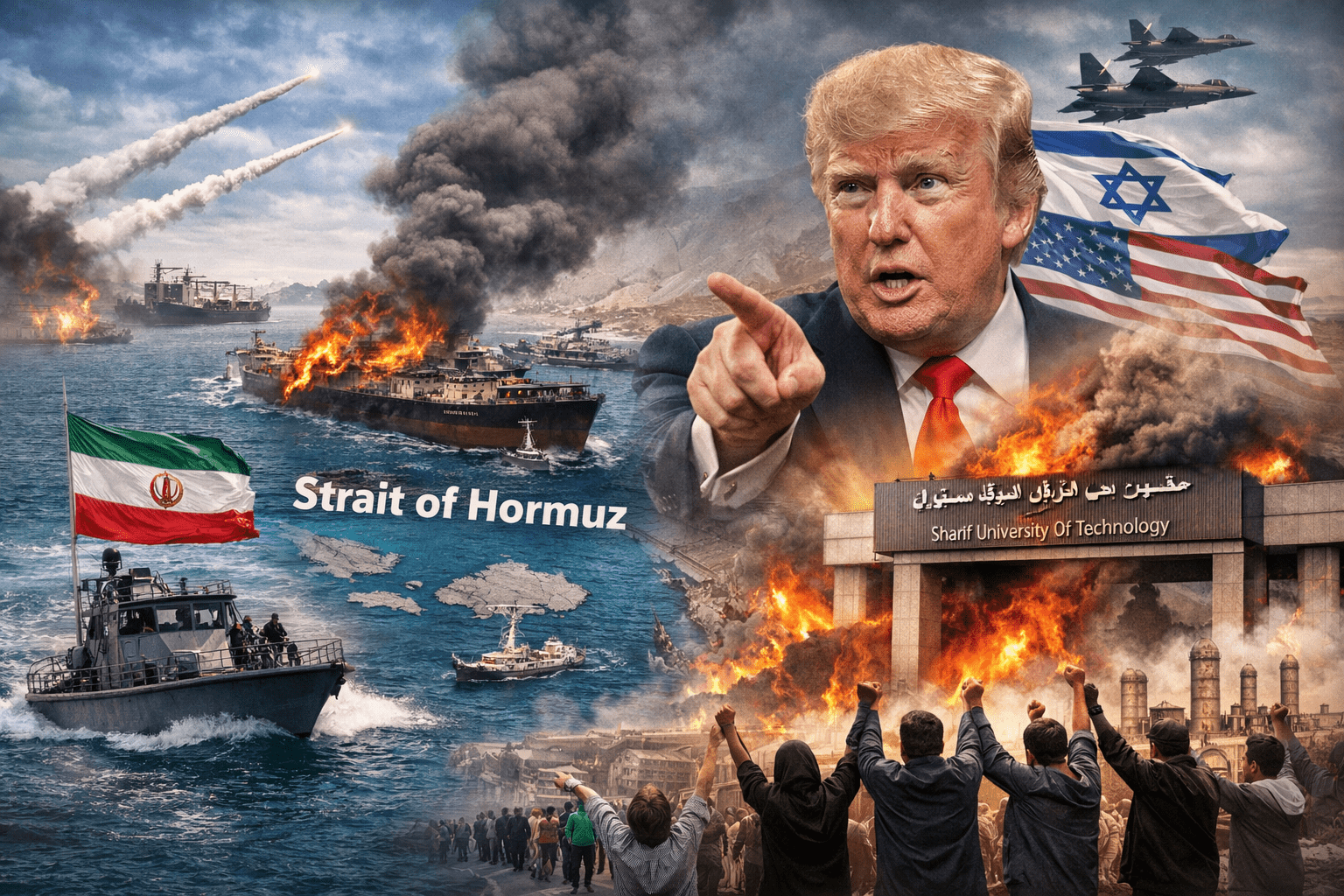
Iran, the United States, and Israel have intensified their conflict since February 28, as Tehran closed the Strait of Hormuz in response to attacks, escalating tensions across Iran and key waterways while leaders issue threats and push competing demands over security, sanctions, and regional control.
Iran Tightens Grip on Strait of Hormuz
Iran closed the Strait of Hormuz after the February 28 strikes. This route carries nearly 20% of global oil and gas supply. As a result, energy markets now face uncertainty.
Tehran uses the closure as a bargaining tool. However, officials refuse to reopen the route without firm guarantees.
Fresh Attacks Trigger Strong Reactions
On Monday, U.S. and Israeli forces struck Sharif University of Technology in Tehran. The attack damaged an artificial intelligence data center and other facilities.
Iran condemned the strike immediately. Officials described it as an attack on civilian infrastructure. Meanwhile, Alireza Rahimi urged citizens to protect national assets. He called for human chains around power plants.
War Crime Allegations Intensify
Iran’s envoy to the United Nations criticized recent U.S. statements. He said threats against infrastructure amount to incitement to terrorism.
Independent experts also warned against such actions. They stressed that targeting power plants and bridges could qualify as war crimes.
However, U.S. President Donald Trump dismissed these concerns. He argued that such pressure could push Iranians toward freedom.
Trump Issues Stark Deadline
Trump set a strict deadline for Iran to reach a deal. He warned of severe consequences if Tehran refuses.
He stated that the U.S. could destroy Iran’s infrastructure in one night. In addition, he threatened to target bridges and power plants nationwide.
Trump rejected Iran’s response to a ceasefire proposal. He insisted that his deadline remains final.
Iran Rejects Ceasefire Proposal
Iran refused a U.S.-backed ceasefire plan mediated by Pakistan. Instead, Tehran demanded a permanent end to the conflict.
The proposal included ten conditions. These covered sanctions relief, regional stability, and safe passage through the Strait of Hormuz.
Iranian officials emphasized lasting peace over temporary solutions.
Military and Political Tensions Rise
Iran’s top military command responded strongly to Trump’s threats. Spokesperson Ebrahim Zolfaqari described them as arrogant and baseless.
At the same time, tensions continue to rise across the region. Both sides exchange warnings, while diplomacy struggles to progress.
Global Impact and What Comes Next
The crisis threatens global energy supply. The Strait of Hormuz remains a key chokepoint.
If tensions escalate, oil prices could rise sharply. In addition, wider regional instability may follow.
For now, global attention remains fixed on Tehran and Washington. Their next moves will shape the outcome.