




 By
By By Elizabeth Ugbo
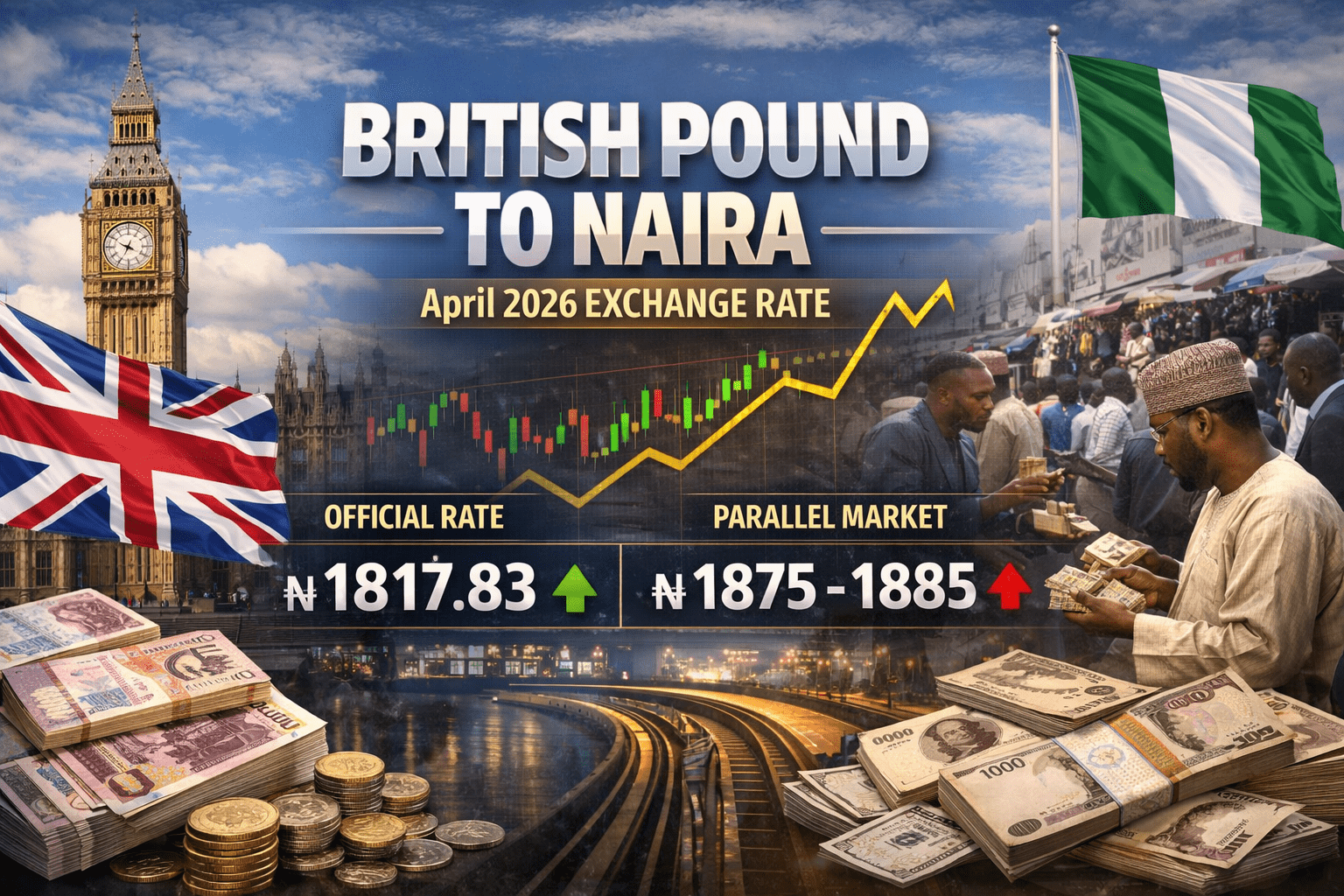
The British Pound opened trading on Monday, April 20, 2026, in Nigeria at around ₦1,817.83 in the official market, reflecting steady demand and global currency pressures. Investors, traders, and importers closely monitored the rate across the Nigerian Foreign Exchange Market and parallel markets. The movement occurred due to strong UK economic data, Nigeria’s external reserves position, and rising foreign currency demand at the start of the work week.
Official Market Shows Early Stability
The Nigerian Foreign Exchange Market recorded the Pound at approximately ₦1,817.83 per GBP in early trading.
Earlier in the session, the rate briefly climbed to about ₦1,820.47. However, it later adjusted slightly, showing active price discovery.
This movement indicates that authorized dealers are responding quickly to liquidity changes. As a result, the market remains relatively stable despite global pressures.
Parallel Market Maintains Premium Rates
Meanwhile, the parallel market continues to trade at higher levels.
Currency traders in Lagos and Abuja reported selling rates between ₦1,870 and ₦1,885 per Pound. Locations such as Broad Street in Lagos and Wuse Zone 4 in Abuja remain key trading hubs.
Although the spread between official and black market rates persists, it has stayed consistent in recent weeks. This consistency suggests controlled volatility despite strong demand.
Drivers Behind Pound Strength
Several factors continue to support the Pound’s strength against the Naira.
First, improved UK economic data has boosted global confidence in the currency. In addition, Nigeria’s external reserves influence liquidity in the forex market.
Moreover, demand for foreign exchange typically rises at the beginning of the work week. This trend further pressures the Naira, especially for high-value transactions.
Impact on Travellers and Importers
For travellers and importers, the current rates signal cautious stability.
There has been no sharp spike, which offers short-term predictability. However, slight fluctuations in the official market highlight ongoing adjustments.
At the same time, demand for Pounds remains strong. Many individuals require foreign currency for education and offshore financial commitments.
Outlook for the Week
Looking ahead, the forex market will likely remain dynamic.
Market participants will continue to track global trends and domestic liquidity levels. If demand increases, the parallel market premium may widen slightly.
However, steady policy adjustments could help maintain relative balance in the official window.