



 By
By By Elizabeth Ugbo
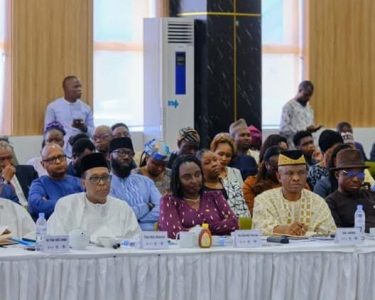
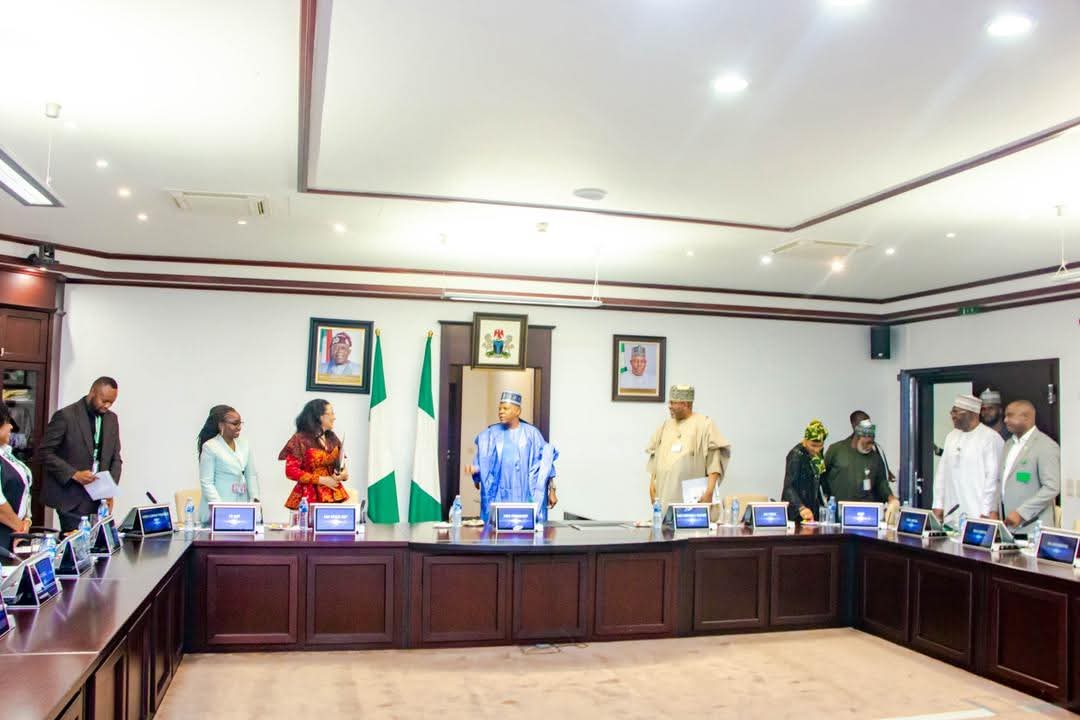
Vice President Kashim Shettima on Tuesday urged state governments to fast-track business reforms under the $750 million State Action on Business Enabling Reforms (SABER) programme. He made the call during a stakeholder meeting at the Presidential Villa in Abuja. Shettima said states must act quickly to unlock the programme’s full benefits, attract investment, improve infrastructure, and drive economic growth. He also directed the Presidential Enabling Business Environment Council (PEBEC) to seek a one-year extension of the programme.
SABER Can Boost Investment and Economic Growth
The Vice President said full implementation of the World Bank-supported programme would create a more transparent and predictable business environment.
According to him, SABER can attract both local and foreign investments. It can also strengthen private sector confidence and reduce the cost of doing business.
Furthermore, the programme aims to expand digital and physical infrastructure. It will improve access to land administration and commercial justice systems. As a result, states can become more competitive and attractive to investors.
Shettima noted that these gains would increase economic activities across the country.
“These outcomes will translate into increased economic activity, higher productivity, job creation, improved internally generated revenue, and better living standards for our citizens,” he said.
PEBEC Directed to Seek One-Year Extension
To ensure states fully benefit from the initiative, Shettima directed PEBEC Director-General Zarah Mustapha-Audu to begin discussions on extending the programme’s lifespan by one year.
He said the extension would allow states to maximise available opportunities and complete outstanding reform targets.
SABER Supports Nigeria’s $1 Trillion Economy Goal
The Vice President linked the success of the programme to Nigeria’s ambition of building a $1 trillion economy.
He stressed that subnational governments play a critical role in achieving this target because many business-related decisions occur at the state level.
According to him, President Bola Ahmed Tinubu’s economic reforms require a business-friendly environment to succeed.
“As a nation, we have embarked on a bold economic reform agenda. The success of this agenda depends significantly on our ability to create an enabling environment for businesses to invest, expand, and create jobs,” Shettima stated.
He added that investors often judge business conditions based on state-level policies and implementation.
Budget Ministry Calls for Removal of Bottlenecks
Earlier, the Minister of State for Budget and Economic Planning, Dr Doris Uzoka-Anite, urged stakeholders to address implementation challenges affecting the programme.
She said SABER aligns with the Federal Government’s Renewed Hope Agenda and can deliver significant economic benefits if states meet performance targets.
Uzoka-Anite expressed confidence that participating states would access the available funds by fulfilling programme requirements.
PEBEC Assures Commitment to Reforms
Providing an update on implementation, PEBEC Director-General Zarah Mustapha-Audu reaffirmed the council’s commitment to the programme.
She said PEBEC continues to work with government agencies, civil society organisations, private sector players, and other stakeholders to eliminate bureaucratic obstacles.
Mustapha-Audu explained that funding under SABER depends on specific performance indicators. However, she noted that participating states are making steady progress toward meeting all required benchmarks.
Conclusion
The Federal Government believes the SABER programme can transform the business environment across Nigeria. By accelerating reforms, states can attract investments, create jobs, boost revenue generation, and contribute to the country’s long-term economic growth.