




 By
By By Elizabeth Ugbo
The Democratic Republic of Congo (DRC) is battling a worsening Ebola outbreak that could become the deadliest on record, according to the Africa Centres for Disease Control and Prevention (Africa CDC). The warning came on Tuesday as confirmed cases rose to 837, including 196 deaths. Health officials blamed weak contact tracing, inadequate funding, and limited treatment facilities for the rapid spread of the virus. They also urged African leaders and international partners to increase support to prevent a wider regional health crisis.
Confirmed Cases Rise as Regional Spread Continues
Government figures show the DRC has recorded 837 confirmed Ebola cases and 196 deaths.
Neighbouring Uganda has also confirmed 19 Ebola cases. Fourteen of the infected individuals recently travelled from the DRC. The country has reported two deaths linked to the outbreak.
The cross-border spread has heightened concerns among health authorities across East and Central Africa.
Africa CDC Raises Alarm Over Missing Contacts
Africa CDC Director-General Jean Kaseya warned that the outbreak could surpass previous Ebola epidemics if urgent action is not taken.
“If we don’t stop the outbreak very soon, it will be worse than what we had in West Africa and eastern DRC,” he said.
Kaseya revealed that health officials have failed to trace more than 26,000 people who may have been exposed to the virus.
“The contact tracing is a major indicator and a major issue. We are missing more than 26,000 people, and we don’t know where they are. We don’t know if they are infecting other people,” he added.
Funding Gap Threatens Response
The African Union says funding remains a major obstacle to containing the outbreak.
Burundi’s President, Evariste Ndayishimiye, who chairs the African Union, disclosed that Africa has raised less than one-fifth of the 518 million dollars required for emergency response efforts.
Health authorities warned that the funding shortfall could severely weaken disease surveillance, treatment, and public awareness campaigns.
No Approved Vaccine Yet
The World Health Organization (WHO) says there is currently no approved vaccine or treatment for this strain of Ebola.
According to the agency, developing a safe and effective vaccine could take up to nine months.
Meanwhile, the shortage of treatment centres continues to limit the response, especially in affected communities.
Traditional Burials Fuel Transmission
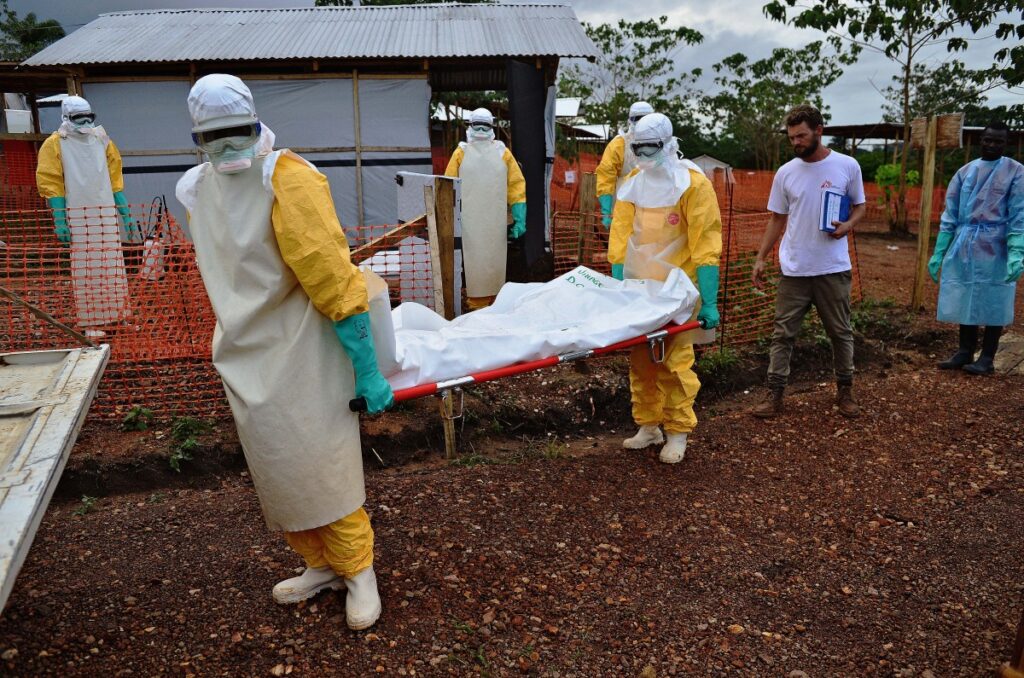
Health officials said unsafe traditional burial practices remain one of the leading causes of Ebola transmission.
The bodies of Ebola victims remain highly infectious after death. Consequently, handling bodies without protective equipment increases the risk of spreading the virus.
Community resistance to strict hygiene measures has also complicated efforts to contain the disease.
Red Cross Warns Outbreak Has Not Peaked
The International Federation of Red Cross and Red Crescent Societies believes the epidemic is still expanding.
Operations Manager Bruno Michon warned that the outbreak could continue for another year if control measures do not improve.
He also noted that the true scale of the epidemic remains unclear because surveillance efforts are still facing major challenges.
Outlook Remains Uncertain
Health experts agree that stronger funding, improved contact tracing, and greater community cooperation are essential to slowing the outbreak.
Without immediate intervention, officials fear the Ebola crisis could become one of Africa’s worst public health emergencies in recent history.