




 By
By By Elizabeth Ugbo
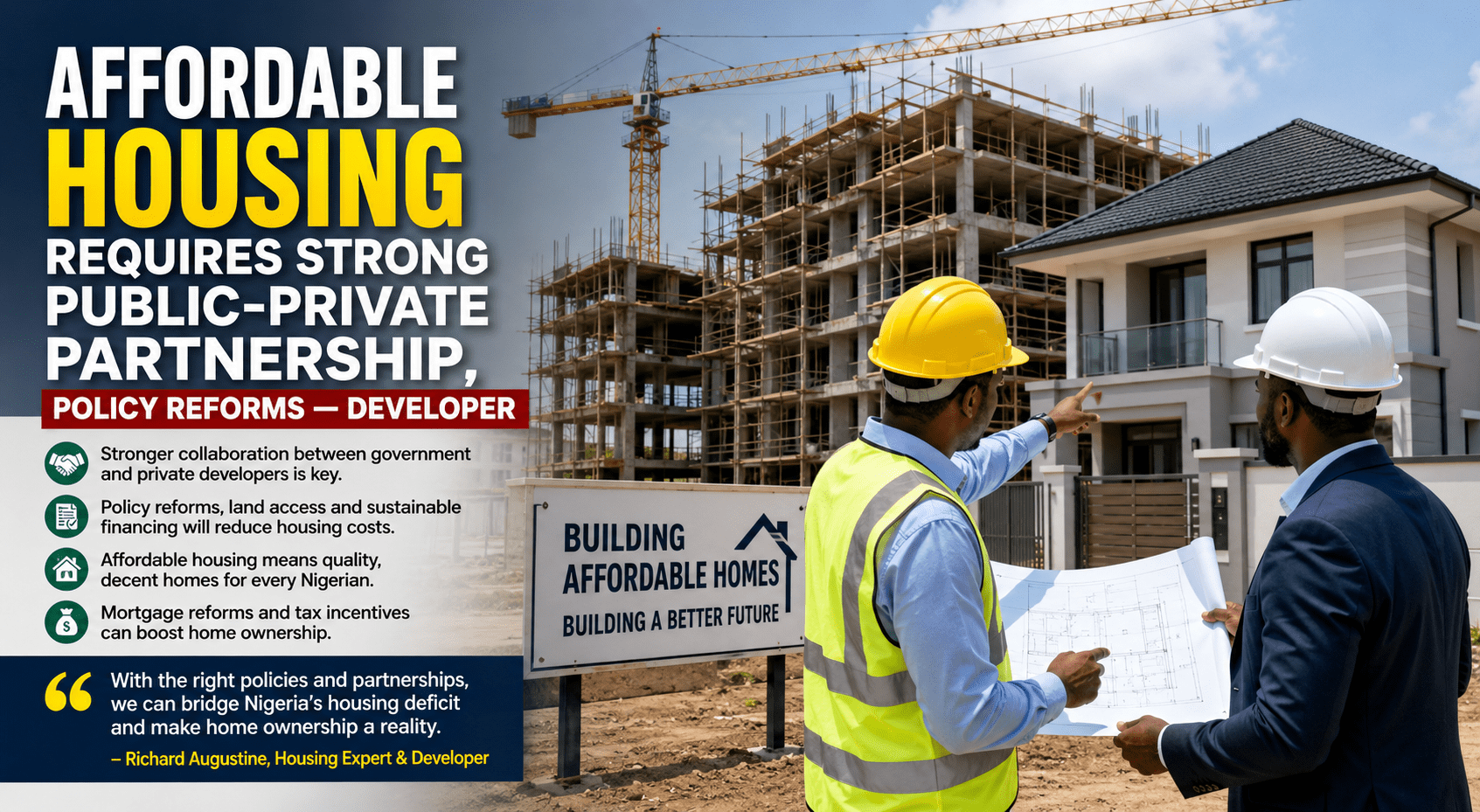
Affordable housing in Nigeria can only become a reality if the government, private developers and financial institutions work together through policy reforms, improved land access and sustainable financing, housing expert Richard Augustine said during a television interview on Nigeria’s housing sector. He explained that these measures would help reduce the country’s housing deficit and expand home ownership for millions of Nigerians.
Affordable Housing Is About Quality, Not Cheap Buildings
Augustine said affordable housing should not be mistaken for constructing low-cost buildings. Instead, he described it as providing quality, comfortable and sustainable homes that ordinary Nigerians can afford.
“Housing is one of the basic needs of man. After food and clothing, everyone deserves a decent place to live. Affordable housing is not about building cheap houses. It is about ensuring every Nigerian has access to comfortable and sustainable shelter,” he said.
Land Access Remains the Biggest Challenge
According to Augustine, access to land remains the foundation of every housing project. Therefore, transparent land administration is essential to lowering housing costs.
“We don’t build houses in the sky. The first challenge is access to land. Government policies determine how easily developers can acquire land and how affordable building materials become. If these issues are addressed, the cost of housing will naturally reduce,” he stated.
He urged governments to simplify land allocation and title registration processes. He said qualified Nigerians should not wait several years to secure land titles.
Developers Shoulder Heavy Infrastructure Costs
Augustine explained that developers spend significant resources beyond purchasing land. They also provide roads, electricity, drainage systems, transformers and other essential infrastructure.
“Developers are almost like local governments because we provide roads, electricity, transformers and other infrastructure before people can comfortably live in these estates,” he said.
He added that these expenses increase housing costs. Consequently, governments should provide more public infrastructure to support housing development.
Government and Private Sector Must Work Together
Augustine called for stronger collaboration between governments and credible private developers. He said policymakers should introduce reforms that encourage investment in mass housing.
He also advised developers to adopt innovative construction methods and prioritise social impact alongside profitability.
According to him, effective public-private partnerships will accelerate housing delivery while improving affordability.
Mortgage Reforms Can Boost Home Ownership
The housing expert criticised Nigeria’s current mortgage financing system. He argued that existing equity contribution requirements remain too high for many workers.
“Civil servants are expected to make equity contributions of about 25 per cent before accessing mortgage facilities. Where will the average worker raise such money?” he asked.
He recommended reducing equity contributions and introducing more flexible financing options. These changes, he said, would make home ownership easier for low- and middle-income earners.
Tax Incentives Will Encourage Affordable Housing
Augustine also proposed tax incentives for companies investing in affordable housing projects.
He said such incentives would encourage developers to build more homes for families with modest incomes while supporting long-term sector growth.
Nigeria Should Learn From Global Housing Models
Drawing lessons from Singapore, Augustine urged Nigeria to adopt long-term urban planning strategies.
He said governments should integrate housing with schools, hospitals, markets, transportation networks and other public facilities. This approach would create sustainable communities instead of isolated housing estates.
He also expressed concern that states surrounding the Federal Capital Territory have not fully leveraged their proximity to Abuja through coordinated housing and urban development.
Better Housing Can Reduce Inequality
Augustine concluded that proper town planning, improved infrastructure and stronger collaboration would reduce pressure on major cities.
He added that expanding access to affordable housing would improve living standards, reduce social inequality and strengthen national security.
Finally, he urged policymakers, financial institutions and private developers to work together on practical solutions that will narrow Nigeria’s housing deficit and make home ownership achievable for more Nigerians.