



 By
By By Elizabeth Ugbo
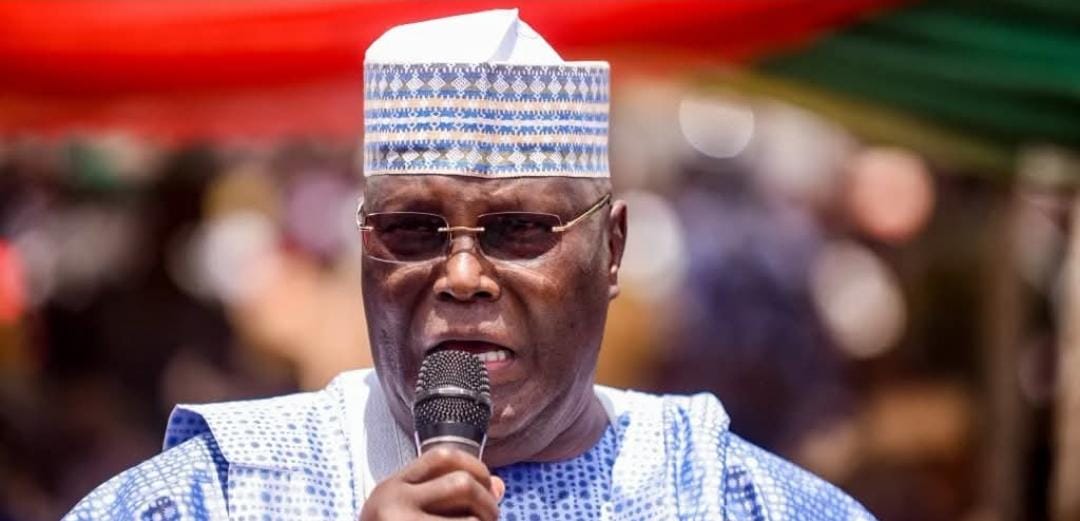
The APC Presidential Campaign Council (APC-PCC) has asked former Vice-President Atiku Abubakar to explain the legal, fiscal and operational basis of his proposed petrol production subsidy. The council made the demand after Atiku restated his proposal in Abuja on Friday. It also questioned how the plan would lower pump prices under Nigeria’s current petroleum laws.
APC Questions Legal Basis of Atiku’s Proposal
Atiku has proposed a “production subsidy” for petrol refined locally. He said the policy would help reduce prices for consumers.
He also called on President Bola Tinubu to reduce petrol and diesel prices.
However, the APC-PCC said the proposal raises important legal and fiscal questions.
The council cited Section 205(1) of the Petroleum Industry Act 2021. The provision states that market conditions should determine wholesale and retail petroleum prices.
The Nigerian Midstream and Downstream Petroleum Regulatory Authority recently restated this position. It said it does not fix petrol pump prices or issue administrative pricing templates.
According to the regulator, government intervention requires exceptional circumstances involving a formally declared market failure. The NMDPRA said no such market failure has been declared.
The APC-PCC therefore wants Atiku to explain how his proposed subsidy would operate within the existing legal framework.
How Would the Subsidy Reduce Petrol Prices?
The council also questioned whether participating refineries would have to sell petrol at a prescribed price.
If the government imposes such a condition, the APC-PCC wants Atiku to identify its legal basis.
It also wants him to explain how the arrangement would comply with the Petroleum Industry Act.
Alternatively, if refiners could sell at prevailing market prices, the council questioned the mechanism for guaranteeing cheaper petrol.
The debate therefore centres on how government support would translate into lower prices for consumers.
APC Demands Details of Subsidy Cost
The APC-PCC also asked Atiku to disclose the projected cost of his proposal.
His earlier comments suggested that the policy could involve preferentially priced crude for domestic refineries.
The council argued that any crude discount could reduce revenue accruing to the Federation.
It said such a reduction could affect funds available to the federal, state and local governments.
The APC-PCC estimated that the proposed intervention could cost between ₦17 trillion and ₦21 trillion annually.
However, the actual cost would depend on several factors.
These include the size of the discount and the volume of crude covered.
The cost would also depend on whether the support covers all crude production or only petrol sold domestically.
Seven Questions Atiku Should Address
The APC-PCC said Nigerians need clearer details about the proposal.
It listed several areas that require clarification, including:
- The proposed subsidy rate.
- The annual spending limit.
- The volume of crude or petrol covered.
- The source of government funding.
- The mechanism for reducing pump prices.
- Safeguards against diversion, smuggling and fraudulent claims.
- Any amendments required to the Petroleum Industry Act.
The council also noted that National Assembly appropriation alone might not settle all regulatory issues.
It said Atiku should clearly state whether his proposal requires amendments to existing petroleum legislation.
Atiku’s Previous Position on Fuel Subsidy
The APC-PCC also questioned how the proposal fits Atiku’s earlier position on downstream deregulation.
The council referenced a speech Atiku delivered at Lagos Business School in November 2022.
At the time, Atiku described the petrol subsidy system as fraudulent. He also promised to complete its removal.
The APC-PCC further cited Atiku’s August 25, 2026 statement on X, where he wrote, “I will restore it!”
The council said Atiku should explain how his current proposal differs from the former subsidy regime.
It also asked how the new arrangement would address concerns linked to subsidy administration.
These concerns have included smuggling, scarcity, verification challenges and fiscal costs.
Deregulation and Nigeria’s Petroleum Reform
The APC-PCC also referenced Nigeria’s long-running petroleum deregulation process.
Diesel moved to market pricing in June 2003. Aviation fuel also moved toward market pricing under the same administration.
The Buhari administration later deregulated kerosene in 2016.
Petrol remained the major product under the subsidy system until the 2023 reform period.
The Petroleum Industry Act established the current legal framework for Nigeria’s petroleum sector.
The APC-PCC therefore urged Atiku to explain how his proposal fits into that framework.
Tinubu Administration Pushes CNG Alternatives
Meanwhile, President Bola Tinubu’s administration has promoted compressed natural gas and electric transport as alternatives to petrol-dependent transportation.
Tinubu said more than 120,000 vehicles have been converted to CNG nationwide.
He also said Nigeria now has more than 400 certified conversion centres and over 90 CNG refuelling stations.
The President also met with the 36 state governors on August 27.
Following that meeting, the government launched the National Affordable CNG Transit Programme.
Tinubu said the initiative aims to deliver measurable reductions in transportation costs from October 1.
He cited lower fares already recorded on several CNG and electric transport routes.
For instance, Borno commuters reportedly pay between ₦50 and ₦100 on some supported routes.
Commercial operators charge between ₦300 and ₦600 on those routes.
Passengers using the Suleja-Abuja service in Niger State reportedly pay ₦550.
That compares with about ₦800 under conventional transport services, according to the Presidency.
Government Says CNG Can Reduce Energy Pressure
Tinubu said Nigeria cannot control international energy prices.
However, he argued that the country can reduce its exposure to global energy shocks.
He pointed to Nigeria’s large natural gas resources as part of the alternative.
The government plans to expand CNG infrastructure and vehicle conversion capacity.
It also wants states to work with transport unions and commercial operators.
The goal is to ensure that lower energy costs translate into lower transport fares.
Petrol Pricing Debate Continues
The latest exchange highlights two different approaches to reducing energy costs.
Atiku has proposed a production subsidy for locally refined petrol.
The APC-PCC is questioning the proposal’s legal basis, funding requirements and implementation structure.
The Tinubu administration, meanwhile, is promoting CNG and electric transportation.
The government says these alternatives can reduce dependence on petrol and limit exposure to global oil price shocks.
The NMDPRA’s position also remains relevant to the debate.
The regulator says petrol prices operate under the free-market provisions of the Petroleum Industry Act.
Consequently, any new intervention would need to address both the pricing framework and the fiscal implications.
The APC-PCC has called on Atiku to publish detailed legal and fiscal documents supporting his proposal.
Such details would allow Nigerians to assess the proposal’s cost, legal structure and expected impact on petrol prices.