




 By
By By Elizabeth Ugbo
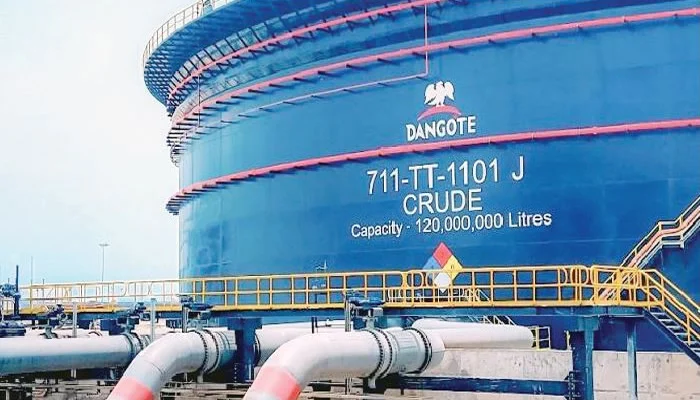
Dangote Petroleum Refinery raised its petrol gantry price from N1,185 to N1,200 per litre on Wednesday, August 26, 2026. The refinery announced the increase to customers through its Group Commercial Operations unit. The latest adjustment affects gantry and coastal deliveries and comes amid falling international crude prices and renewed oil market volatility.
Dangote Refinery Announces New Petrol Price
Dangote Petroleum Refinery and Petrochemicals FZE issued the new pricing notice to customers on Tuesday.
The email carried the title, “PMS Price Change Communication (N1,185 Per Litre To N1,200 Per Litre).”
The refinery directed customers to note the revised prices. The new rates took effect on August 26, 2026.
According to the notice, the gantry price rose from N1,185 to N1,200 per litre.
Meanwhile, the coastal price increased from N1,562,265 to N1,582,380 per metric tonne.
Refinery Orders Return of ATCs
The refinery also directed customers to return all existing Authorization to Collect documents.
It said customers must return the ATCs for repricing. Afterward, the refinery will issue new volume contracts.
The new contracts will allow immediate loading to resume.
“You are advised to return all ATCs for repricing, and a new volume contract will be issued for immediate loading resumption,” the notice stated.
Industry sources indicate that some marketers and depot operators may have started returning existing ATCs.
They would then receive revised pricing before loading new petrol supplies.
Petrol Price Increase Comes Days After Previous Hike
The latest adjustment represents a N15 per litre increase in the gantry price.
However, it comes only days after the refinery’s previous price adjustment.
Dangote Refinery increased its petrol price from N1,165 to N1,185 per litre on August 21, 2026.
The latest move therefore marks another price increase within a short period.
Consequently, the new refinery price could push petrol pump prices higher nationwide.
Petrol Pump Prices Could Reach N1,250
Oil marketers may factor several downstream costs into the new petrol price.
These costs include transportation, logistics, storage and other distribution expenses.
As a result, petrol prices could return to an average of N1,250 per litre.
However, actual pump prices will vary across locations and retail outlets.
Marketers will also consider their operating costs and prevailing market conditions.
Crude Oil Prices Fall Despite Petrol Price Hike
The Dangote petrol price increase comes against a backdrop of falling international crude prices.
Data from Oilprice.com showed West Texas Intermediate trading at $82.13 per barrel.
WTI fell by $2.88, representing a 3.39 percent decline.
Brent crude also dropped to $88.37 per barrel.
That represented a decline of $3.80, or 4.12 percent.
Meanwhile, Murban crude fell to $92.71 per barrel.
The benchmark lost $8.73, representing an 8.61 percent decline.
The contrasting movements have added fresh uncertainty to the downstream petroleum market.
US-Iran Conflict Keeps Oil Market Volatile
The global oil market also faces renewed uncertainty because of the ongoing US-Iran conflict.
Reuters reported that oil prices declined after the latest US sanctions against Iran.
Investors viewed the sanctions as less threatening to global supplies than military escalation.
However, analysts warned that the decline could prove temporary.
They said prices could rise sharply if Iran responds with military action.
Supply disruption risks also remain a major concern for the global oil market.
Strait of Hormuz Remains a Major Risk
Reuters reported that only two commodity vessels crossed the Strait of Hormuz on Monday.
That figure represented the lowest daily tally since early May.
The waterway previously handled about one-fifth of global oil consumption.
Therefore, any prolonged disruption could trigger another sharp rise in crude prices.
The development could further complicate petrol pricing across importing and refining markets.
Dangote Yet to Comment on Latest Price Increase
The Dangote Group has yet to respond to inquiries about the latest price adjustment.
Nevertheless, the new price takes effect immediately.
Marketers and depot operators will now adjust their transactions to reflect the revised refinery rates.
The development could influence petrol prices in the coming days.