




 By
By Elizabeth Ugbo
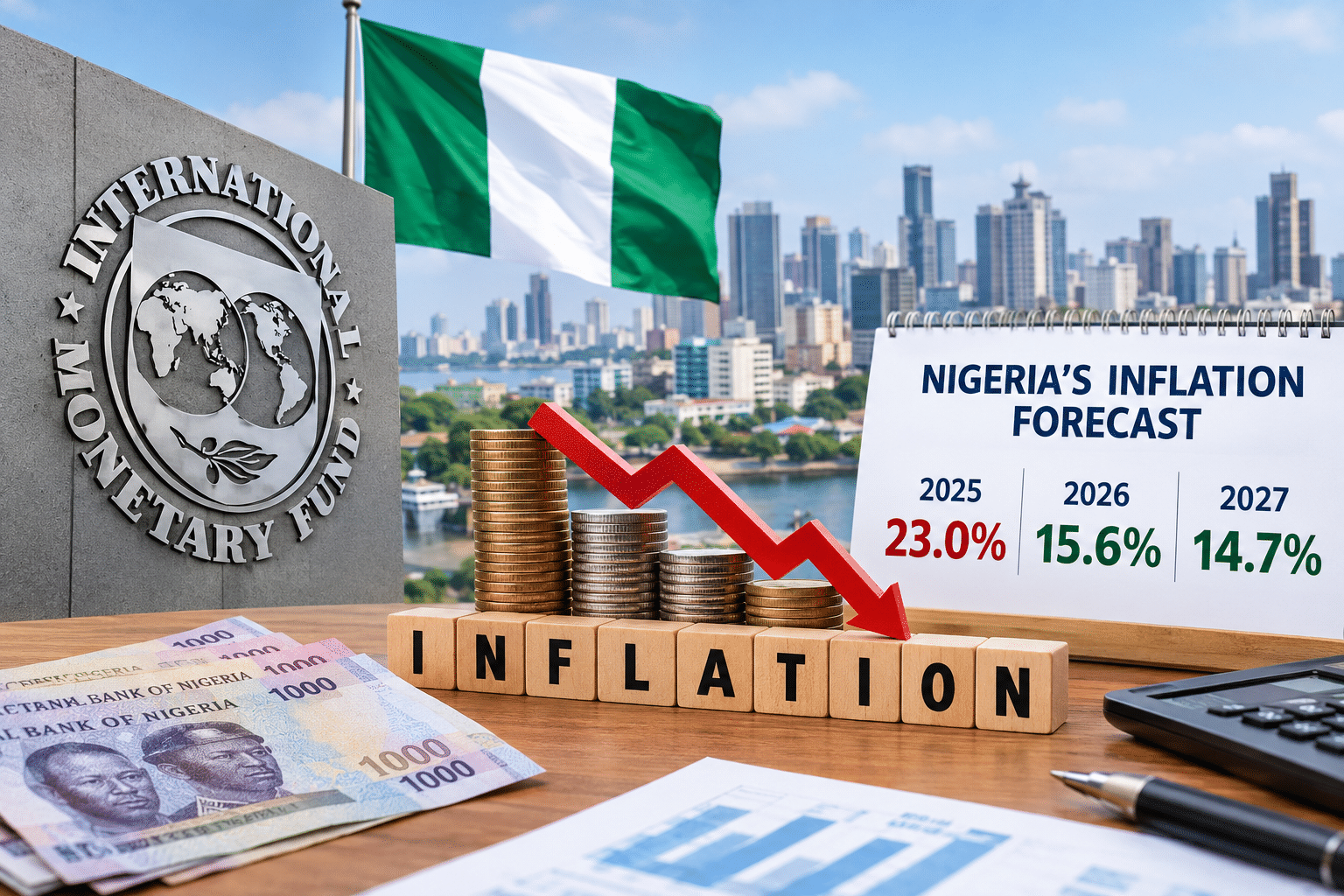
Nigeria’s annual average inflation rate could decline to 14.7 per cent in 2027 from 23.0 per cent in 2025, according to the International Monetary Fund (IMF). The IMF’s October 2026 World Economic Outlook update attributes the expected slowdown to economic reforms, tighter monetary policy, improved foreign exchange stability, and increased domestic refining capacity. However, analysts warn that food prices, energy costs, and fiscal pressures could limit relief for households and businesses.
IMF Forecasts Further Decline in Inflation
The IMF projects Nigeria’s annual average inflation to fall to 15.6 per cent in 2026 before declining further to 14.7 per cent in 2027.
This outlook signals a significant improvement from the estimated 23.0 per cent average recorded in 2025.
Moreover, sustained monetary tightening and gradual foreign exchange stabilisation have started easing price pressures across major consumer categories.
These measures aim to restore price stability, strengthen the naira, and support sustainable economic growth.
Coronation Research Supports Inflation Outlook
Analysts at Coronation Asset Management broadly support the IMF’s projections. Their internal forecast places Nigeria’s average inflation at 14.56 per cent in 2027, close to the IMF’s estimate.
The analysts believe ongoing economic reforms and expanding domestic refining operations could support long-term price moderation.
They also identify improved exchange rate stability and increased local refining capacity as important factors in reducing domestic inflation.
However, they caution that structural economic challenges could slow progress.
Domestic Refining and Exchange Rate Stability Offer Relief
Nigeria has faced persistent inflationary pressures in recent years. Foreign exchange volatility, macroeconomic imbalances, and global supply chain disruptions have contributed to rising prices.
Consequently, the government has pursued structural reforms to improve economic stability and stimulate non-oil production.
Meanwhile, increased domestic refining capacity could reduce dependence on imported petroleum products and ease transportation costs.
Nevertheless, the benefits may take time to reach consumers fully, particularly as other production and distribution expenses remain high.
Food and Energy Costs Remain Major Risks
Despite the projected decline, several factors could weaken Nigeria’s disinflation outlook.
Higher agricultural input costs, rising energy expenses, and persistent food insecurity continue to threaten household welfare.
In addition, fiscal pressures and election-related spending could increase demand and complicate efforts to control inflation.
Coronation Research warned that higher energy and fertiliser costs could slow the pace of price moderation.
These challenges may also prevent businesses from reducing prices quickly, even as broader economic indicators improve.
IMF Projects Stronger Economic Growth
Beyond inflation, the IMF expects Nigeria’s economy to expand by 4.2 per cent in 2026 and 4.3 per cent in 2027.
The projected growth reflects continued foreign exchange reforms and stronger performance across the non-oil sector.
However, sustained economic growth must translate into improved living standards to deliver meaningful benefits to Nigerians.
High food prices and other essential expenses could continue to strain household budgets despite the expected decline in inflation.
Outlook for Nigeria’s Economy
Nigeria’s inflation outlook points to gradual improvement as economic reforms and domestic refining operations support price stability.
Nevertheless, the pace of relief will depend on how effectively policymakers address food insecurity, energy costs, exchange rate pressures, and fiscal risks.
Although the IMF’s projections offer grounds for cautious optimism, many households may not experience immediate relief.
Sustained reforms and stronger domestic production will remain essential to achieving lasting price stability and improving purchasing power.