



 By
By By Elizabeth Ugbo
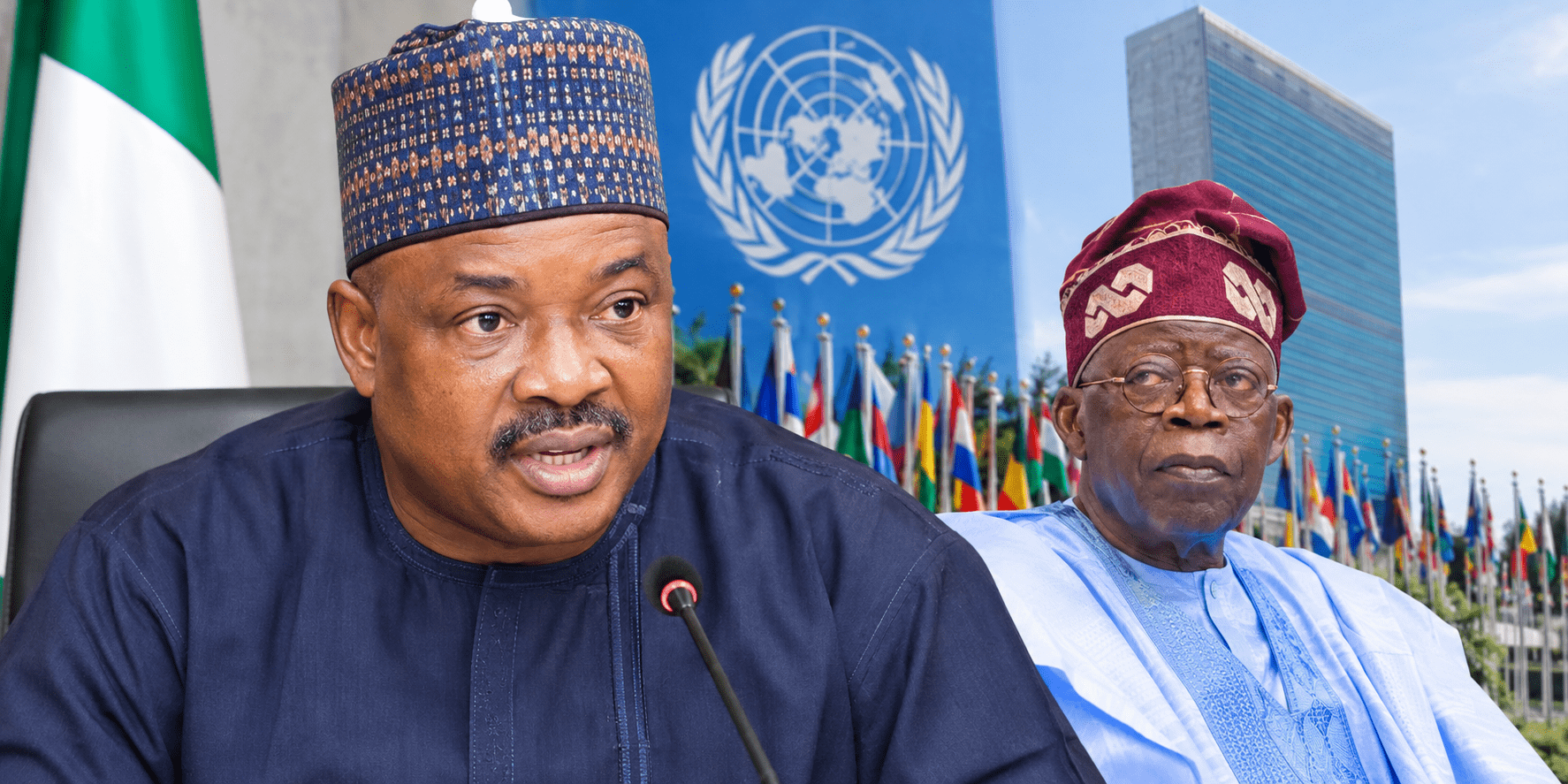
Nigeria’s Permanent Representative to the United Nations, Ambassador Jimoh Ibrahim, has dismissed claims that President Bola Ahmed Tinubu could face arrest or movement restrictions in the United States during the 81st United Nations General Assembly (UNGA) in New York. Ibrahim made the clarification on Sunday through Nigeria’s Permanent Mission to the UN. He said the Nigerian government had received no communication from US authorities suggesting any restriction against Tinubu or his family.
Jimoh Ibrahim Clarifies Tinubu’s UNGA Status
Ibrahim, who chairs the UN Committee on Budget and Administration, addressed growing speculation about Tinubu’s planned UNGA attendance.
According to him, social media claims do not establish any legal basis for arrest or criminal liability.
He stressed that an allegation does not amount to a criminal conviction.
Instead, authorities must subject criminal allegations to due process.
They must also prove such allegations beyond reasonable doubt before securing a conviction.
UN Agreement Protects Member States’ Representatives
Ibrahim based his position on Section 11 of the 1947 UN-US Headquarters Agreement.
He said the agreement requires US authorities to avoid obstructing representatives of UN member states.
The protection covers their movement to and from the UN headquarters district.
It also covers their families, UN officials and specialized agency officials.
Furthermore, it protects people invited to the UN headquarters district for official business.
Ibrahim therefore maintained that Tinubu enjoys protected transit while attending UNGA engagements.
No Communication From US Government
The Nigerian ambassador said Nigeria’s UN mission had received no official communication from Washington.
He said no message indicated that Tinubu would face restrictions during the General Assembly.
Therefore, he dismissed reports suggesting possible arrest or legal action against the Nigerian president.
“Social media cannot criminalize or arrest President Bola Tinubu,” Ibrahim said.
He added that opposition efforts to promote such claims would ultimately prove futile.
Allegations Do Not Establish Criminal Liability
Ibrahim also explained the difference between an allegation and a criminal conviction.
He said US law-enforcement agencies could invite individuals for questioning during investigations.
Authorities could also collect identifying information from individuals.
Such information may include personal history, family details and educational records.
Investigators may also collect fingerprints during certain investigations.
However, Ibrahim stressed that gathering such information does not constitute a criminal conviction.
He said investigators may use the information to establish links between people and networks.
Nevertheless, authorities must still prove criminal liability through due process.
He warned that failure to secure a conviction in sensitive criminal cases could have financial consequences.
“Where a conviction cannot be secured in a sensitive criminal matter, the consequences could include substantial compensation,” he said.
Presidents Can Delegate UNGA Representation
Ibrahim also addressed the importance of presidential attendance at the UN General Assembly.
He said participation in UNGA remains a matter of national priority.
However, a president can delegate representation when necessary.
According to him, more than 60 percent of the current speakers are vice presidents or foreign ministers.
These officials represent their respective countries during high-level UN engagements.
Therefore, heads of government do not need to attend every UNGA session personally.
He noted that the invitation goes to member states rather than individual presidents.
Ibrahim Urges Nigerians to Support Nigeria
Despite the controversy, Ibrahim urged Nigerians to continue respecting the national flag.
He also called for support for Nigeria’s economic transformation agenda.
The ambassador’s clarification comes amid renewed social media claims about Tinubu’s UNGA participation.
However, Ibrahim maintained that there is no indication of any US restriction against the president.
His statement therefore seeks to calm concerns over Tinubu’s planned presence in New York.
It also reinforces the legal protections available to representatives of UN member states.